








By almost every definition, bass-baritone Gerald Finley is having an excellent 2025.
He appeared earlier this year at the Royal Opera House world premiere production of Festen by Mark-Anthony Turnage and Lee Hall. In April that production was awarded the Olivier Award (the British Tony equivalent) for Best New Opera Production.
That same month, Decca Records released a recording of Wagner’s Der fliegende Holländer that featured Finley singing the title role alongside Lise Davidsen who sings Senta. This recording comes from two live performances in Oslo in 2024.
On Saturday he concludes a series of performances in John Adams‘ Antony and Cleopatra at the Metropolitan Opera. It is a role that was written for Finley.
Not that his very good 2025 stops there. On July 18th he performs Ralph Vaughan Williams’ Sancta civitas at the First Night of the Proms in London. In November he’ll step onto the legendary stage at La Scala, for the very first time, to sing Don Alonso in Cosí fan tutte.
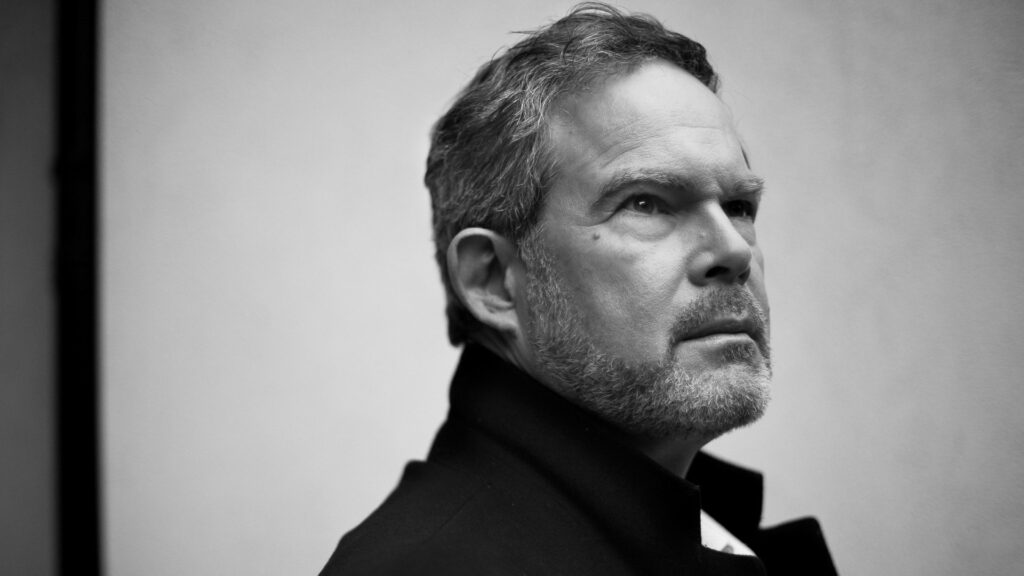
Rather than rest on his laurels, Finley is doing his first-ever recital in Los Angeles. He takes to the BroadStage in Santa Monica on June 11th to sing a program of songs and arias.
How does Finley find time to prepare for a recital and what does he want audiences to understand about him from that recital? That was just one of the many things I spoke to him about last week. What follows are excerpts from our conversation that have been edited for length and clarity. To see the full interview, please go to our YouTube channel.
Q: George Bernard Shaw famously said, “Opera is when a tenor and a soprano want to make love but are prevented from doing so by a baritone.” What, then, is the function of a bass baritones in making relationships work or not?
We go from being the father that interrupts the the daughter’s ambition, to the villain say of Scarpia in Tosca, to trying to have the soprano come what may. Then you can be paternalistic and well, shall we say, forego the pleasures of that in a role like Hans Sachs in Der Meistersinger. So we have a really wide involvement in all of these stories.
Given that you have this wide range roles that you can play, when you’re programming a recital like the one that you have coming up at the BroadStage in Santa Monica, what do you want audiences to learn about who you are from the pieces you choose to perform?
We’re trying master our instrument. We’re trying to master our sensitivities so that an audience can share in them. I’d like to feel that I’ve got a certain strength about my character. That I have a certain sensitivity to the world that I’m impacted by. Any emotional event that is thrown at all of us, I have my personal reaction to that. So many composers offer ways to encounter, shall we say, those poetic moments. So my program for the BroadStage is absolutely one of the most personal recitals I’ve ever done.
I love the programming of songs and arias that you have. Each of these pieces tells their own story within a three to four minute span. What consideration do you give in putting this program together so that you’re telling the story you want to tell, but that these individual little stories all build upon each other to help accomplish that and don’t serve strictly as just counterpoint to one another?
Partly the excitement that I have is that these are all pieces that I’ve sung before. They all can link, shall we say, in a way that tells my journey as an artist. So the pieces that I’ve chosen, and particularly in the song part of the recital, is really a reflection of me developing my artistic life. I’ve taken pretty much the most important songs that have been to me in my life. I love singing each one.
I’m very much compiling something which I know the inside and outside and all around the context of where the song has come from; how I’ve reacted to it in the past. I think that gives me a certain freedom to really share my innermost artistic life and my heart really.
You’re going to be singing Wither Must I Wander by Vaughan Williams. I’m a passionate believer that Vaughn Williams is one of our best composers ever and I find him woefully under-programmed. Maybe it’s just in the United States. What are your thoughts on Vaughan Williams, his legacy and if he gets the respect, or his music gets the respect, that it deserves?
My encounter with Vaughan Williams came at a very early age as a choral singer. He was very, I don’t want to say benign necessarily, but our ability to approach his music, it’s very listenable. It has a liltingness which has an approachability. In his harmonies, he’s working in very much block chords a lot of the time. Sometimes people feel that’s detrimental because you hear everybody moving at the same time. I think it’s ingenious because you’re taken on this kind of this wave of sound.
He’s known as the English pastoral composer. Of course, England’s geography and geology is rolling hills. There’s no kind of great, dramatic rock outcrops. People in Cornwall and Wales might feel that I’m downplaying their coastline a bit. But in terms of the vast rolling hills that there are, [it is] the beauty of the undulating greenery that is the English countryside.
But you’re right, he is under-represented. I’m excited just to share that one song, Wither Must I Wander, and, perhaps allow people the chance to explore further.
The recital also features music from Der Meistersinger, Otello, and Guillaume Tell. When you’re in a recital, what freedom do you allow yourself to perform these arias in a way that might be different than the way you would perform them if you were in the middle of a production?
One blessing is you haven’t got a director. I’m sorry if I’ve offended every director in my life, but the thing about a recital is one is one’s own stage manager, one’s own director, one’s own lighting technician, and one’s own choreographer. One doesn’t necessarily want to see a singer dancing in a vocal recital. But the freedom! It’s just you and the piano and an audience.
I want to enter into the moment that these arias are happening. I will always preface it, shall we say, with a little bit of scene setting, just so the audience can kind of imagine what’s going on.
One of my idols was Sir Tom Allen. One of the only times I’ve ever heard him sing Iago’s Credo from Otello was televised and he doesn’t move his face. He just looks straight ahead, straight into the camera, and it’s gripping. Everything that you imagine is in his head is in his eyes and in his focus. That’s a really good lesson. The stillness, the focus, for describing how evil you are and how you think you’ve been created by an evil god. That’s a very, very powerful thing. I hope to emulate that sort of concentration and focus for that because it’s a terrifying piece of music. Not just to perform, but I think also to hear.
Note: Credo is part of Finley’s program at the BroadStage.
How intimate is the relationship between a singer and his accompanist?
The most important thing is the music. If there’s a way that the voice and the music around the voice can serve the same purpose…That they literally breathe together in making music move forward and back…
I once had a one an encounter with a pianist whom i worked with and we did a very famous song cycle of Schumann. We had rehearsed previous to it and we went and did the performance. Offstage they came up and said, “But Gerry, that’s not how we rehearsed it.” To me, that was almost the best compliment I could get, because there was the opportunity to be very creative in the moment. They followed extremely well. From that point of view, you have to say that it is a marriage really.
You’re coming off of the last four performances of Antony and Cleopatra at the Met before doing this recital. Psychologically, emotionally, what does doing a recital within just a few days of having finished a run at the Met give you?
I’ve generally tried to isolate my recital work for recital periods rather than, you know, interspersing it with other activity – particularly opera. There’s the challenge of finding the subtleties of a smaller room: acoustics obviously, the ebb and flow, the minutiae of being sensitive to particular musical phrases. The precision and the glory of the intimacy of a recital hall is about the intimacy of it, the personality… So yeah, I won’t be singing my arias quite as if I’m over singing over an orchestra. The other thing is that recital singing is about being in the best vocal shape possible. One of the gifts, shall we say, of John Adams’ Antony and Cleopatra, is that it was written for me, for my resources. I’m busy during my non-performance days, very much getting back into that context.
You were scheduled to do Sweeney Todd 10 years ago at San Francisco Opera and fatherhood got in the way. Is that a role that you would still like to do?
It is, of course, a role I’d love to do. Sondheim, honestly, he’s the gift that keeps on giving. Everything I’ve encountered of his work is always an amazement to me. I’d love to have the opportunity to do it. I have some amazing colleagues who I’ve seen do it, and I think, how did they do that? The thing about Sweeney is that he’s got a hardness, of course. The revenge streak is so within him and yet you know he’s such a fallible human being as well. He’s consumed and blinded by love, or what he expects love to be. I’d love to do it.
One of my favorite albums of yours was your 2014 Shostakovich album, because it’s not music we’re used to hearing. In the preparation of that album and the exploration of those songs, was there anything that stood out to you about what you learned about Shostakovich as a composer through this work?
His ability really to comment, using Michelangelo’s words, on his own artistic ability to create in the political circumstance in which he found himself, was very profound. To comment and say that an artist really is compelled to create, and the hard work that it takes to become a master, is self-reflective on him and on all of us who are trying to do anything artistic.

I want to conclude by asking you about something that Wagner is quoted as having said. “Everything lives and lasts by the inner necessity of its being by its own nature’s need.” What do you think that inner nature is in you as it relates to your career and how you live your life?
Through various means I’ve been reflecting on what my career is and has been. It’s clear I’ve had a need to explore as much music as I possibly can within my voice type and what my artistic personality will allow. I’ve found myself wanting to explore all sorts of things intellectually and emotionally. Sometimes I’ve been presented with opportunities which I’ve literally gone in, not with my eyes closed, but taking a huge leap into the unknown. Taking leaps, because your inner self believes that your growth needs these perhaps slightly extraneous activities, stretching. Maybe there have been one or two things which I have taken on which, I’m glad to have experienced, but now know that was something that one was one step I didn’t either invest in it or I couldn’t do that.
I want to do this as long as i still love it and I still love it. When I’m out there singing, it’s just like flying. I’ve been fortunate, of course, but seeing birds fly with such abandonment, that’s really what I want to be doing as a singer.
To watch the full interview with Gerald Finley, please go HERE.
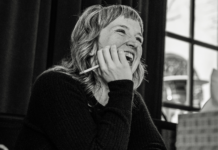
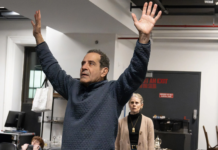
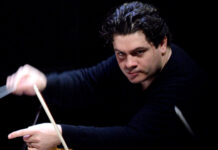
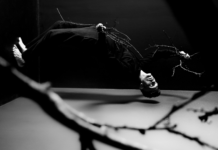
All photos: Gerald Finley (Photo by Marshall Light Studio/Courtesy MWA Management)