




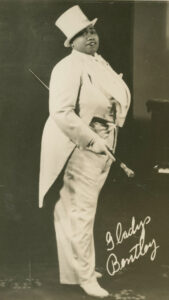
This weekend, the Dallas Symphony Orchestra presents the world premiere of Drag, a new work by composer Kathryn Bostic with libretto by playwright Lorene Cary and soprano Karen Slack as soloist. The work celebrates the remarkable life and art of Gladys Bentley—a larger-than-life Harlem Renaissance performer who defied gender norms and expectations with her tuxedoed swagger, bawdy humor, and unapologetic self-expression.
You can listen to Bentley perform “Wild Geese Blues” HERE.
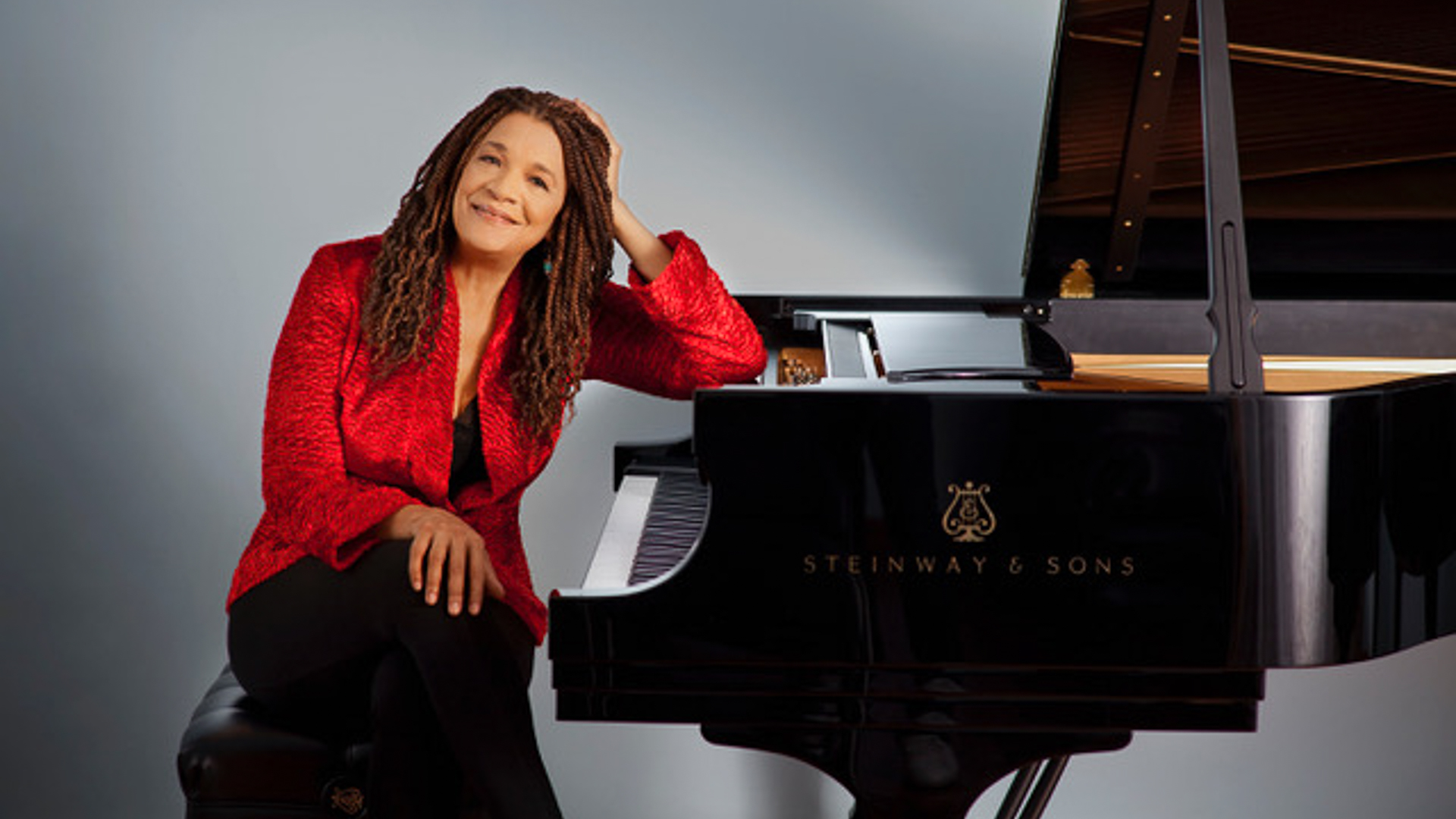
Composer, vocalist, and pianist Bostic is known for her expansive work across film, theater, and concert music. A recipient of multiple commissions from orchestras and arts organizations, she has scored films such as Toni Morrison: The Pieces I Am and Clemency, and her concert works often explore identity, history, and the power of artistic truth.
Bostic brings her signature lyricism and deep emotional insight to Bentley’s story. Drag is both a portrait and an act of reclamation—an exploration of an artist who “was light years ahead of most people,” as Bostic says. With Drag, she and her collaborators bring Bentley’s voice roaring back to life for audiences in 2025.
What follows are excerpts from our conversation that have been edited for length and clarity. To watch the full interview with Kathryn Bostic, please go to Cultural Attaché’s YouTube channel.
Q: Drag is centered around the performer Gladys Bentley. What was your awareness of her before Karen Slack reached out to you about this project?
You know, I have to say I was not aware of her. I was aware of this extraordinary force of an artist. So I’m really glad that Karen brought her to my attention.
Was there a learning curve about who she was and how much you were able to uncover? There isn’t a lot of history about her.
Yeah, there wasn’t a lot, but I did some research. I listened to her performances. I watched her on the Groucho Marx Show. I was just blown away. I mean, she is beyond extraordinary.
What makes her extraordinary in your eyes?
She is like a force of nature—musically and in her fearlessness. She was a phenomenal entertainer, but also fearless in her embrace of that. That fearlessness was the foundation of her lifestyle. People often talk about her as being openly gay, performing in speakeasies, singing bawdy lyrics, and being adored by all kinds of audiences. But for me, the foundation of who she is was this largesse of her artistry and presence.
How much of that comes from how self-possessed she was, even as a teenager?
I think it’s a lot to do with how she walked in the world. She had to be self-possessed, given what I read about her childhood—it was very difficult and contentious. Allegedly, her mother wanted a son and shunned her because she was a girl. So she had a tumultuous relationship with her family. I think she leaned even more into who she was, finding places to hold on to self-worth and self-regard. The music was an easy partner. She came into the world this way.
You can listen to Bentley perform “Red Beans and Rice” HERE.
Her peak was during the Harlem Renaissance, but she only lived until 52. When you’re presenting her story through your own music, how do you balance the music she performed with your desire to tell her story through your own voice in 2025?

That’s a really good question. Karen Slack—the Grammy-winning soprano who reached out to me—and I were talking about this last night. I was torn because so much of that stride piano, that jaunty cadence, is very specific. I thought, how can I translate that for orchestra and Karen? What I decided was to incorporate that sensibility without being literal.
Her music and her self-awareness—she’s still a huge presence. I tried to invoke her essence, her spirit, her heart, and her challenges. My intention was to create a score that reflects her outer adulation and success, but also her inner turmoil. I wanted to musically create the outer stage and the inner stage.
Does Karen get to reflect one or the other, and the orchestra the opposite?
I didn’t want to draw that kind of line, because life isn’t like that. Life is nuanced and complicated. Music is conversation—it’s always storytelling, no matter the canvas. The narrative for this score reflects those complexities. You’ll hear the bravado that she claimed, the moments of vulnerability, reflection, and introspection. It’s all intertwined among the orchestra and Karen.
I had the opportunity to read Lorene Cary’s libretto, which I think is terrific. How did you collaborate with her? There’s the age-old question, did the music or the libretto come first.
Absolutely—it was incredible what she wrote, and it was very helpful in informing me musically. I never like to assert myself over another artist. It’s about conversation. We went back and forth because I wanted the music to be part of the storytelling. I repeated some of her phrases so they could really sink in with the audience and highlight certain points.
Lorene did a fantastic job of delving into Bentley’s demeanor—not only as a performer but her inner landscape. It made my job real easy.
In reading the libretto, it seems this isn’t just a conversation between the soprano and the orchestra—it’s also a challenge to the audience. That penultimate line, “This is my last drag,” feels incredibly contemporary. You’re bringing her attitude to life in 2025, aren’t you?
Oh yeah, definitely. Even now, she’s light years ahead of most people. She lived by her own rules and her own way of being. She may have put up a facade to appear to sacrifice that, but she never compromised. She faced heartbreak because of that stance, but I have so much respect for who she is. I talk about her in the present tense because the impact of her music and story is still so relevant.
You once said, “When people can feel the honesty in music, that’s when you know you’ve done the job.” What was the journey for you in finding that honesty here?
When I write music, I really try to get out of the way. It sounds cliché, but I trust that flow of instinct and inspiration. Reading her story, watching videos, listening to audio clips—it was visceral. I start from that visceral place because that’s the most honest space.
I began creating a menu of themes, a pastiche, and from there I had these musical conversations with Lorene’s libretto. People look at me like I’m crazy when I say the music writes itself, but it really does. It becomes its own vessel.
Many composers talk about hoping their works have a life beyond the premiere. Are there plans for Drag beyond Dallas?
Yes. The Fresno Philharmonic was very supportive and co-sponsored the commission, so it will be performed there. We’re intent on getting it out there, performed as often as possible. We want to record it, too. We’re still tweaking things—new work always evolves—but I think this definitely has some legs, some wings.
Bentley and Cab Calloway didn’t dress all that differently.
White tux and tails, yep.
But she was more than that how she dressed. She performed under different names, even married two men later in life. She seems full of contradictions and possibilities.
Yes, and I think that’s a reflection of her self-discovery. There was a fearlessness in what she was trying to uncover about herself, even in difficult times. The part of her life you’re referencing was during the McCarthy era, with its horrific level of control and judgment. She tried to conform, maybe even convince herself that it was her way to redemption. But who knows? Maybe it was to protect herself from being so abused by judgment.
You can hear Bentley perform “Fearless Song” HERE.
In one essay, she’s described as “consistently and unapologetically breaking unspoken rules of gender norms.” That seems just as relevant today. How political do you think her approach was—and is writing a concert work about her in 2025 an equally political act?
I think she was very aware of the conflicts and pushback she’d get for being outspoken, openly gay, and ridiculing criticism. For me, it’s not even so much a political statement—it goes back to my favorite word, autonomy. She wasn’t going to make light of that for anybody. She held up a mirror and showed how ludicrous it is to think you can control everyone with a construct of right and wrong.
She was about her art and her music, come what may.
And do you see Drag as a political act?
I wasn’t thinking about it that way. I’m not dismissive of how polarizing these times are, but my focus was on her passion for her music. She never compromised her musicality, even when her popularity declined. I think that constant fight chipped away at her health.
That, to me, is my political statement: none of us are here to fit. We’re here to stand out in our autonomy—to walk in the world in a way that’s transcendent of all this divisiveness. She inspires me because of her immense talent and because she brought people joy. She knew how powerful that was.
She famously said, “It seems I was born different,” which sounds like an early version of “Born This Way.” How does being “different” find its way into your life and work?
I don’t know that I think about it like that, even though sometimes I’m like, “Where’s the mothership?” But in all sincerity, the music has become an incredible tool—not only to write but to inform how to live. I don’t embrace constructs the way most people do. I don’t look at checking boxes or living within them. Music is vast, fluid. One minute I’m writing a symphony, the next I’m writing a song with just me and the piano, or having a jazz jam session. It’s accessing something otherworldly. So in that way, I guess I’m a little different—because I live like that.
That sounds like a great way to live.
It helps me keep my sanity because it’s such a gift. To be able to receive that and create from that space—it’s life-changing.
To watch the full interview with Kathryn Bostic, please go HERE.
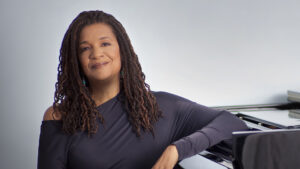
Main Photo: Kathryn Bostic (Courtesy Kathryn Bostic)