






For two decades, Beth Morrison Projects has stood at the forefront of contemporary opera and music-theater, incubating, producing, and fiercely advocating for new work that reflects the urgency, complexity, and imagination of our time. Founded in 2006, BMP has commissioned more than sixty works, many of which have gone on to reshape expectations of what opera can be—and who it can be for.
As Beth Morrison Projects marks its twentieth anniversary, Morrison finds herself in a rare position: simultaneously looking back at a body of work that has helped define an era, while continuing to push forward with new commissions, new artists, and new questions about the future of the field. That reflection has taken tangible form in the BMP Songbook Project—an ambitious anthology that includes a collection of arias, a double album, a limited-edition vinyl release, and a commemorative visual history book documenting two decades of artistic collaboration.
Morrison also has the start of this year’s Prototype Festival on January 7th which will feature the New York premiere of Sarah Kirkland Snider‘s Hildegard, the world premiere of Precipice by composer Rima Fand and librettist Karen Fisher and a two-night celebration of the BMP Songbook Project featuring live performances from many of the operas BMP has birthed into the world.
In this wide-ranging conversation, Beth Morrison speaks candidly about leadership, risk, economics, artistic loyalty, generational change, and what it truly means to build a life—and an institution—around new work. What emerges is not only a portrait of a producer, but of a pragmatic dreamer whose intuition, tenacity, and sense of responsibility continue to guide one of the most influential organizations in contemporary opera today.
What follows are excerpts from our conversation that have been edited for length and clarity. To see the full interview with Beth Morrison, please go to Cultural Attaché’s YouTube channel.
Q: Let me start with something Jessye Norman once said—someone you’ve often cited as deeply influential. She believed that a person has “both the right and the responsibility to develop all of their talents.” How have twenty years of Beth Morrison Projects allowed you to develop your own talents while cultivating those of so many other artists?
I love that question. That’s a question I’ve never been asked before. And I love that it’s Jessye Norman because, as you said, she was such an enormous influence on me. In fact, she is the whole reason I went into classical music at all. When I was seventeen, I heard her sing at the Tanglewood Festival, and that was it. I was sold on what classical music could be.

Founding a company and creating a viable organization over the course of twenty years—with all the ups and downs, the tragedies, the heroics, all of it—has stretched me in every single way I could possibly be stretched. I’ve had to grow and learn so much, not just about producing a show, but about how to grow and sustain a company, how to create a happy workforce with full-time employees. For a while it was just me, for six years, and now there are thirteen of us.
I’m thinking far beyond just making a show great. I’m thinking about culture—how to create something sustainable, something people want to be part of. I’ve had to learn how to cultivate board members and funders, how to maintain excitement in those relationships over the long haul. My skill set from the start to where I am now has obviously grown considerably through experience.
You’re known for always looking forward—that’s almost a mantra of BMP. How does it feel to pause and look backward?
I also love that question. I’ve never really given myself the time to look back and take stock. But working on the BMP Songbook Project—which is an anthology of sixty-five arias from our twenty years of commissions—has forced that reflection. We’re making a double album with twenty-five of those arias, and a commemorative coffee-table book with production photos and interviews with composers, co-producers, and festival partners.
Through all of this, I’ve had the opportunity to reflect on the work, the ups and downs, the successes, the Pulitzer Prize winners, the Grammy nominees. Talking again with the artists who created these projects has been incredible. It’s been the first moment I’ve really allowed myself to feel proud.
I’m not someone who rests on their laurels, but this project has allowed me to say, “Wow—these sixty-plus pieces wouldn’t exist if I hadn’t been the mother and midwife bringing them into the world.” It’s been the joy of my life to walk hand in hand with artists who have helped reshape the opera field with me.
With more than sixty works, narrowing things down must feel like Sophie’s Choice—especially for the Songbook concerts, recordings, and vinyl. How do you make those decisions?
It’s so hard. I know people are going to be hurt or upset. The history book represents every single project we’ve ever done, so everyone is there in that way. But not everyone is interviewed, and not everyone is part of the live concert or recordings.
The biggest Sophie’s Choice for me right now is that we were nominated for two Grammys—Adoration and Trade. I’m a Grammy voter and I only get one vote per category. I’ve decided I’m going to flip a coin and not tell anyone.
Twenty years in, do you still recognize yourself in Oscar Hammerstein II’s description of “a hopeful innocent in fair weather, a stern pilot in stormy weather, a mathematician who prefers to ignore the laws of mathematics and trust intuition, a realist, a practical dreamer, a sophisticated gambler, a stage-struck child?”
Yes—absolutely all of those things. That quote lived on my refrigerator for fifteen years. I’m still a stage-struck child when I sit in the audience and get wowed by the work. I call myself a pragmatic dreamer. I’m long on vision and dreams, but deeply pragmatic because this has been my company and I’ve had to toe the financial line for twenty years. Intuition still guides many of my decisions. That quote fits me to a T.
When Hildegard debuted at The Wallis in Beverly Hills late last year, the response felt immediate and emphatic. Productions like that inevitably raise a question about completion—about when a work has fully arrived. As someone who lives with pieces for years, do you feel that Hildegard has reached its final form, or is it still evolving as it heads toward Prototype?
That’s a great question. Coming out of it, I know that Sarah thought that there might be a couple of places she was going to tighten up, and we’ll see if she decides to make that happen in the end. That was on her mind.
And you’re comfortable either way—whether the piece continues to shift or stands as it is?
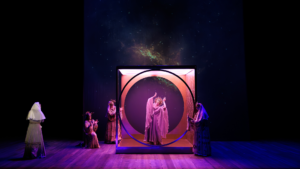
I support either decision. The work was very, very well received, and it’s a beautiful piece. It’s also not a short piece—it’s two and a half hours. If she were to make some little internal cuts here and there, I would support that. And if she doesn’t, that’s also fine with me. I think we’re in good shape.
But I will say, the only other BMP project that has been this length is Breaking the Waves. Dog Days was two hours, and pretty much everything else is ninety minutes or less. So it’s definitely a long piece for BMP.
Breaking the Waves brings me to something I’ve been thinking about a great deal. When I saw the work presented in Guanajuato as part of the Cervantino Festival, it struck me as a powerful example of how far these pieces can travel—geographically and culturally. Even when BMP isn’t producing the touring version, what does it say to you about the reach and durability of the works you’ve chosen to shepherd?
I stand behind all of the pieces that we’ve done and think that there should be bigger lives for all of them. When I created BMP, I created it with the touring model in mind. Over the years, we’ve toured many of the projects, and that was always the hope—to get them out so they weren’t just one-and-done.
As we’ve moved forward, the industry has changed. A lot more companies are now creating their own new work, so we’re touring our projects a bit less than we were originally. But that feels like a natural progression of how the field has evolved. I really try to promise that our projects will have both a New York and an LA presentation, since those are our two home cities. And if we can do more than that, that’s great. I certainly wish they could all tour the world.
Your desire for scale—without losing specificity—feels central to BMP’s identity. With that in mind, as Prototype approaches, Precipice enters the picture. How does this piece fit into the broader arc of what you’ve been presenting in recent seasons?
It’s a beautiful piece by Rima Fand. The concept came from the designer Susan Zeeman Rogers, who’s creating these beautiful dioramas. At its core, it’s about a girl finding her voice, and that’s a story I really love to tell.
The music sits in a kind of music-theater realm. We’ve had such beautiful success with those projects recently—Gelsey Bell’s Morning, Heather Christian’s Terce, John Glover’s Eat the Document. This follows in that lineage.
That porous boundary between opera and music theater has also allowed performers from different worlds to flourish in BMP projects. Marc Kudisch is a great example—an artist many associate with Broadway, yet someone who has done some of his most profound work with you. How did that relationship begin?
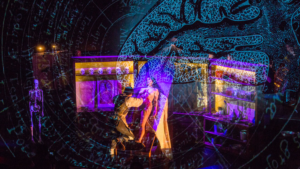
I have to give credit for that to Royce Vavrek. Royce had been working at the Public Theater, and during the workshops for Angel’s Bone—we did two years of work-in-progress at Prototype—he brought Marc into the fold.
We just continued with him because he’s so damn fabulous. David Lang’s Anatomy Theater was a perfect vehicle for Marc, and his portrayal of the older man in Trade is one of my favorite performances of all time—singing one of my favorite arias of all time.
Which listeners will find in the Songbook.
Yes. And Marc—knock on wood—is going to be part of the live Songbook celebration concerts on January seventh and eighth.
With so many artists returning again and again, it speaks to the depth of trust involved. At any given moment, how many works are you carrying—emotionally and practically—before they ever reach the stage?
A lot. We just announced thirteen new commissions that will happen through BMP and Prototype over the next five years. Between that and projects that have premiered and are touring, we usually have between twenty and thirty things in some form of play.
Works generally take three to five years to come to fruition, so we have to have many things happening at once—premieres, workshops, touring projects—to keep the flow going.
With that level of commitment, I imagine the decision to let go of a project is rare.
It is. There have only been three projects in BMP’s history that haven’t made it to premiere. Two were pulled by the artists because it wasn’t a good artistic fit, and one was a grand opera where a partner pulled out at the last minute. But never say never.
The economics of producing this work have shifted dramatically since BMP’s early years. How does that reality shape the way you look toward the future?
Post-pandemic, we can’t do anything for less than five hundred thousand dollars for a full-scale chamber opera. Everything costs more—the labor, the materials, the cartage. And at the same time, the funding community has really collapsed around this work.
A lot of foundations have left the opera field. Donors are aging, and there aren’t people coming up to take their place. Everything is twice or three times as expensive, and it’s incredibly challenging.
But I won’t retreat. I won’t shut down or lead with fear. We’re doubling down on what we do—supporting artists and continuing to announce commissions. I’m pragmatic, but I still believe you have to lead with vision.
A recent Mellon Foundation study painted a sobering picture of what it takes to sustain a life as an artist today. Does that align with what you see every day?
It’s almost impossible. Everybody has at least three jobs. So many composers and singers teach just to survive. The cities where the arts thrive are the most expensive places to live. It’s very, very hard to be an artist, and I think it’s harder than it’s ever been.
I don’t think that will change in my lifetime—but I wish it would.
As you stand at this twenty-year threshold—looking backward while actively shaping what comes next—what do you hope the next twenty years will say about this moment?
The work we do is of the moment, of the time. I hope the next twenty years reflect their time the way these sixty-five pieces reflect the last twenty.
We want to make work that’s relevant, timely, and rooted in the voices of today—always asking who the next great writer is, who will move the genre forward. That’s what BMP really offers.
To watch the full interview with Beth Morrison, please go HERE.
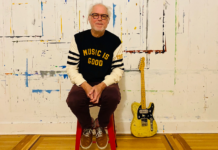
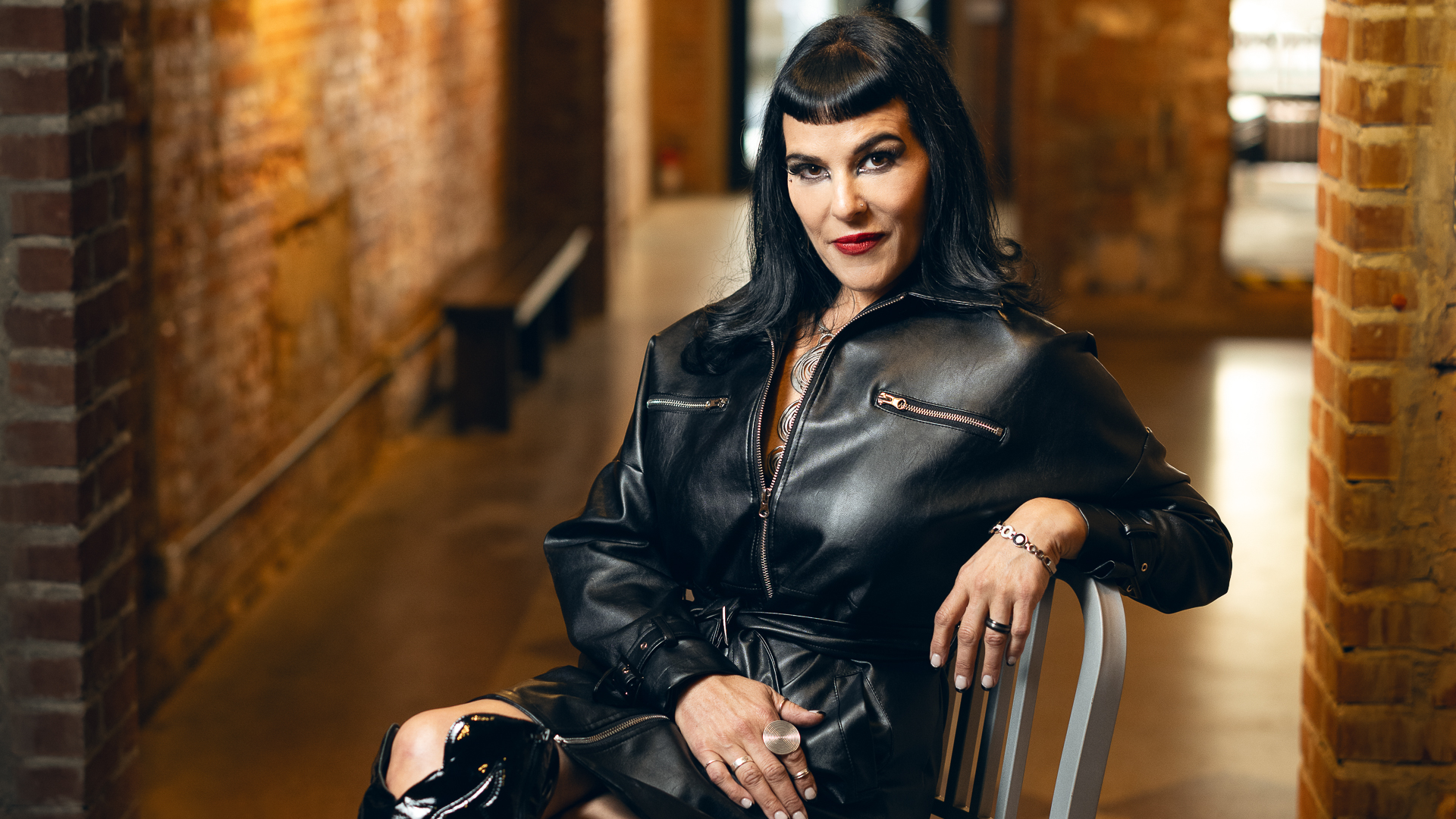
Main Photo: Beth Morrison (Photo by Daniel Welch/Courtesy Beth Morrison Projects)
Correction: In a previous version we mistakenly stated that the opera Morning was by Yelena Bell. The correct name of the composer is Gelsey Bell. Cultural Attaché regrets the error.