





When Mandy Gonzalez walks onto the stage at The BroadStage on February 28th, she won’t simply be performing a concert. She’ll be stepping into a circle that began in Southern California — with plaid-flannel rock bands, VHS audition tapes recorded by her mother, and a teenage dream that refused to quiet down.
Over the years, that dream carried her from Broadway highs like In the Heights and Hamilton to the hard lessons of public failure. From “Elphaba” in Wicked to symphony halls and Carnegie Hall.
Along the way, she has built something deeper than a résumé: a practice. A philosophy. A commitment to the work, to her family, and to the young artists watching her path and wondering if there might be room for them too.
In this conversation, Gonzalez reflects on fear, failure, resilience, representation, motherhood, and the long walk toward a life that feels both ambitious and grounded.
Q: You’re a West Coast girl, and on February 28 you’ll be playing The BroadStage in Santa Monica. I have to imagine that feels like a homecoming.
I can’t wait to be home. It’s been too long. I think the last thing I did in Los Angeles was before the pandemic. So I think that was around 2019. And even that wasn’t a solo performance. So everybody’s coming out. I have friends from high school that are coming and friends from music groups that I was in when I was younger. So I can’t wait to be home. My parents are very, very excited.
It’s interesting because when you were doing Aïda years ago, you were asked about doing solo shows and you said, “That’s terrifying.” What changed?
It was a lot of work developing myself as a concert vocalist. I had started very young in LA singing in different clubs. I was 15 when I played the Cinegrill at the Roosevelt Hotel. I had a music teacher at that time, Bill Schneider, who was also a musical director and accompanist. He said we should put together a show. I jumped into it. I had no idea what I was doing. I was reading off cards. It was very factual.
It wasn’t until my daughter was born. I had finished doing Wicked in 2010. Right after that run, I was pregnant. My daughter was born and I would go out for auditions and I wasn’t getting anything. I had a friend who was booking singers for cruises. I thought, okay, I’ll try it. We went to Mexico on one cruise with my dear friend Brian Nash, my musical director, and I loved it. It was the best crowd I think I’ve ever had. But I knew that if I wanted to do it, I had to figure out how to do it.
That’s when I decided to put together a show at 54 Below. I hired a director and a co-writer and Brian Nash. I started to learn about the craft of creating concerts. I think it really started around that.
When I saw you in 2015 at Catalina Jazz Club with Love Always, and later with Fearless at Feinstein’s at the Hotel Nikko in 2018, there was a deep sense of storytelling — not just singing. How have those concerts evolved for you personally?
They’ve evolved in a lot of different ways. I’ve become so comfortable on stage, whether it’s an intimate crowd or a bigger venue. I’ve become very comfortable just being myself and bringing the audience along with me.
I’ve become more comfortable as a storyteller outside of putting together a Broadway show — just putting together songs and what those songs mean to me in that moment, in that concert, and weaving those songs to create a story. I’ve become more comfortable trusting my own instinct.
Love, All Ways stemmed from my 54 Below show. My parents met during the Vietnam War. They were pen pals. I found these letters in the closet. My mom said there are all these letters in a box, but I don’t want you to read any. Being the youngest of three, I read them. At the end of every letter, my father would say, “Love allways, Paul.” It was always with two L’s. He has a hard time spelling. I wanted that first show to be personal and tell stories about how I grew up.
After I had done Hamilton, I created a social media platform called the Fearless Squad because I had so many young people writing to me telling me they felt like they didn’t belong. I said, if you don’t feel like you belong, you can be part of my Fearless Squad. That’s how that journey with that word started. I wanted to create material and stories for that squad.
You make performing look effortless. But how much work does it actually take to come off that way?
It takes a lot of work. I’m constantly working. I say this to my young students — if you want to do this for a living, you have to put in the work. It doesn’t just happen to you.
I’ve watched some of your videos with opera singers and classical musicians and how hard they work. Sometimes it doesn’t begin for them until they’re in their 40s because that’s when the instrument is at its peak. But the work doesn’t change. It doesn’t matter if you’re in a hit like Hamilton or in a flop. The work is the same. If you don’t do the work, you’re doing a disservice to yourself and your gifts. You’re given certain gifts in your life, and it’s the work that makes you into an artist. It’s a practice.
You mentioned flops. What did you learn from the failure of Dance of the Vampires that helped you navigate the success of In the Heights and Hamilton?
I learned so much about myself through failure. Not that the failure was mine alone, but you feel that way when you’re in a show that doesn’t do well. That show was very cruel on the internet. You go from feeling like this is the most amazing thing and now I’ve made it — Bette Midler sends you a telegram opening night — to the next day having the worst possible things said about your show and about you. And then you have to go on stage and perform the next day.
I think it taught me to have really thick skin. You realize you’re not in it alone. You just have to keep going. That’s life. You can’t let something that isn’t successful or someone else’s opinion determine how you’re going to live your life.
I was 24. That was a big thing to learn at a very young age. I’ve been through the lowest that you can go. So when I was cast in In the Heights, I could let go of the worry about what people were going to think and just do the work.
On the Breast Cancer Research Foundation in 2020 you were quoted as having said, “As much as I love the first part of my life, I want to make the second part happier for my family and myself.” Five-plus years later, how is that going?
I’m happy to say that I’m constantly a work in progress. As much as you say you’re going to focus on this, then life happens. But I’ve stayed very true to the fact that I really wanted to put a focus on my life and my family.
Concerts allow me a little bit more freedom. I don’t have to take everything. I don’t always have to go out of town. And when I do, it’s for a week. It’s not for a month. I can be home and be with my family.
When you go through something life-threatening like breast cancer, you learn how fragile life is. You learn to trust your instinct and ask yourself, is it worth it? For me, if I can sing the rest of my life and do concerts and be around people, it’s definitely worth it.
This summer, Broadway gets something like its own Woodstock with the Broadway Festival in the Hudson Valley. What would your younger self — the girl in Santa Clarita with big dreams of musical theater — have thought about something like that? And what would she think about you performing there?
I would have figured out how to go. I would have figured out what bus route I could take to get there. I don’t have any money, but are they offering a scholarship? I would figure it out.
When I did Ann Reinking’s camp in Florida, that was because of a singing teacher who said you should submit a tape. I tap danced outside. My mom taped me in Santa Clarita Valley. I sang and I got a full scholarship to go to that camp in Tampa.
It completely changed my life. I was 15 years old taking class with Gregory Hines and Ann Reinking and Treat Williams and Jeff Calhoun. They expected excellence.
I’ve always wanted to be around that kind of community — the people who set the bar so high. Going to something like this, as a young person, I would want to be looking for those artists and teachers who made me feel like that’s what I want to be.
Everything is a pinch me moment for me. When you’ve had a dream this long that has come true and you look back and you go, oh my gosh. But because I am who I am, there’s still so much to do and so much further to go. I think my younger self would be very proud.
A wise woman [her mother] once said, “Traveler, there is no trail. The path is made by walking.” You’ve walked through peaks and valleys. Where do you want that walking to take you next?
I just created a show of all my dear friend Lin-Manuel Miranda’s music, and we debuted it with the Boston Pops and then at Carnegie Hall in November. I want to see where this goes. I’ve been booked now with this show and symphonies all over the country. I want to bring his music to so many that love it. To be a vessel for his music — that’s a big focus for me.
And then beyond that? You’re somebody who has always been dreaming big.
There’s always something in the works, but I want to travel. I want to be home to see my daughter starting high school this year, which is so crazy. I want to move people. I don’t know whether that’s master class or keynote speaking. There’s so much more for me to do. I’m mapping it out. Let’s see where it goes.
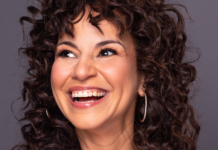
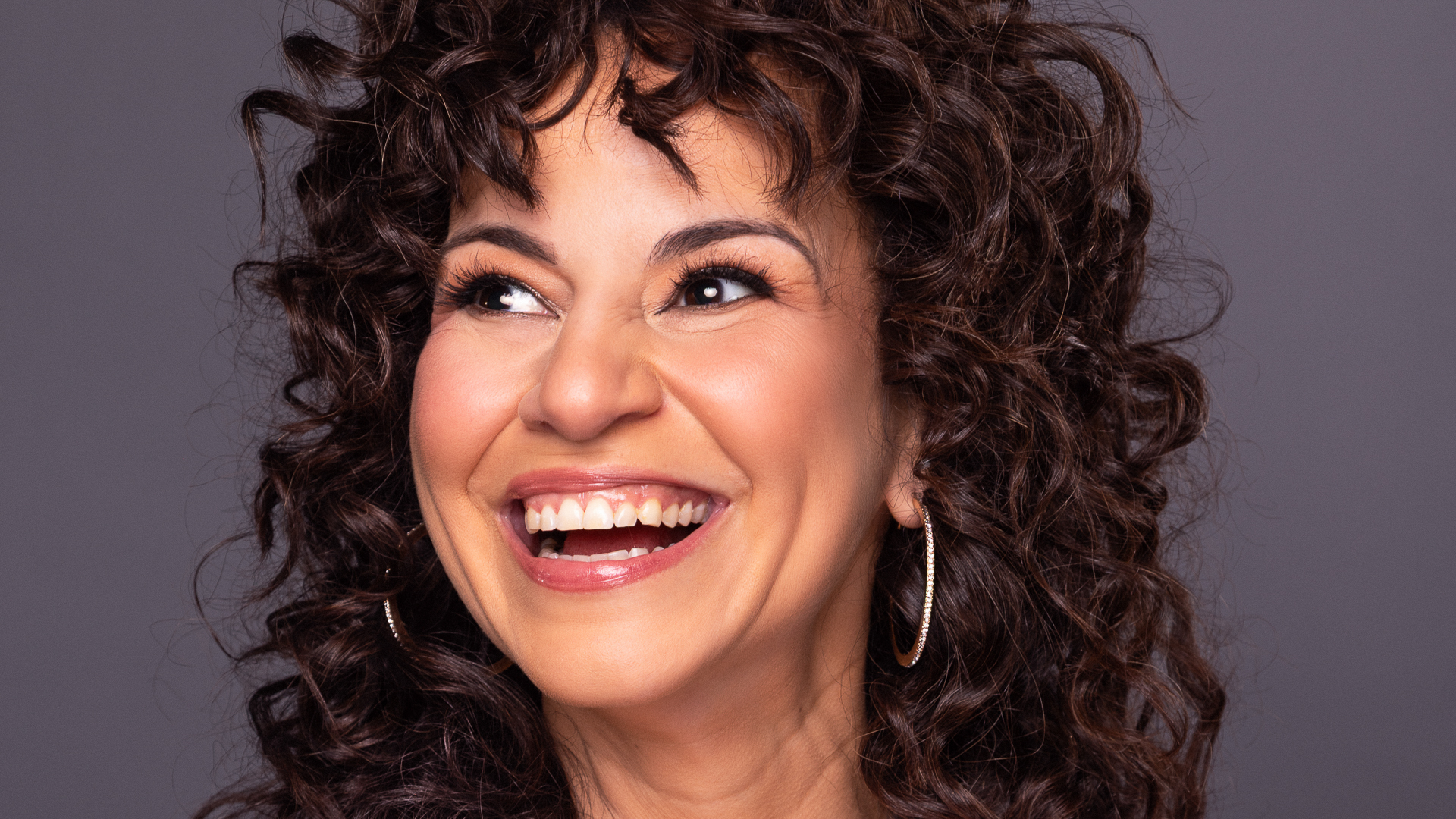
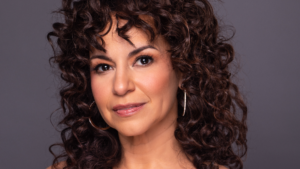
Main Photo: Mandy Gonzalez (Courtesy The BroadStage)