








There are conductors who program new music. And then there are conductors who assume responsibility for it.
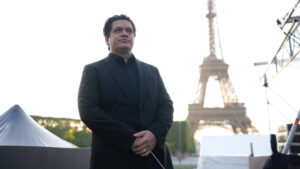
For Cristian Mǎcelaru, commissioning, premiering and advocating for contemporary composers is not a side project — it is central to his artistic philosophy. This Saturday, at the Interlochen Center for the Arts, he leads the world premiere of Wynton Marsalis’ new cello concerto with Yo-Yo Ma as soloist.
It is one of several premieres he will conduct in the coming weeks. On March 21st he leads the Orchestre National de France in the world premiere of Tan Dun’s Clarinet Concerto.
On May 22nd, he leads the San Francisco Symphony in a concert that features the world premiere of Tyler Taylor’s Embers. He returns to the Orchestre National de France on June 11th for the world premiere of Thierry Escaich’s Concerto for Orchestra.
But for Mǎcelaru, the act of presenting new music is not about novelty. It is about transmission — about the performer’s obligation to carry a composer’s language into the world with clarity, conviction and depth. In this conversation, he speaks candidly about preparation, collaboration, advocacy and why, in his view, performers — not composers — often determine the fate of a new work.
Q: You once said that Strauss will sound better “if you play the way a gospel choir sings.” What did you mean by that?
Well, it wasn’t connecting Strauss to gospel music as it was connecting the way that people are committed when they interpret gospel music to the way that we should be committed when we interpret Strauss, because I think there is a depth of understanding of your role when you are part of a gospel group that’s not as clear.
Of course it’s a lot more complex to be part of Strauss opera than to be part of a four-part gospel choir. But I think that clarity with which you are committed to the understanding of the context that you represent and you create is so necessary in classical music especially.
When we think of music as abstract and multi-layered and intellectual, none of those statements are false. But the way that we transmit it directly needs to be in a way that people can understand it and connect with it.
Your advocacy for new works is unusually robust. How do you approach a new composition so that audiences hear it at its best, especially with limited rehearsal time?
The biggest hurdle that especially young musicians have to overcome is the fact that they don’t have to reinvent the language of music with every new composition. Every new composition still belongs to the great canon of the musical language.
You might be speaking a different dialect depending on the composer, but you’re still part of the same musical language. You have to find ways to connect it with what you know and what is truly yours.
My process for conducting new music is exactly the same as conducting old music. It doesn’t change one bit. I try to discover as soon as I can what is the musical language of the composer. What are the commonalities that link this composer with others? What are the musical gestures that I have to make overwhelmingly compelling to the audience?
So oftentimes we focus on new music with precision — the rhythm, the notes, the harmonies. But that element that differentiates the abstract quality of a sound wave to the emotional quality of a musical phrase — we need to bring that into contemporary music as well.
A phenomenal performance of a mediocre composition goes so much further than the mediocre performance of a phenomenal composition. It’s really up to the performer to transmit something meaningful and valuable.
When an audience does not connect with a new piece, I would say 99% of the time, it’s the fault of the performer, not of the composer.
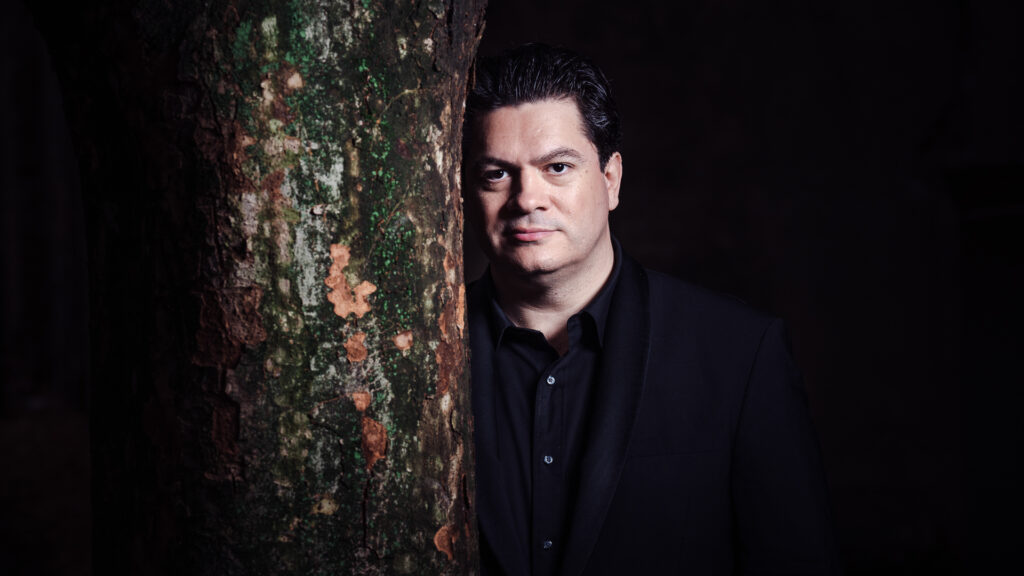
Your advocacy for new works is unusually robust. How do you approach a new score so that audiences hear it at its best?
The biggest hurdle that especially young musicians have to overcome is the fact that they don’t have to reinvent the language of music with every new composition. Every new composition still belongs to the great canon of the musical language.
You might be speaking a different dialect depending on the composer, but you’re still part of the same musical language.
My process for conducting new music is exactly the same as conducting old music. It doesn’t change one bit. I try to discover as soon as I can what is the musical language of the composer and what are the gestures that I have to make overwhelmingly compelling to the audience.
So oftentimes we focus on new music with precision — rhythm, notes, harmonies. But that element that differentiates the abstract quality of a sound wave to the emotional quality of a musical phrase — we need to bring that into contemporary music as well.
A phenomenal performance of a mediocre composition goes so much further than the mediocre performance of a phenomenal composition. When an audience does not connect with a new piece, I would say 99% of the time, it’s the fault of the performer, not of the composer.
You’re premiering Wynton Marsalis’ cello concerto with Yo-Yo Ma. After more than a decade with his music, are there still discoveries?
Yes, of course. He’s such a genius that he surprises me all the time.
There are gestures that define who he is. For example, the use of the wah-wah gesture — the Harmon mutes in the brass. I tell him I wouldn’t agree to conduct a Wynton Marsalis piece that did not have that gesture in the brass because it defines who he is so much.
Then there is always a reference to the train — the locomotive pulling into the station, the wheel screeching, the whistle. He has explained to me that the sound of the train is the truest representation of freedom for him because the train represents expansion, development, motion and movement.
In this cello concerto, for the first time, there’s an entire movement that’s spiritual. He was explaining to me the difference between a chorale and a hymn and what are the parallels and the differences. This is a new thing in this composition that was quite beautiful to understand.
When you commission a composer, what is your responsibility in shaping the work?
It depends a lot on each individual composer and the relationship that I have with them. I do like to contribute if I can to make something better. The first thing that I tell the composers is, first of all, you do not need to accept any of my suggestions or comments. That’s absolutely totally up to you.
It depends a lot on the composer and the relationship. I do like to contribute if I can to make something better. The first thing that I tell composers is, you do not need to accept any of my suggestions.
I talk to composers a lot about notation. I think it’s maybe the most difficult thing for a composer — how do you notate those sounds in a way that is clear?
Some composers are open to collaboration, some are not. It’s not a criticism. It’s just an acknowledgement of how everyone likes to safeguard their compositions.
You don’t just premiere works — you actively lobby for them. If the future of a piece depends on advocacy, is that now part of a conductor’s artistic responsibility?
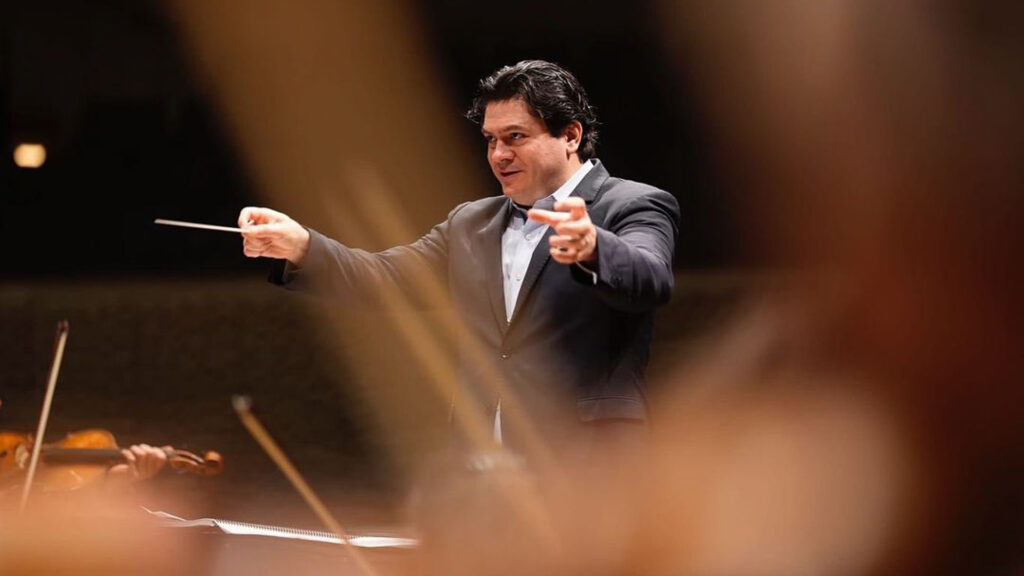
It needs to be something that I have to be a champion of.
The people that know me best will know that by the third sentence of, “Hi, how are you?” I’m already saying, “Let me tell you about this new piece.”
Any composition, even if at first it does not seem to be appreciated or understood by the public, can enter the grand canon of music history by having multiple performances. It is important to give a composition time to develop, time to simmer, time for people to understand the musical language before writing it off.
If you truly want to give the composer the freedom to be themselves, then you also have to give them the time to develop into that mature voice.
You recently released an album devoted to the work of composer 20th century French composer Elsa Barraine. What drew you to her music, and what will it take for it to be more widely heard?
I really do think that an album like the one I released will make an enormous difference. Having an extraordinary recording that people can listen to as a reference point and say, “Oh, wow, this music is really worth performing.”
When her name popped up at Radio France, I said, I don’t even know who this person is. She had died only 20 years before, yet her music was completely lost.
I started looking at manuscripts. A lot of her music had never been published. And I said, my God, this is really remarkable.
When we started working on it, within three minutes, the entire orchestra was like, “Oh my God, we’re in the presence of something remarkable.”
Now that I heard her voice, I can’t even imagine French music of the 20th century without her being such an important part of it.
A great recording of a composition that is not known but is really worth listening to is the greatest way to share someone’s music. I’m hoping everyone in the industry will listen and say, “Oh, we should perform that.”
When you return to Beethoven or Brahms, is that a relief from all this newness?
I don’t see it that way. It’s not easier to conduct Brahms or Beethoven.
Tradition can really damage a composition. The traditions of how it was performed in the past can become more important than what the composer has written.
My first job is to communicate in a way that I can remain the strongest defender of the composer itself.
If you’re not happy with the way Beethoven wrote this symphony and you feel like you have to change something, why don’t you write your own composition? Beethoven labored over it. There is a reason why every single gesture is there.
Pierre Boulez argued that great conducting requires both total absorption in the score and the ability to transmit that knowledge. In an era of constant premieres, recordings and travel, how do you protect the depth of that preparation?
It’s so spot on.
The conductors who balance those two things — their personal knowledge and the way to transmit what they have gained — are the truly greatest ones.
I redefined things for myself. Music is my language and conducting is my job. I am in the pursuit of knowledge. The study of music is a lifelong pursuit. I study because I’m passionate about understanding. I conduct concerts because that is my job.
The two things in the right balance is what makes a conductor really powerful and effective.
In the end, what emerged from my conversation with Mǎcelaru is not merely the portrait of a conductor with a busy premiere schedule. It is the philosophy of a musician who sees performance not as interpretation alone, but as stewardship — of composers, of language, of sound itself.
For Cristian Mǎcelaru, new music does not need protection. It needs conviction. And conviction, he makes clear, is the performer’s responsibility. Perhaps it’s also ours as listeners. What do you think?
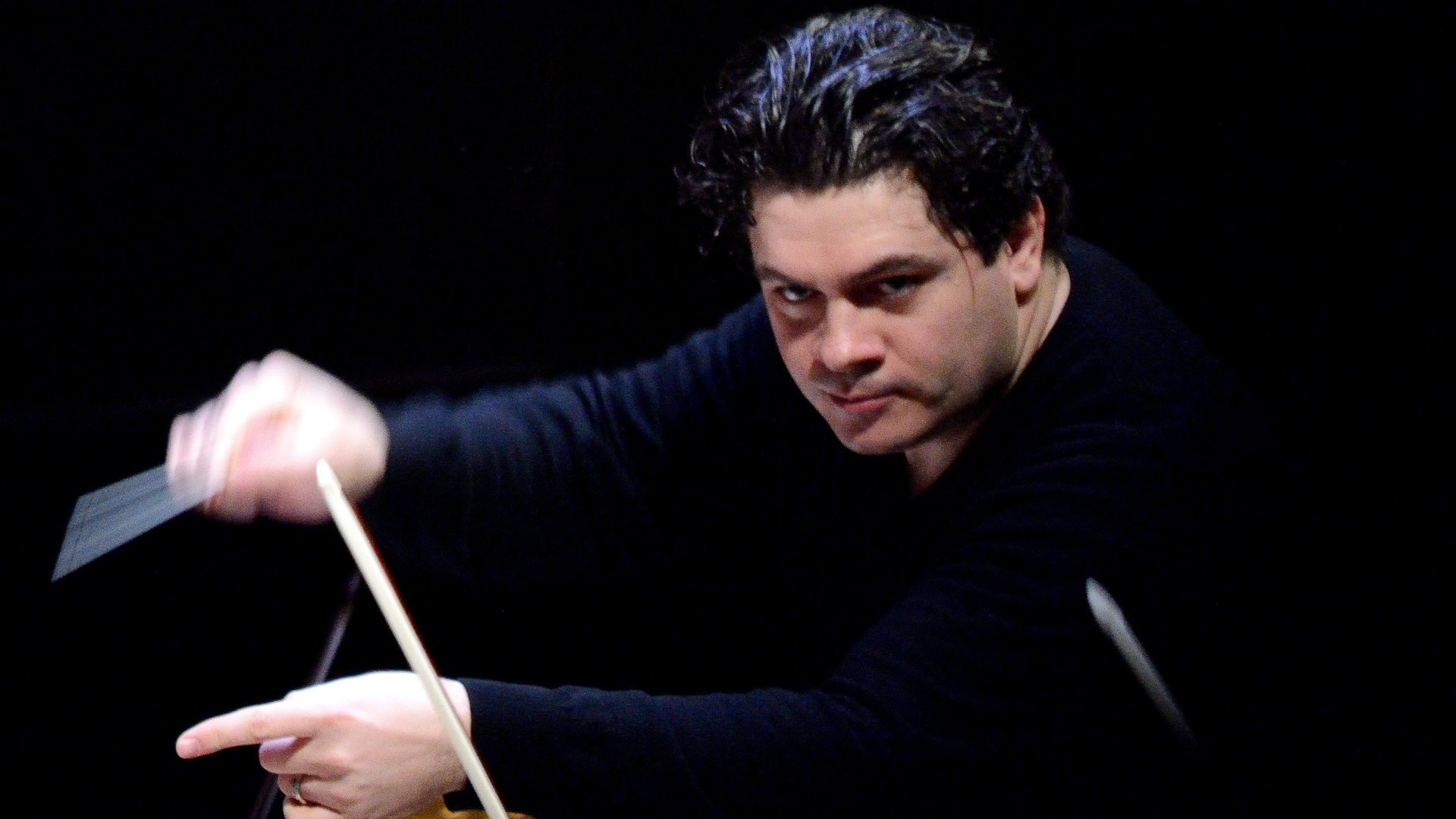
Main Photo: Cristian Mǎcelaru (©Jakob Helmer Mørk) All photos courtesy Primo Artists
Correction: An earlier version of this story spelled Cristian’s first name as “Christian.” Cultural Attaché regrets the error.