





At the end of September, the Los Angeles Philharmonic launched a new online series of performances called Sound/Stage. The concerts found members of the Phil performing with guest artists and soloists on the stage of the Hollywood Bowl. The series was such a success that they have created a second season. The first concert in Sound/Stage Season 2 begins on March 5th.
With the balance of this season already cancelled and the Hollywood Bowl season a big question mark, this series offers a great opportunity to see one of the world’s finest orchestras in action.
If you haven’t seen Season 1, those performances will be available through late this year. Sound/Stage Season 2 performances will be available for one year from their debut.
Here is the schedule for Sound/Stage Season 2:
March 5th: Camille Saint-Saëns’ The Carnival of the Animals
You might be familiar with this work as one of the earliest pieces of classical music you heard. With its musical evocations of lions, donkeys, elephants, cuckoos and swans, The Carnival of the Animals is often used as a way of introducing the sounds of an orchestra to young listeners.
So it is completely appropriate that Music Director Gustavo Dudamel will be accompanied by his son, Martín, as co-host.
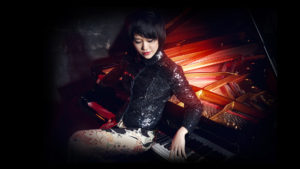
This arrangement is for two pianos and orchestra. The soloists in this performance are Yuja Wang and David Fung. Dudamel will be leading the LA Philharmonic in this performance.
Narration will be provided by El Sistema students Arão (12) from the The Recanto Youth Orchestra in Santa Maria, Brazil; Afra (14), Youth Orchestra of Los Angeles (YOLA) at EXPO Center and Maya (8) from The Sydney Russell School in London, England. Traditionally the narration is the text written by Ogden Nash.
This performance will also incorporate animation.
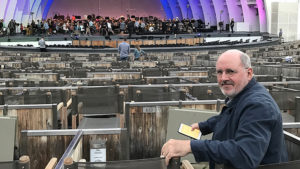
March 19th: A Pan-American Musical Feast
Dudamel and the LA Phil welcome José Andrés as his special guest for this program. The two will been seen in a conversation. Andrés has been donation a lot of time and resources to helping feed people in the aftermath of natural disasters and also for those caught up in other crises. Last year they activated in the Albania; Bahamas; California; Central America; Haiti; Mozambique; Nebraska; Puerto Rico; South Dakota; Venezuela; Washington, D.C. and more.
For this concert the orchestra will be performing:
Fanfarria by Tania León
This is a perfect pairing of material. The Cuban-born León wrote Fanfarria after receiving a commission from the Library of Congress to write a piece in celebration of the centennial of composer Aaron Copland in 2000. (See what they are doing there with this program?)
Sinfonia Burocratica ed’Amazzonica: “Bananera” by Paul Desenne
Written and premiered in 2004, Desenne’s Sinfonia Burocratica ed’Amazzonica is a five moment chamber symphony. Bananera is the fourth movement. Desenne uses cumbia as the foundation for this movement.
Appalachian Spring Suite (chamber orchestra version) by Aaron Copland
Dancer/choreographer Martha Graham commissioned this work from Copland in 1942 for a ballet. Two years later Appalachian Spring had its world premiere. One year later Copland was commissioned again to create a symphony version.
The LA Phil will be performing the smaller version as it was first performed which calls for 13 instruments.
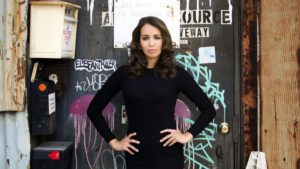
April 4th: Easter Sunrise at the Hollywood Bowl
The tradition of having an Easter sunrise service at the Hollywood Bowl dates back to 1921. For the 100th Anniversary of that tradition, Dudamel and the Hollywood Bowl welcome gospel singers Mary, Mary and soprano Nadine Sierra to the stage for this concert.
On the program are:
Air pour les trompettes by Johann Sebastian Bach
This work was originally written for harpsichord. It can be performed with as few as two trumpets (with an organ) or for a full eleven brass musicians. It is very short and runs less than two minutes. This is the Michael Allen arrangement.
Exsultate, jubilate by Wolfgang Amadeus Mozart
Mozart composed the piece of music for soprano and orchestra. It had its world premiere in Milan in 1773.
There are four parts to this work whose name translates to Exult, rejoice. Originally written for a castrato, it is far more commonly performed by a soprano.
If you’ve been following the Metropolitan Opera’s weekly streaming concerts, you would have seen Sierra in productions of Mozart’s Idomeneo. She also appeared in San Francisco Opera’s production of Romeo and Juliet by Charles Gounod that was available in January.
All Hail the Power of Jesus’ Name – a traditional hymn arranged by Carlos Simon
Edward Perronet is the composer of this hymn which he wrote in 1780.
Sisters Erica and Tina Atkins are the duo who make up Mary Mary. They have had their recordings on the Billboard charts and their songs have been recorded by a multitude of artists.
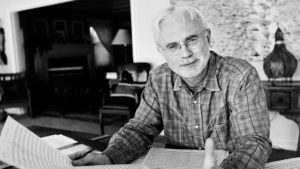
April 16th: Grand Pianola Music
John Adams’ Grand Pianola Music will be performed in this concert. Joining Dudamel and the LA Phil are sopranos Elissa Johnston and Holly Sedillos and mezzo-soprano Kristen Toedtman.
Adams composed Grand Pianola Music in 1981. The work had its world premiere in 1982 by the San Francisco Symphony with the composer leading the performance. The score calls for three amplified female voices and two pianos.
When Mark Swed of the Los Angeles Times reviewed a performance by the LA Philharmonic of this work in January, 2019, he wrote, “…what had seemed regressive in 1982, Adams’ supposed cheapening of pure minimalism with show-off, almost Liberace-esque effects doesn’t sound so regressive anymore.
“In an expansive performance, Adams brought out a range of colors from the L.A. Phil winds. His soloists focused on rhythmic intricacies. Climaxes were operatic. Once booed, Grand Pianola Music is now wildly cheered. With perspective, the regressive has become progressive. You can hear in its theatricality the birth of an opera composer.”
Adams will participate in a conversation with Dudamel during the program. The performance will be accompanied by visuals created by Deborah O’Grady.
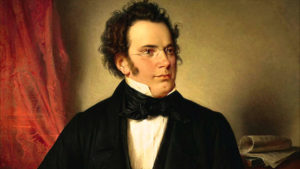
April 30th: Unfinished
Classical music fans know that the word unfinished is closely associated with composer Franz Schubert and his 8th Symphony. Indeed, that is the work being performed in this concert.
This symphony did not remain unfinished because the composer died. In fact, Schubert lived another six years after the two complete movements were finished in 1822. There’s speculation as to why he didn’t finish this work, but no definitive reason is known.
There have been several attempts to finish the symphony based on piano scores and what little was orchestrated for additional movements. But this symphony is traditionally performed with just the two completed movements.
Dudamel leads the LA Phil in this concert.
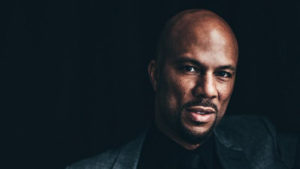
June 18th: Dudamel and Common
In August of 2018, I attended a concert at the Hollywood Bowl with Queen Latifah and Common. Common opened and once he was finished I knew the Queen would have a mighty big challenge in front of her. Common was so powerful and so dynamic that she risked being seen as the runner-up in that evening’s concert. That didn’t happen, but I still walked away completely blown away by Common’s performance.
The program for this concert has not been announced. But it will undoubtedly be good.
Oh and if you don’t know Common, he’s an Oscar, Grammy and Emmy award-winning performer, composer and writer. He joined the LA Phil for their recent Icons and Inspirations which you can still watch here.
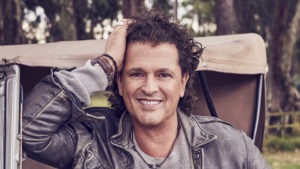
June 25th: Dudamel and Carlos Vives
Composer Carlos Vives will be featured in both conversation and performance in this concert. With Dudamel leading the LA Phil, Vives will perform an acoustic set.
Vives is best known as one of Colomobia’s finest sons. With two Grammy Awards and 11 Latin Grammys, his music has been entertaining audiences and selling records for over 30 years.
There is no announced set list for this show.
You might have noticed there’s a big gap between episodes in Sound/Stage Season 2. There won’t be official episodes of Sound/Stage during that time, but there will be a series of five chamber music performances. Four of them were filmed at The Ford and one at Walt Disney Concert Hall in Los Angeles.
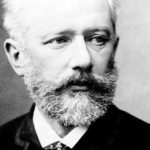
May 7th: Chamber Music: Tchaikovsky – Filmed at The Ford
Pyotr Illyich Tchaikovsky’s Souvenir de Florence is performed in this program. The composer wrote the work for two violins, two violas and two cellos in 1890. He revised the work in 1891-1892 before it had its world premiere in 1892.
There are four movements in Souvenir de Florence and the piece runs a little more than half an hour.
Performing in this concert are violinist Nathan Cole and Gabriela Peña-Kim; violists Ingrid Hutman and Ben Ullery and cellists Jason Lippmann and Gloria Lum.
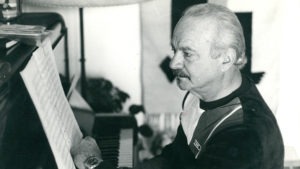
May 14th: Chamber Music: Piazzolla – Filmed at The Ford
Argentinian composer Astor Piazzolla is synonymous with the tango. The work being performed in this concert is his Tango Ballet for String Quartet. It’s a brief piece, running just 14 minutes or so, but is an immensely popular one.
The musicians for this concert are violinists Sydney Adedamola and Bing Wang, violist Dana Lawson and cellist Jason Lippmann.
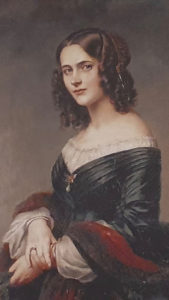
May 28th: Chamber Music: Mendelssohn – Filmed at Walt Disney Concert Hall
Fanny Mendelssohn is the older sister of her better-known composer brother, Felix. She never gained the same level of success or popularity as Felix did, despite his attempts to bring her work to a wider audience and to have her compositions published in the last year of her life.
She is primarily known for her songs (lieder) than her orchestral compositions. She, herself, felt that composing lieder was more suited to her abilities.
The String Quartet in E-flat was composed in 1834. It was only performed once, privately. Her brother was harsh in his criticism of the work. She never composed another quartet, but this work remains one of the few surviving quartets written by a woman.
This performance of selections from the quartet will feature Martin Chalifour and Lyndon Johnston Taylor on violin; Teng Li on viola and Robert DeMaine on cello.
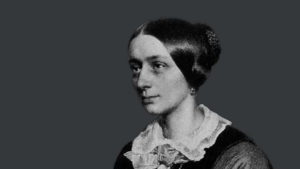
May 28th: Chamber Music: Schumann – Filmed at The Ford
Composer Clara Schumann’s Piano Trio in G minor is being performed in this companion piece to the Mendelssohn work just above. Schumann was married to composer Robert Schumann and she composed this, her only trio, in 1846.
It was a tumultuous time for the couple. During that year her husband was battling serious health issues. She also suffered a miscarriage. A year after this work’s premiere her husband published his first piano trio.
Performing in this concert are Joanne Pearce Martin on piano; Rebecca Reale on violin and Dahae Kim on cello.
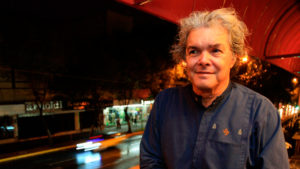
June 4th: Chamber Music: Márquez – Filmed at The Ford
Mexican composer Arturo Márquez is a prolific 20th and 21st century composer. The work being performed in this concert dates back to 1993: Homenaje a Gismonti.
The work is dedicated to Cuarteto Latinoamericano, a classical music ensemble founded in Mexico in 1982. They included Homenaje a Gismonti on their 1998 album, Four, For Tango.
In this performance Sydney Adedamola and Bing Wang play violin; Dana Lawson on viola and Jason Lippmann on cello.
As a reminder, all Sound/Stage Season 2 concerts will remain available online, for free, for one year from their debut.
Photo: Gustavo Dudamel and the Los Angeles Philharmonic on the stage of the Hollywood Bowl (Courtesy LA Philharmonic)