


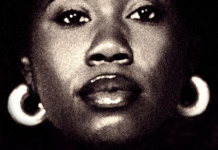






Composer Angélica Negrón has built an extraordinary career expanding the language of contemporary music while grounding it in human experience. Born and raised in Puerto Rico and now based in New York, Negrón’s work blends acoustic and electronic worlds, found sounds and field recordings, and deep emotional clarity.
Her newest composition, for everything you keep losing, is an ambitious and deeply personal meditation on silence, extinction, and light.
The work, a requiem, has its world premiere with the Dallas Symphony Orchestra on October 16th – October 18th. Fabio Luisi conducts.
On November 11 the Los Angeles Philharmonic Green Umbrella series presents Recovecos, a concert series curated by Negrón. The program includes three world premieres by other composers and Negrón’s Arquitecta.
The Los Angeles Philharmonic will give the world premiere of her cello concerto written for Yo-Yo Ma and part of Gustavo Dudamel’s final season with the LA Phil. Those concerts take place May 28th and May 30th.
In this conversation , Negrón discusses how her creative voice has evolved, how silence becomes sound, the intersections of identity and ecology, and why curiosity remains her most important tool.
What follows are excerpts from our conversation that have been edited for length and clarity. To see the full interview, please go to Cultural Attaché’s YouTube channel.
Q: You did an interview with Music USA in 2009 where you said, “In the end, the music that I like to write is the music I want to listen to.” How has the music you like to listen to evolved in the 15 years since that interview, and how has that influenced what you want to write?
Wow, I’m glad that that still holds up and resonates true. At the core, the music and the art that I’m drawn to—besides aesthetics—has to do with a shared sensibility of humanity and authenticity. I’m always drawn to that, and to experimentation that doesn’t necessarily mean experimental sounds but a curiosity for experimenting. I’m drawn to artists that are endlessly curious and unapologetically themselves. I’ve definitely grown as a composer and have had the fortune to work with many new collaborators—people I admired then and never even dreamt I would meet or write for. My career has brought me to that. So I think it’s similar to what I was listening to then, but ever more expansive. It just keeps growing.
As new opportunities present themselves, the number of people who want to collaborate with you must just keep growing.
Yeah, and I feel very lucky that I get to work with people I never could have dreamed of. Even more lucky to meet people making really interesting work that my work has brought me to. Some of them have become long-term collaborators, not just one-offs. Those sustained relationships are really important to me.
Let’s talk about your requiem for everything you keep losing. A Requiem is such an ambitious form, and there are long shadows cast by Mozart, Verdi, Britten, Brahms, Ligeti, Pärt. How do you get past that intimidation?

Such a great question. I panic about it for a little bit and pretend it’s not affecting me—but it can be paralyzing. The same thing happened when I wrote my first symphony. There’s that historical baggage that comes with these big forms. But then there’s a point when I realize that I’m making it, so it can be anything I want it to be. I don’t have to pay reverence or break tradition—it can be both.
That’s liberating. I can make it my own, and if I’m invited to write these works, it’s precisely because of my own unique perspective. I trust that all the things I love and respect from the people who came before me are infiltrating the work in ways that are authentic to me.
Of course, you come from a very different culture and background than most composers in that lineage.
Exactly. And I talk a lot about how people that look like me and come from where I come from are underrepresented in classical music. I’m hungry for those voices because I want to hear their perspective. I’d be incredibly bored by a requiem from a Caribbean composer trying to sound like Verdi. It’s not that my requiem has to have maracas, but it needs to reflect a sensibility that only I can have. That’s what’s going to keep classical music alive—people seeing themselves reflected in it.
And for people who don’t know, you’re from a fabulous island called Puerto Rico.
Yeah, a very special tiny island in the Caribbean that has, besides beautiful sights and delicious food, an incredible amount of talent—and, I’d like to think, really nice people.
When you began writing for everything you keep losing, what challenges or goals did you set for yourself?
I knew I wanted to write something about loss—because that’s what a requiem is—but I didn’t want it to be heavy or sad. One big challenge was to focus on light. The piece looks toward light without ignoring loss. It’s very much about the climate crisis and species extinction, about how our natural soundscapes have changed. I wanted it to feel contemporary and resonant with those issues while still being specific. Naturally, that’s connected to Puerto Rico—loss of sounds due to habitat loss, but also loss of language and community through disaster capitalism and displacement after hurricanes like Maria. So I was thinking of loss in an expansive way—something resonant with people everywhere but still rooted in my own perspective and the land I care about.
The last line of the requiem’s text is buscar el silencio—search the silence. What is the role of silence within your music?
I think a lot about silence. This piece is about silence, even though it’s filled with sound. It’s inspired by sounds that are no longer there—our environment’s silences. It’s also about the human need to fill those silences with meaning, empathy, action. In one movement, Agnus Dei, I use the sound of depleted coral reefs. When I was writing it, it felt awkward and empty, but it was important to sit in that silence. These reefs used to be so active—a whole underwater symphony—and now they’re so quiet. It’s important to sit in that discomfort. I follow John Cage’s philosophy that there’s never truly silence—there’s always something to listen for. In this piece, the silence is almost deafening. It forces us to listen to the absence we’re responsible for.
When you’re in an audience during a premiere, can you sense when they’re comfortable or uncomfortable with silence?
At premieres, I’m often too nervous—grateful, stressed, judging myself—to really be present that way. But in repeated performances, I can. I’m lucky this piece is being performed three times—that’s a luxury for composers. Even if I can’t process it in the moment, I can reflect on it later. In live music, you really do feel that shared sensibility, whether or not it’s resonating with people.
I’ve seen conductor Gustavo Dudamel hold a baton in the air long after a quiet ending, just to make people sit in the moment.
Yeah—that’s so important and powerful. Taking it in. The Meyerson Hall and Walt Disney Concert Hall both have incredible acoustics and resonance. My earlier piece for the LA Phil plays with that resonance and echo—an attack and a note that fills the space as long as possible. And that last line of the requiem—buscar el silencio—is one of my favorites.

I used four poets from Puerto Rico, and that line is from Amanda Hernández, whom I’ve worked with before. The text is in English translations, but I struggled with language. My native language is Spanish, and most U.S. ensembles prefer English. In the last movement, In Paradísum, paradise became returning home. There’s a line that says, “I will gather my things, run toward the mountain, forget how to speak English.
So I thought—what if after the chorus sings that, they actually forget? The last lines are in Spanish: buscar el silencio. It’s me navigating my place in classical music and as a Puerto Rican artist writing mostly in the U.S.
The change of language obviously alters the musical rhythm.
Yes—and Spanish has such cadence and weight. Language is another kind of music, with its own rhythm and meaning. I think a lot about that, especially being away from Puerto Rico for almost 20 years. Sometimes I think in Spanglish. I used to feel ashamed—my English is not perfect, or my Spanish slipping—but growing older has meant embracing it. That mix is part of who I am and of Puerto Rican identity, which is complex and fluid.
While I was in Puerto Rico, I fell in love with the sound of the coquí frogs. They inspired this requiem.
The coquí is one of my favorite sounds too. It’s one of those you take for granted until you leave the island. When I moved, the silence at night was deafening. The coquí is a symbol of national identity and resilience. It doesn’t survive outside Puerto Rico—it’s used as a metaphor for Puerto Ricans, this constant pull to return home. In the Kyrie movement, I use the sounds of Afro-Caribbean bomba—music of resistance—and the coquí. Some species are gone because of habitat loss. So for me, it connects resistance, identity, and environmental loss.
In your program notes, you write that the piece asks how music and technology can help us reconnect with what’s been lost. What’s your view of technology’s role in our future at a time when we are hearing warning sounds about the possible future dangers of this technology?
I feel all those worries about technology deeply. At the same time, I think multiple things can coexist. Technology is a huge part of contemporary reality, but it also helps us reconnect—with others and with nature. For example, I had access to field recordings from biologist David Haskell and marine ecologist Elliot Ma, who uses hydrophones to capture underwater sound. Through those, we can actually hear sonic loss. Technology lets us realize what’s happening. I also make music with plants, using technology to awaken their inner sounds. For me, it’s another entry point to understanding and empathy—especially in a world where we’re overwhelmed by information and distraction. When technology is in human hands—scientists, artists, writers—it can unlock empathy and awareness.
It also lets us explore things outside our daily structure.
Exactly. Accessibility is huge. During the pandemic, so many family and friends could see things I was doing. I don’t thank the pandemic, but it made us aware of other ways to make art accessible to more people.
Moving on to other projects…I love the Green Umbrella series that the LA Philharmonic does. What “hidden corners” did you want to explore through your program Recovecos?
That program focuses on Caribbean and Latin American composers, most of whom are part of a diaspora. Their stories are often reduced to nostalgia or longing for home, which is valid but not the whole picture. There are many other recovecos—hidden corners—beyond nostalgia: labor, catharsis, joy, healing, complexity. Many of us come from places with very complex political structures and histories. Going home isn’t just eating mofongo—it’s facing difficult realities, or realizing the place you loved no longer exists because locals have been displaced. I wanted to present a more nuanced view of belonging—how multiple truths can coexist.
And on top of that you’re writing a cello concerto for Yo-Yo Ma and the Los Angeles Philharmonic.
Yes—very much writing! It’s not until May, but tickets are already sold out. My family’s traveling for it and I’m thinking, the piece isn’t even done yet!
Yo-Yo Ma is quoted as having said, “Culture is able to look at the macro universe and the micro universe and bring it back to a size we can see and analyze.” What do you see in both, and how does that find its way into your work?
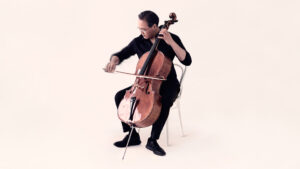
I love that. You have to share that quote with me! Two days ago, I finally landed on a title for the concerto that connects exactly to that. Connected to the requiem and to Yo-Yo’s work, he has such commitment to equity and access. These big issues can feel overwhelming, but he brings openness and specificity that connect with people and make them want to take action.
He told me he didn’t want another cello concerto that’s just “look what I can do.” He wanted something about what he can learn from his community—the orchestra. That’s such a beautiful metaphor. A concerto is usually about the individual showing off. But he wants it to be about learning from the collective. That balance between the detailed and the vast feels right. When I talk about local things in Puerto Rico and he talks about global climate work, all those gaps between the micro and macro feel possible.
The pressure and the magnitude of the situation sometimes feels a little impossible. This is very much in the spirit of Yo-Yo, I think it’s always remembering how lucky I am to do this for a living—and to have fun.
To watch the full interview with Angélica Negrón, please go HERE.
Main Photo: Angélica Negrón (Photo by Quique Cabanillas/Courtesy Angélica Negrón)