


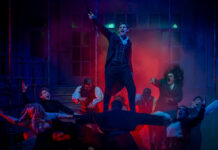
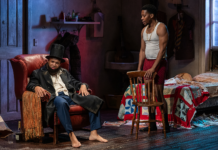




When Stephen Sondheim died in November 2021, the loss reverberated through Broadway houses, cabaret rooms, and living rooms where cast albums had long served as sacred text. But at 54 Below in New York City, where Sondheim Unplugged had become a ritual gathering for devotees, the grief was immediate, communal, and raw.
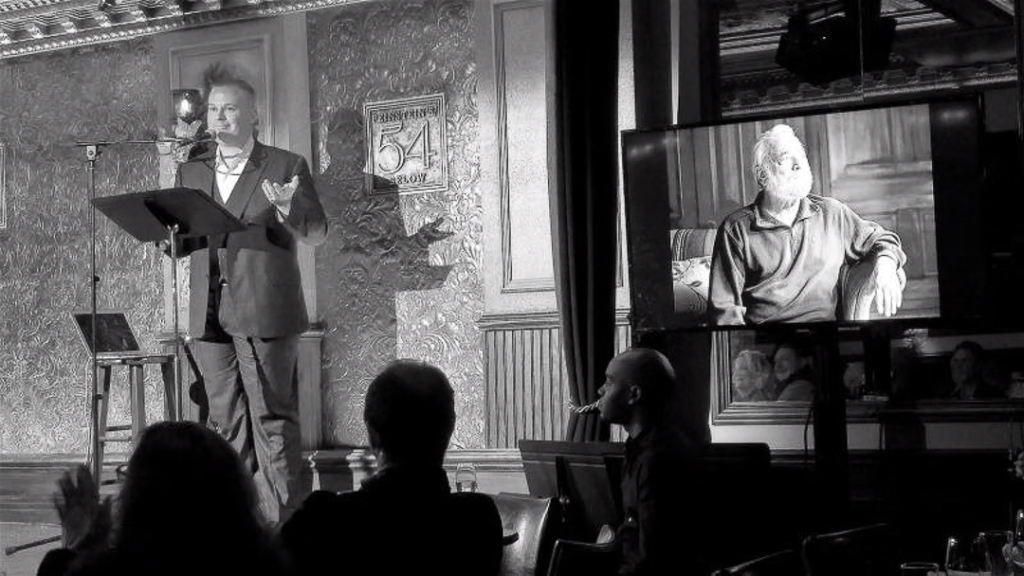
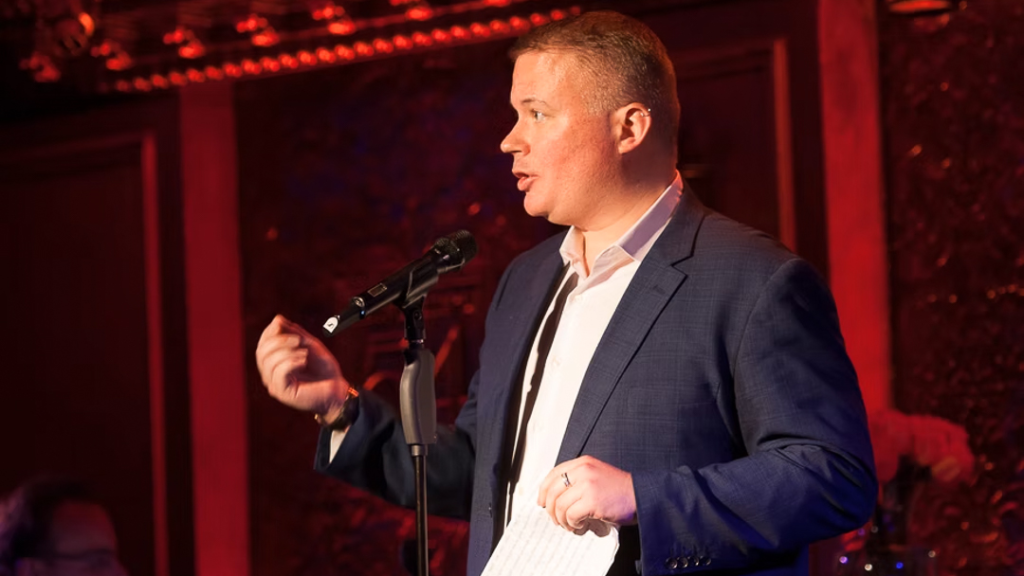
For fifteen years, Phil Geoffrey Bond has shepherded Sondheim Unplugged from intimate downtown experiment to international celebration—150 performances across continents, three Grammy-nominated recordings, and a devoted audience that can clock a misplaced lyric faster than a conductor can raise a baton. This year, the show takes its final bow.
This Sunday, February 22nd is the first of the final four concerts. You can see the show in person at 54 Below and you can stream it. The last concerts take place on April 26th and two concerts on June 28th at 7:00 PM and 9:30 PM.
Bond insisted the timing is right when we spoke on November 12th of last year.
Below is our conversation, edited only for length.
“It felt like the right time.”
Q: You released news recently that you’re breaking the hearts of Sondheim fans, that after a hundred and fifty shows you will be calling it quits on this program.
Yep, a hundred and fifty performances over fifteen years in several different continents and states. And yeah, it it felt like the right time to step off. We’ve been doing this a really long time. And I was I came across a clip, right before we made the decision, of Carol Burnett talking about the end of her show. And she said, “Well, I just decided it was best to leave now before we were asked to leave.” And, you know, we’re doing really well right now and we’re we’re packing them in and that’s a really good feeling. And I don’t want to get to the point where we’re not anymore, you know. So I it just feels like the right time after fifteen years to step down.
What Makes a Sondheim Song Work?
After all these shows that you’ve done and the recordings, what makes for a great performance of a Sondheim song?
Intelligence. You know, intelligence over anything else. I mean, he’s laid it all out for you in the music. You can just read it, interpret it, put yourself into it, of course, but he has laid out every contextual clue you need in the music. And if you get that you’re gonna be just fine.
Universality Beyond Context
What are the challenges in making sure that a singer can bring that subtext outside the context of the show?
Oh, the songs are very universal. It is very interesting because Send in the Clowns in [A Little Night Music] works perfectly in that spot in the show, for example. But everyone can relate, everyone over thirty can relate to Send in the Clowns because there’s a universality to it. And that’s part of the brilliance of his music. They’re very specific, yet they’re very flexible.
“Sondheim’s music ages with you.”
How has your relationship to Sondheim songs evolved over the fifteen years of Sondheim Unplugged?
Sondheim’s music ages with you. I’s like layers of an onion. He’s written out so many clues for you in the music. The older you get, the more your heart gets broken, the more you realize about life, the more you know, you have triumphs, the more you have failures, the deeper the music gets. A song like Send in the Clowns means something very different to me now than it did 15 years ago. And that’s true of probably all of his music.
It’s like Into the Woods, where it just gets more layered and more layered and more layered and more layered as the show progresses. That’s why I love that Into the Woods Broadway show logo, because the plants start on the “I” really small and then they get bigger and bigger and bigger. By the time gets the “S” [in Woods] it’s this enormous forest because the the story has just evolved and grown so much.
Sunday and the Passage of Time
Have you had experiences revisiting shows where the emotional resonance is that much greater for you now?
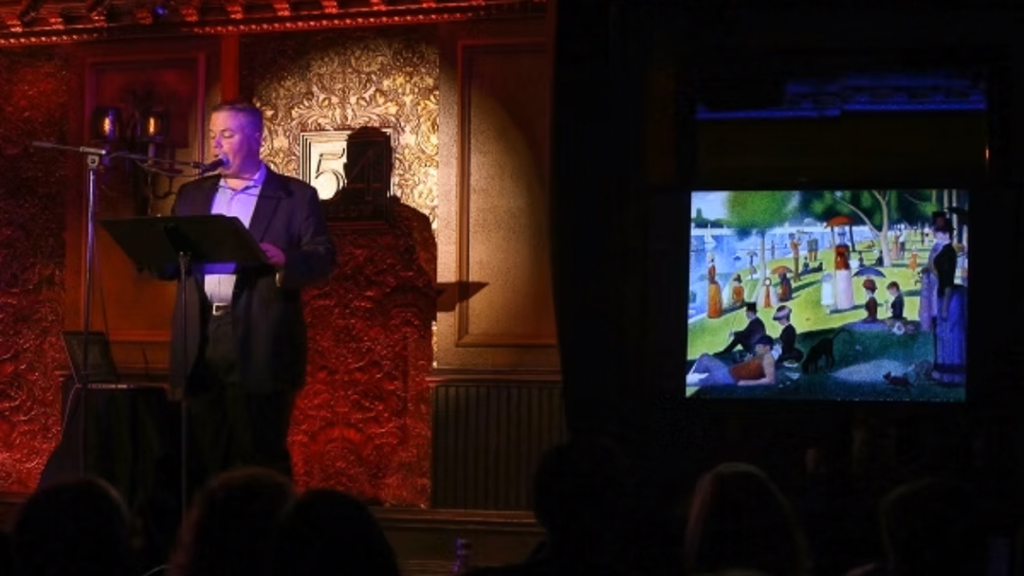
Sunday in the Park with George means so much to me. Wasn’t the Menier Chocolate Factory production the one that transferred to Broadway? I saw it twice, that production, and I absolutely loved it. I mean it was full of bells and whistles, but it was somehow strangely appropriate, particularly in the second act. Sunday I also saw on PBS when I was fifteen or sixteen. And like so many people, so many Sondheim fans, it completely changed my life and and I’d never seen anything on a stage like that before. As an artist, as a creative person, as someone who creates things, as someone who’s fifty now and looking back at what will be some kind of tiny legacy, of course that show hits me differently now than it did then. And it will probably hit me differently if I’m lucky enough to see it in another twenty or thirty years.
Never Let Down
Were there any shows that grew on you over time that you didn’t originally respond to?
No, I’ve never been unimpressed with anything of his. I can’t think of a single thing that that I didn’t think, wow, that’s really interesting, unique; I’ve never seen anything like that on a stage before. I’ve been disappointed a lot in my life, but never by Stephen Sondheim.
Assassins and Timing
To paraphrase Frank Rich, you’ve never felt your heart broken by one of his shows?
No, not even with Merrily [We Roll Along]. I loved Merrily from the first time I heard it. And it was many years before I even saw a production of Merrily. And I thought it was fascinating. I still do. I think maybe the world just wasn’t ready for it when it first came out. Maybe Frank Rich wasn’t ready for it. He said the quote “To be a Stephen Sondheim fan is to have one’s heart broken at regular intervals.” It’s a really famous Frank Rich quote. I loved Assassins the first time I heard it. I thought it was brilliant. So no, I’ve never been let down by by Steve.
The Night Everything Changed
Take me back to the first show after Sondheim’s passing.
Steve died on a Thursday. We had a show that Sunday. I had sent the first volume of Sondheim Unplugged recordings to Steve. And I got home that Friday with my mail and there was a letter from him. I opened it up and he was thanking me for the cd and how much he looked forward to listening to it. He was looking forward to volumes two and three. Ten minutes later, the news broke that he had died, and I was I was still holding the letter in my hand. I knew we we had to do a show that Sunday. So we we restructured the whole show and we made it sort of a tribute to Steve. [Music director] Joe Goodrich just sat down at that piano and he struck into the chords of Sunday. It turned out to be a great night that everyone just needed at that point in time.
Was it cathartic?
Terribly cathartic. People were crying and I was crying. It was like a good Stephen Sondheim show. By the time you reach the end of it, it turned into this great big celebration. because I defy you to to hear some of that music from A Funny Thing Happened on the Way to the Forum and not laugh hilariously. He’s such a funny writer. It turned out to be a wonderful memorable evening and I’ll never forget that.
“Phil, I know all about it.”
You first met Sondheim at 54 Below.
The first time I met him, I said “It’s a pleasure to meet you and thank you for so much amazing music that’s changed my life. And by the way, I host a show here that I’ve been doing for a while now called Sondheim Unplugged. He cut me off and he said, “Phil, I know all about it.” I was like, holy shit. That was quite a moment.
Two Thousand Two Hundred and Fifty Songs
You’ve calculated that with fifteen songs per show across 150 performances—Sondheim Unplugged will have presented roughly 2,250 performances of Sondheim songs. That’s nearly ten times the composer’s own catalog. Do you have favorite performances or songs across those shows?
Oh so many, you know, and a lot of them stem from the special guests: Having Annie Golden sing from Assassins, having Jim Walton sing from Merrily, having Lane Bradbury, the original Dainty June, sing from Gypsy… having Donna McKechnie on the show. … every time Sarah Rice would sing Greenfinch and Linnet Bird, I would lose it with the rest of the audience. … When I look back on all of it, I think I remember Sarah the most.
The Final Season
What are your plans for the ultimate show?
It’s going to be a great night. It’s going to be two shows, one at seven and one at nine thirty. And this whole season we’re bringing back people who have been with the show the whole time. We’re bringing back the people who started with us. And you’re gonna see a lot of that and you’re gonna see a lot of special guests, particularly as we get closer to June.
What Comes Next?
Bond has already expanded beyond Sondheim with a Billy Joel project and Grammy recognition under the banner of The Broadway Ensemble. He’s eyeing future composers, future recordings, future risks. But for now?
I don’t have any big plans next. I really don’t. I’m going to to the Bahamas and I’m gonna do that for a while and then I’m gonna come back here and have Christmas. I’m also involved with two Broadway shows. I’m involved with the Chess and I’m involved with CATS: The Jellicle Ball. So that’ll be fun to watch as it as they evolve.
“The choice may have been mistaken, the choosing was not.”
Your favorite lyric from Sunday in the Park with George is also, fittingly, a credo for you, isn’t it?
I say it daily. I say that lyric daily. “The choice may have been mistaken, the choosing was not.” Every time I’ve left a job, every time I’ve left a relationship, every time I’ve made a major decision in my life, I say that to myself. “The choice may have been mistaken, the choosing was not.” And looking back, I’ve never regretted one major life decision that I’ve made. Minor things, yes, I’m full of regrets. But when it comes to the big things, no. I was absolutely right to do something, to make a move, to take a leap, to take a jump. And I always encourage other people to do that too.
After 150 shows, Phil Geoffrey Bond is choosing again. If history is any indication, the choosing will not be mistaken.
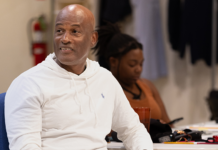
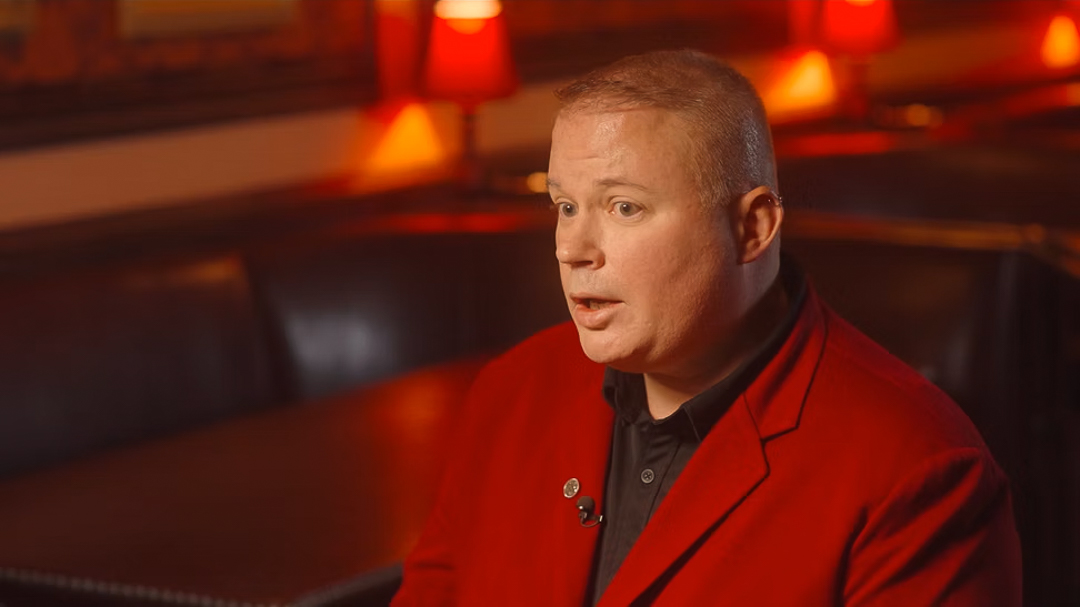
Main Photo: Phil Geoffrey Bond (Courtesy Phil Geoffrey Bond)