









Eva Marie Saint died yesterday at her home in Los Angeles at the age of 102. The news sent me back to a conversation I had with her in 2014.
At the time, Saint was preparing to host The Big Picture: Hitchcock! at the Hollywood Bowl, an evening celebrating the films of Alfred Hitchcock and the music that helped make them unforgettable. I interviewed her for Los Angeles Magazine, and the resulting story understandably focused largely on Hitchcock, North by Northwest and the concert.
But that wasn’t all we talked about.
Saint spoke about James Mason, Elia Kazan, the early days of her career, her marriage to director Jeffrey Hayden and the patience she believed had served her both personally and professionally. At some point during our conversation, she invited me to come to her home for coffee or a drink. I never took her up on the invitation. Twelve years later, learning of her death, I find myself wishing that I had.
What I do have is this conversation. Returning to it today, what strikes me most isn’t simply what Saint had to say about Hitchcock or the films that made her famous. It’s the way she talked about work, patience, love and the life she had made for herself.
This interview has been edited and condensed from our 2014 conversation.
Q: Why do Hitchcock’s movies continue to be celebrated today, particularly in a culture where everything moves faster than his movies ever did?
Culture has changed radically, but it’s interesting. In the fan mail I receive, so many start with, “I am a 21-year-old woman. I am a 22-year-old man. Don’t think that I’m reminiscing. I’m young and I’m interested in film and I like what I see now, but I never want to forget Hitch or Kazan.”
And I send the photo with an autograph and then some little note. The contact has to be solidified, the impulse to reach out to someone older.
In particular, what do you think is the lasting appeal of North by Northwest?
I think people like to be—we know they do—they like to be frightened or scared in a movie. I don’t see many of the new movies. They’re extraterrestrials. I’m not into that. I love life as it is lived. I don’t have to go outside into the solar system.
But there’s something about the fundamental of love and being scared by Hitch. It isn’t when, he said, that’s the scary part. It’s what leads up to the scary part.
When people think of a Hitchcock movie, it isn’t just the visual, it’s the sound. I hear the theme from Psycho every time I take a shower. I lock the door. Janet Leigh said she never took a shower again. She’d take baths. It scared her so.
You had a very positive experience working with Hitchcock.
It’s like, to me, if you have a dear friend and you respect the friend and enjoy the friend, and then someone comes and tries to tell you all the stuff about the friend, you don’t want to hear that. I don’t want to hear anything bad about the experience. I have my own experience.
That was my experience with him. It couldn’t have been nicer. It couldn’t have been more gracious. It was a wonderful experience.
He didn’t work the way Kazan did. He started with the look—the look of this sexy spy lady, what she wore. As he gave me all these external hints, I began to see the kind of lady she is.
Lee Strasberg said you are the violin and the director is the conductor, and you should do whatever the conductor wants.
You’ve been asked a lot about Cary Grant, but what was the experience of working with James Mason like? He sometimes gets lost in the conversation about North by Northwest.
He had a beautiful voice and he was so dear. I sound like Pollyanna, but it’s so true. I can’t say anything bad about any actor I’ve worked with. It’s so difficult a profession. We knew his family and we’d have dinner with Pamela.
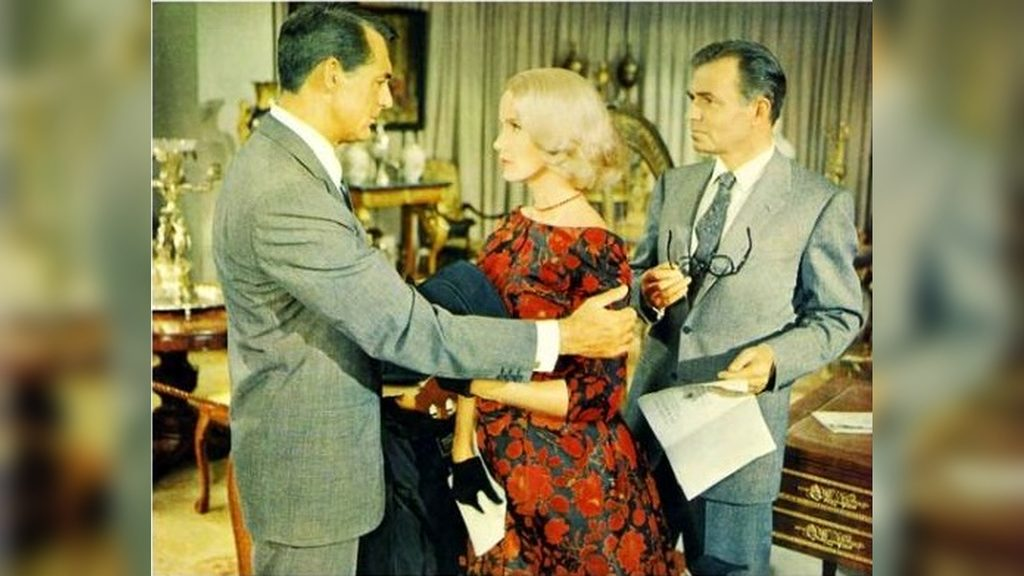
He was a wonderful and menacing villain. When I’m sitting there in the black dress with red roses and Cary Grant comes up toward him and sees us looking, James Mason just puts his finger on my shoulder and really presses in. I don’t remember that except on the take. It really helped. I was his and he was mine. Don’t fool around, Cary Grant, even though you’re Cary Grant.
Do you have a favorite Hitchcock film?
Oh, favorite one? I think I’ve been brainwashed into North by Northwest. I think I really did like Psycho. It was so scary. Going down the stairs in that house. It’s all so scary.
You won the Oscar for On the Waterfront [her first film]. With Hollywood remaking so many movies, could you imagine somebody remaking that film?
No. They tried to do a play on Broadway and it didn’t work. Marlon is such an important part of that theme and that movie. I think to put anyone else in there…
Your career didn’t happen overnight. What did patience mean to you when you were starting out?
I am very patient. I take pride in being patient with my husband, my children, my grandchildren. I was patient about my career. No one in our family had been in the business.
I really did feel that if I worked hard, if I were out there every day making the rounds, something good would happen. My first job on live TV was applauding. I called my parents and said, “I’m on television. Not really on, but you can hear me applauding.” And they called my apartment and said, “We heard you.” They were just such dear parents.
Next time I was on camera. My dress was $20, I got $10, so I wasn’t ahead. I started slowly. I loved being on set. By the time I got featured and starring roles, I felt so comfortable on that stage because I was patient. I knew I would be that leading lady someday. I didn’t think about that every day. I would just work and work and build a career.
What do you tell young actors who ask how you got started?
I have talked with young people out here in Hollywood. “How did I get started?” Are you studying? Get thee to a teacher. Study. Or get thee to New York. People are impatient. They want immediate gratification. Maybe people don’t have patience.
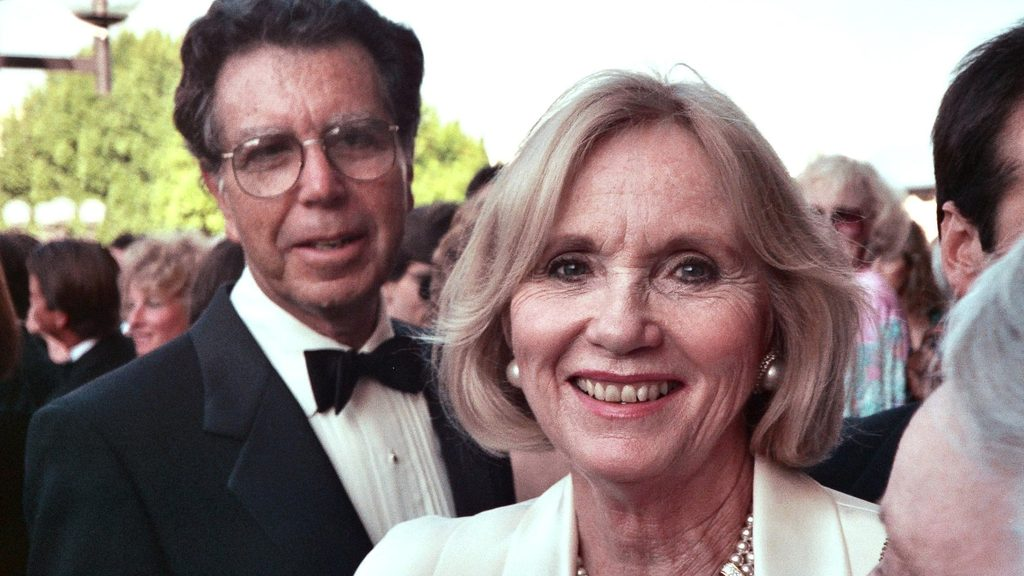
You and Jeffrey Hayden are approaching your 63rd wedding anniversary. What can people learn from the longevity of your relationship?
I’ve never thought about that. My husband is going off to work at the office. Maybe I should ask him. Honey, are you still here?
My husband said patience, humor and we’re all God’s children. I don’t know what that means.
But I understand the patience.
You once said that when you watched yourself in your old films, it was “almost another person up on the screen.” What do you think the young woman who made On the Waterfront would think of the woman you are today?
I think she’d be very proud. Because the career, which meant so much in the beginning, making the rounds in New York—she was very fortunate. But she met this wonderful man and they have this wonderful family, children and grandchildren, and she’s still with that wonderful man. That she was able to do it all. Have the career, the excitement, the fun, go to the Actors Studio.
I think the young girl would say she worked hard, she kept her heart open for love in her life and she’s had it.
And I think she’d be very happy for me because I’m very happy for me.
Main Photo: Eva Marie Saint, 1950s. (Public domain/Wikimedia Commons)