






Four years can seem like a long time. Particularly for an artist whose work isn’t being performed because of scheduling issues and then the pandemic. Composer Ted Hearne is one such artist. Though the Los Angeles Philharmonic commissioned Place, its performance this week comes two years after it was originally scheduled. Even that original date was two years after its first performance at the Brooklyn Academy of Music.
Place was a Pulitzer Prize-finalist in 2018. The committee called it, “A brave and powerful work, marked by effective vocal writing and multiple musical genres, that confronts issues of gentrification and displacement in Fort Greene, Brooklyn.” Hearne wrote the music and part of the libretto. He collaborated with poet Saul Williams who write the rest of the libretto.
The Los Angeles Philharmonic New Music Group is presenting Place on Tuesday evening at the Walt Disney Concert Hall. Hearne will be conducting the performance which is directed by Patricia McGregor. She was recently named the incoming Artistic Director at the New York Theater Workshop.
Last week I spoke via Zoom with Hearne about Place, how he’s reconciled his own ideas about the issues the work raises and how his composing allows him to understand himself better. What follows are excerpts from our conversation that have been edited for length and clarity.
You stated previously that you were confronted with your own feelings after hearing Spike Lee speak at the Pratt Institute about people and the relationship they have to their neighborhood. How did composing and writing Place impact your own perception of how you relate to your neighborhood? Has the time since the work debut altered your perceptions about that relationship, if it has?
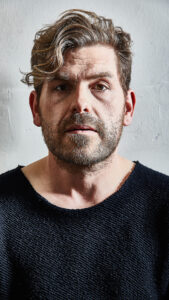
One thing that changed is that I started to see the divisions that I created in my own life and my own sense of identity and my own self and how maybe I’ve created a proxy for thinking about those divisions. What I mean by that is that through this process, I started really looking at texts about whiteness and white identity and white supremacy and it got very personal in a way that I think it hadn’t before this process. And that’s a big way that my thinking changed.
It was as blunt of an interrogation of the tenets of white supremacy and that systemic racism that were embedded in my own upbringing, in my own identity. That was totally not academic because all of my artistic work was right there front and center and that’s a big part of my heart and soul.
I think part of growing up in a place with so much systemic racism as a white person is often, at least in my house, in my generation, it is growing up with the idea that your perspective as a white person is like the neutral one. No one ever like told me, “Oh, that’s a better perspective” or that you’re better than anybody else explicitly. But also no one really told me that to be raised as a white person entailed kind of its own identity. So in a way being raised with this paucity of identity itself. I don’t think anyone should be raised that way. But this process was like a cartography process of mapping all the ways that white supremacy or racism was present just in all of my individual small interactions and the fundamental structures of family.
I’m happy to say that I think the conversation around all these issues has progressed a lot since when I started writing the piece. I’m not saying that any of this stuff was taught to me intentionally. But that’s, of course, the problem. This process really helps me connect all of these concepts which I’ve been wrestling with since basically coming of age in this culture so it makes sense.
Having come through this process how do you reconcile the dichotomy between the shining concert hall on the hill that is Walt Disney Concert Hall and the huge homeless community, mostly non-white, that are mere blocks away. Should that impact the way an audience experiences Place?
I hope it influences the way people see work like this. That dichotomy is all around us in this in this culture, right? In this society and this in this country, in the city. We’re living at a time of a large increase in the number of unhoused people in the city. And there’s a huge increase in aggressive, violent police action to remove unhoused people from the places that they’re dwelling.
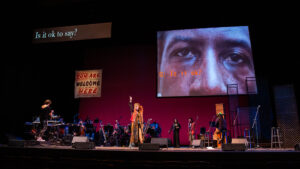
Part of the process in writing this piece has been to think about displacement and the connections of displacement and systemic racism. Wrestling with inequalities that have been built into the systemic fabric of these institutions. I know that there are good people within these institutions that are trying to root out these inequalities and trying to create really safe spaces for all sorts of different types of people. But it’s not easy.
Including, I would assume, safe spaces for artists who aren’t just white to be recognized in the performing arts world as well.
Especially American music. There are these incredible innovators who just were never included in institutional music or classical music as we now call it. And I think that the reason that they weren’t included is because they’re not white. Duke Ellington being the most obvious example of a composer who was creating music that is symphonic and who’s pushing boundaries in so many different directions; creating this unique American work. I’m not saying that that necessarily affected Duke Ellington’s reputation, but I do think that when we say classical music we should acknowledge that it’s based on this history of exclusion.
When we think about the language that we use to talk about why certain artists are innovative or important we often romanticize it and leave out all of these very blunt and important sociological contexts: who had access to certain streams of money and who is a white man. These are actually very important parts of it. When we take all this together, we can see how the genre and institution of classical music has been sculpted.
During the pandemic you did an at-home version of Place that was streamed online. Did that prompt any reconsideration of the work that you had already completed or any reflection on what to do next?
I don’t feel like the piece was done until we did the version in March 2020 where we were all sheltering in place. We had already made the album and the album was about to come out. We had all the tracks from all the instrumental performances, from all these brilliant instrumentalists that we recorded across the country to make the piece. But then these singers, who were prepared and all ready to do the whole show, were stuck at home as we all were. So we decided to make this at home version.
The people in the cast, the singers, they all live very differently and they were all affected differently. It was more traumatic to some than others. Something about that, plus the fact that this is a piece about place and displacement. Through people just capturing themselves at their microphone, but capturing the whole environment, we were able to get a really personal picture into the lives of all the singers. I think that was the last key to understanding the piece. It gave us something that we didn’t get when we were doing a large stage version. It made the piece really intimate and we use that in the remount of the piece that we’re doing now in 2022.
Saul Williams wrote in Said the Shotgun to the Head, “I have offered myself to the inkwell of the wordsmith that I might be shaped in terms of being.” Ted, what is offering yourself to the inkwell of composing allowing you to be?
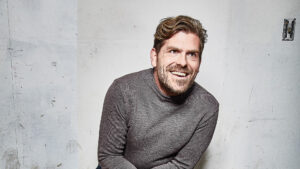
I’m pretty impulsive. I make like really large works sometimes that take years to make. I feel like often it’s driven by things that I feel in a moment or things that I feel [in] a cumulative succession of moments that feel powerful. I tend to use that as an engine. And then look later at the thing I made.
It’s the learning that comes from the rigorous process of composing. It’s through the rigor of holding yourself to really high standards and making sure that the piece understands and respects itself. Setting those strictures up as clearly and as well-constructed as possible. I think that through that discipline I can come to a much clearer understanding of who I am and who I am in the world. Without composing I don’t know if I would have any motivation to do that. If I didn’t have that process, I think that I would be drawn to living in a way that had no impact. Through composing I can continually examine my impact.
I am really interested in living in a way that helps other people be better. But I have to help myself be better. I know it’s very presumptuous to think you can help other people be better without really putting yourself through the paces continuously. So I think composing is just the whole apparatus for that.
Place is produced by Beth Morrison Projects. To see when Place might be performed in your area, I suggest you go to BMP’s website here.
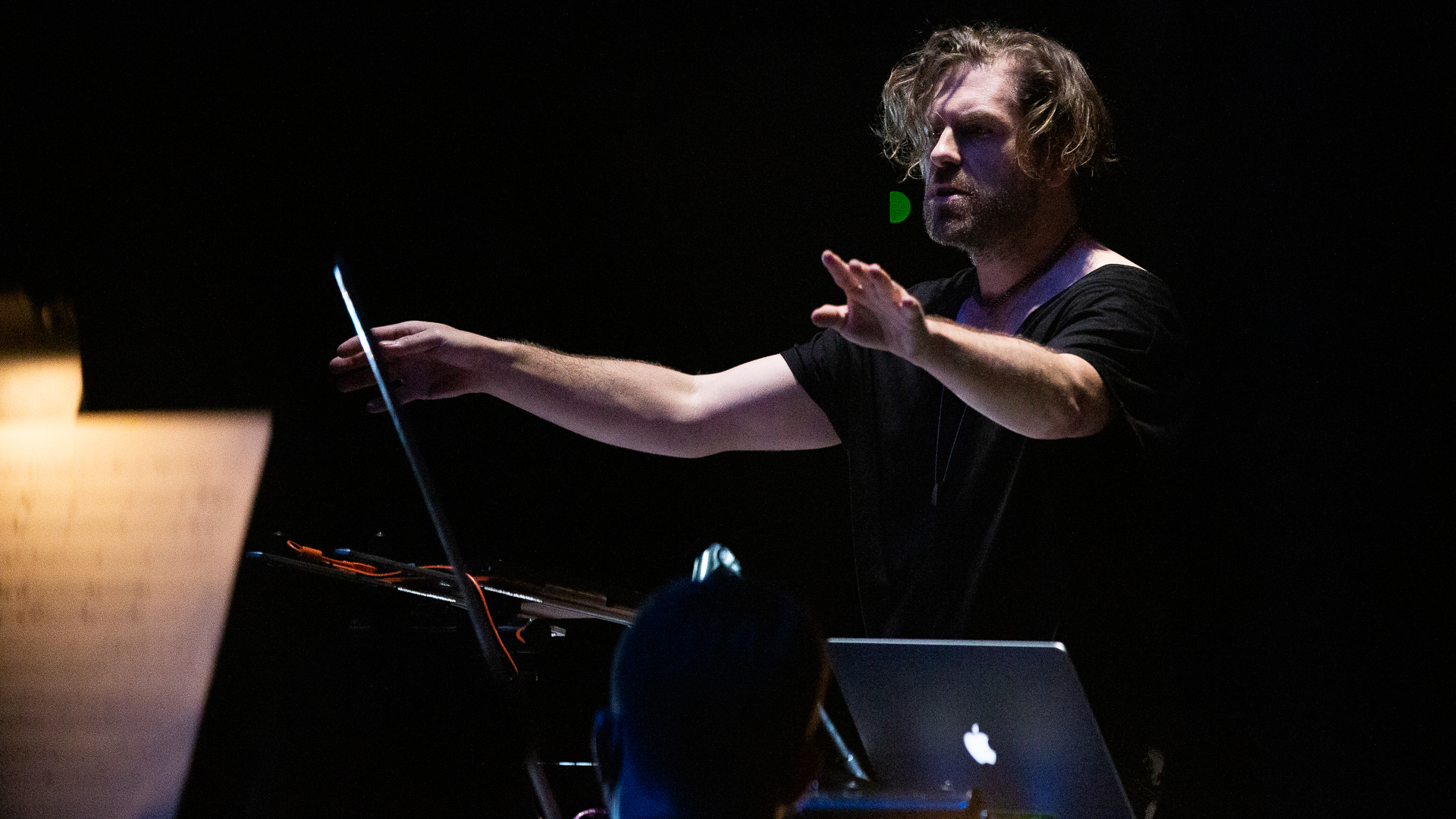
Main photo: Ted Hearne conducting Place (Photo courtesy Unison Media)