




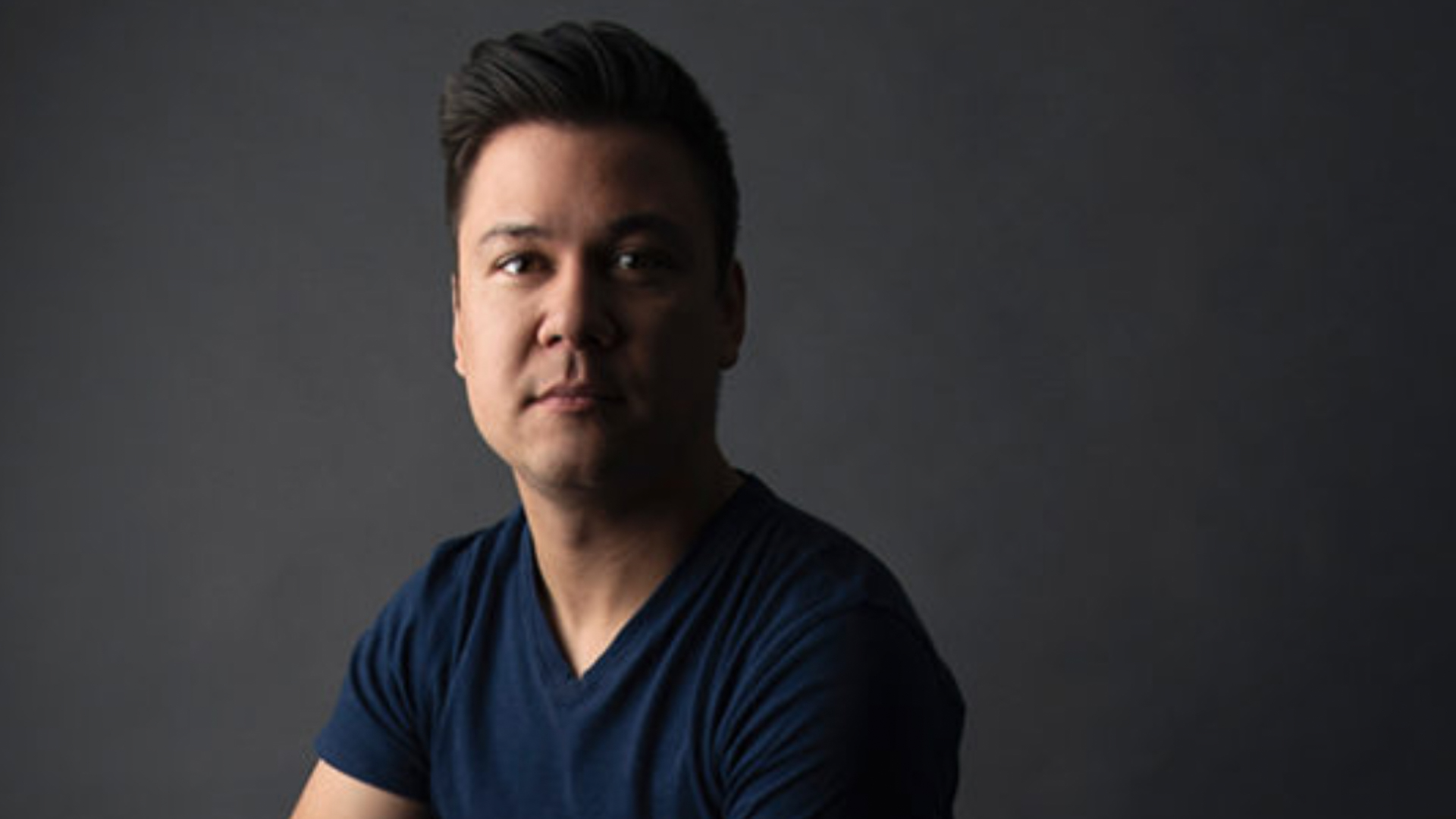

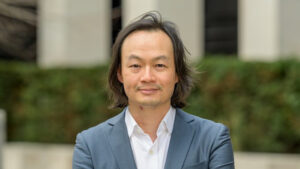
Chicago has long been a city where musical innovation thrives, from jazz and blues to contemporary classical music. Few events embody that spirit more than the Ear Taxi Festival, the Midwest’s largest gathering dedicated to living composers and new music. Launched in 2016, the festival has become a once-every-four-years celebration that brings together hundreds of artists across dozens of venues. This fall, Ear Taxi Festival 2025 takes over Chicago from October 3 to November 2, with a theme centered on The Composer’s Voice. And overseeing it is Executive Director Tim Corpus.
For Corpus, who also balances a career in composition and film scoring, the festival is about more than just premieres. It’s about risk-taking, collaboration, and creating a space for underrepresented voices in contemporary music.
In this wide-ranging conversation, Corpus discusses the challenges of staging a month-long festival, the shifting landscape for arts funding, the state of Chicago’s new music scene, and what it means to create a “festival of now.”
What follows are excerpts from our conversation that have been edited for length and clarity. To see the full interview with Corpus, please go to our YouTube channel.
Q: For people who may be new to it, what is Ear Taxi Festival?
Ear Taxi Festival is the largest contemporary classical, contemporary concert music festival in the Midwest. It’s happening throughout the month of October, from October 3 through November 2, all across the city of Chicago. We have something like 720 artists involved, 60-plus hours of programming from small performances, jam sessions, larger performances, operas, professional development. It really runs the gamut to include as many musicians from the cultural sector of concert music as possible.
There are already festivals for jazz musicians — Chicago has a great history with that. We wanted to provide something that’s really specific for the classical music community.
This isn’t a long-running tradition. The first festival was 2016, the second in 2021, and now 2025. It’s almost like an Olympics for the arts.
Yes, I like to say that as well. It’s the Olympics of classical music.
With an intermittent festival, I imagine there are unique challenges. What’s been the hardest part this year?
The theme is The Composer’s Voice. The biggest challenge is also its greatest strength: it’s a different team each time. This is a festival of now. Our team started in 2023. The first festival’s challenge was being the first, and it was massive in scope. The second faced the pandemic and needed a large virtual component.
For this festival, again large in scope, we wanted to include a big vocal component — hence The Composer’s Voice. It’s a double meaning: the artistic voice of the composer, and literally the inclusion of vocal music. Because it’s a different team each time, we get to reflect on what our audience is interested in now.
We saw less interest this year in the older model of cramming performances into one day. That’s one reason it’s spread out over a month.
Your mission statement emphasizes celebrating underrepresented creators and countering the dominance of Eurocentric traditions. With DEI initiatives under fire nationally, is Ear Taxi Festival a response to the prevailing winds in America today?
That mission is coming from an amalgamation of perspectives from 2016 and 2021, written before the gutting of NEA funding and some of the different events that have occurred.
It’s not an attack on Eurocentric music — we all love that. What we want is an additional space to amplify different voices. And that includes Illinois composers beyond Chicago proper. The Composer Showcase has 22 commissions — the largest commissioning initiative in Illinois history. We have composers from western and southern Illinois and that was really important in terms of representation to make sure that Illinois is actually really represented in the Composer Showcase.
That broadens your reach, doesn’t it?
Sure, and the perspectives. We wanted a lot of different voices. The Taxi Concert Series, which is our chamber music series, is really focused on the performer. The performers were the folks who were like, I wanna put on this program. The Composer Showcase is composer-driven. It was important to provide opportunities for both.
How would you describe the state of contemporary classical music in Illinois, especially Chicago?
Absolutely robust. Our Accent Series, from October 19 through November 2, is full of artists presenting their own programs, sometimes within universities, sometimes independently. I think you can see the amount of music that’s coming out of Chicago is impressive. When people ask why there are 700-plus musicians involved, the answer is because that many people want to be involved.
I think the state of funding and audiences for all art forms is changing, but I don’t think that necessarily means it is diminishing. You know, this is a massive risk. We could be putting on these very interesting performances and it is completely up to the audience to come out or not. That’s the beauty of putting on a festival like this, taking risks doesn’t break the bank for us because we only happen every four years.
Clearly there’s an audience, or you wouldn’t be on your third festival.
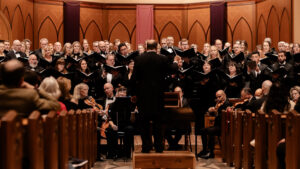
Exactly. Chicago has so many large institutions — Lyric Opera, the Chicago Symphony Orchestra — and also longstanding organizations like the Apollo Chorus. They’ve kept Chicago in the spotlight, which helps Ear Taxi Festival grow.
What will 2029 look like? Hopefully completely different because hopefully the nature of the world is a little different, too. Each festival reflects what Chicago’s scene looks like at that time.
How much was your team’s focus predicated on the success or the response to previous Ear Taxi Festivals?
That’s a great question. In 2021, chamber music performances were a big success, so we carried that on. From 2016, we kept elements of larger-format concerts. I think the unique addition to this festival would be the Composer Showcase where we have seen with other festivals the commissioning of two or three artists and we wanted to turn that on its side for more people to be involved.
Past Ear Taxi composers — Mason Bates, Samuel Adams, Ted Hearne, Anthony Cheung — have gone on to major careers. What is the goal of your Ear Taxi Festival to be a platform to elevate composers to larger profiles?
I think that totally speaks to the point of making sure that there’s space for different voices to be involved. Because this is a great thing to put on an artist’s resume. A great jumping off point.
We can take “risks” on artists we believe will say something unique. With 700 artists, there’s a plethora of ideas and voices that they each bring. I’m confident that at the end of this festival, some of these artists may be announcing album releases or what their next projects are that may be larger than one of the performances that they’re involved in.
How engaged are Chicago’s big institutions like the CSO or Ravinia?
Very engaged. This is a program of New Music Chicago, so partnerships are central. We didn’t want to create new institutions but pair existing ones.
For example, Christopher Tin’s The Lost Birds is being performed by William Ferris Chorale plus DePaul’s ensemble. On October 18th we have Chicago Philharmonic and Apollo Chorus are collaborating on a concert with 200 musicians on stage. Chicago Philharmonic has been very involved from the get-go. We’ve had a great relationship with Lyric Opera who’s been promoting some of our upcoming operas. Ravinia’s Steans Institute is involved in the Composer Showcase.
It’s remarkable to see all of these different partners coming to the same space. Massive organizations who typically work in their own silo are partnering and working together.
How do you measure success?
Not ticket sales. This is about risk-taking. I don’t think we were originally thinking that whatever great piece by whatever great composer depended upon who was in the audience that day. It is about taking risks, putting forward that there is great music in Chicago by living artists. Nobody talks about how many butts were in the seats of these shows. We hope that all of these shows are absolutely full, but we’re really excited to present to the world that there are a lot of different things going on with the Chicago community. So I would argue that i it is a success just because it happens.
Which is, of course, the antithesis of what major instutitions do because they have to satisfy subscriber needs.
It’s certainly a different model. I’ve run professional orchestral organizations before — you have to program your Nutcracker to fund other projects. We don’t have to worry about that because the goal was really to fundraise what we could to make sure that we can just present what needs to be presented. That being said, there’s certainly money that we would love to find. But we can take those chances that some other organizations are not.
This year’s festival marks Illinois’s largest commissioning initiative ever. How did you raise the money?
From zero dollars we started and we raised from there. I have to shout out The Treehouse Foundation because they were very excited about this coming back. The fundraising model is a lot of foundational support, a lot of support from organizations that are new to Ear Taxi Festival.
We saw a large change in who is supporting the arts. Several foundations in Chicago have sunset or are no longer supporting the arts. The NEA used to support Ear Taxi Festival, but not this time around.
You always get more nos than yeses. But there are still, even with that climate, those organizations that were not interested in funding something that looks different with different voices and there are those who will. I think that’s the great hope of what arts organization funding looks like. It’s up to us to make sure that we’re delivering to audiences so they can get involved.
As a composer yourself, what challenges do these commissioned works face in getting second and third performances after their premieres?
That’s absolutely true. Some works are easy to replicate — string quartets, for example. [We have] the Midwest premiere of Damien Geter’s African-American Requiem. It has a lot of percussion parts. It has complications, but with a lot of the music that we’re picking for this festival, we wanted to take the chance whether or not it was easily replicable.
For example, Stacey Garrop’s piano concerto, Invcitus. Of course, piano concertos are very common, but being able to make space for those types of performances…I don’t know yet if she has future performances lined up for something like that. Hopefully within the marketing of the festival, we’ll be able to give the kind of support so they can promote whatever their next performance is.
On your own Instagram, you once shared that you were “0 for 23” in competition applications. How do you keep your morale up to keep applying for commissions?
I’ve been composing for a long time. I was curious about these composers concerts, composer calls, that I would be involved in. How much time am I spending on this versus the outcome? There was one year where it was zero for 23. That’s not to say it wasn’t a successful year, but it shows that personal relationships and networking building within an arts community is much more successful than blind calls.
You have a new orchestral commission from the Danville Symphony. What’s that journey like emotionally?
It’s certainly a rollercoaster. The excitement that it’s going to happen, there’s always the daunting blank page. To me the worst part is bar 32. Now that I’ve run out of ideas, what do I do?
This Danville piece celebrates Vermilion County’s 200th anniversary. I wanted to lean on kind of the American symphony style from David Diamond, Howard Hanson, Aaron Copland. I like a box knowing we’re going to try and aim for this target and then I can break down whatever walls I can. That gets me the energy to go through all of these ups and downs that is the commissioning process.
Composer Jessie Montgomery, who is on Ear Taxi Festival’s Advisory Committee, told me in 2021 that “creating art or composing is a form of expression and of freedom. Just being a human being a human being and having the right and freedom to create what you want. That’s a natural human right and ability we all possess and develop in different ways.” What would you like Ear Taxi Festival’s legacy to be in terms of creating a safe space for artists to have the opportunity to act on that exact freedom that Jesse spoke about?
I think that’s so great for so many reasons. It is your right to have those artistic ideas and whether you want to record those with electronics or you want to notate them classically like it’s your right to do whatever it is that you want to do with that and I think it’s great that Ear Taxi Festival is providing a space for both of those.
I hope that there are too many artists arriving that we can’t even fit everybody in. I hope that beyond whatever we were able to do with our budget, that folks came out and were inspired by those composers and also participated in conversation with them. We hope that there is something for everyone. To just experience living art by people who are alive right now.
To watch the full interview with Tim Corpus, please go HERE.
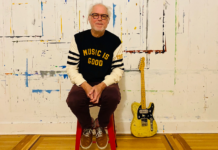
Main Photo: Tim Corpus (Courtesy TimCorpus.net)