



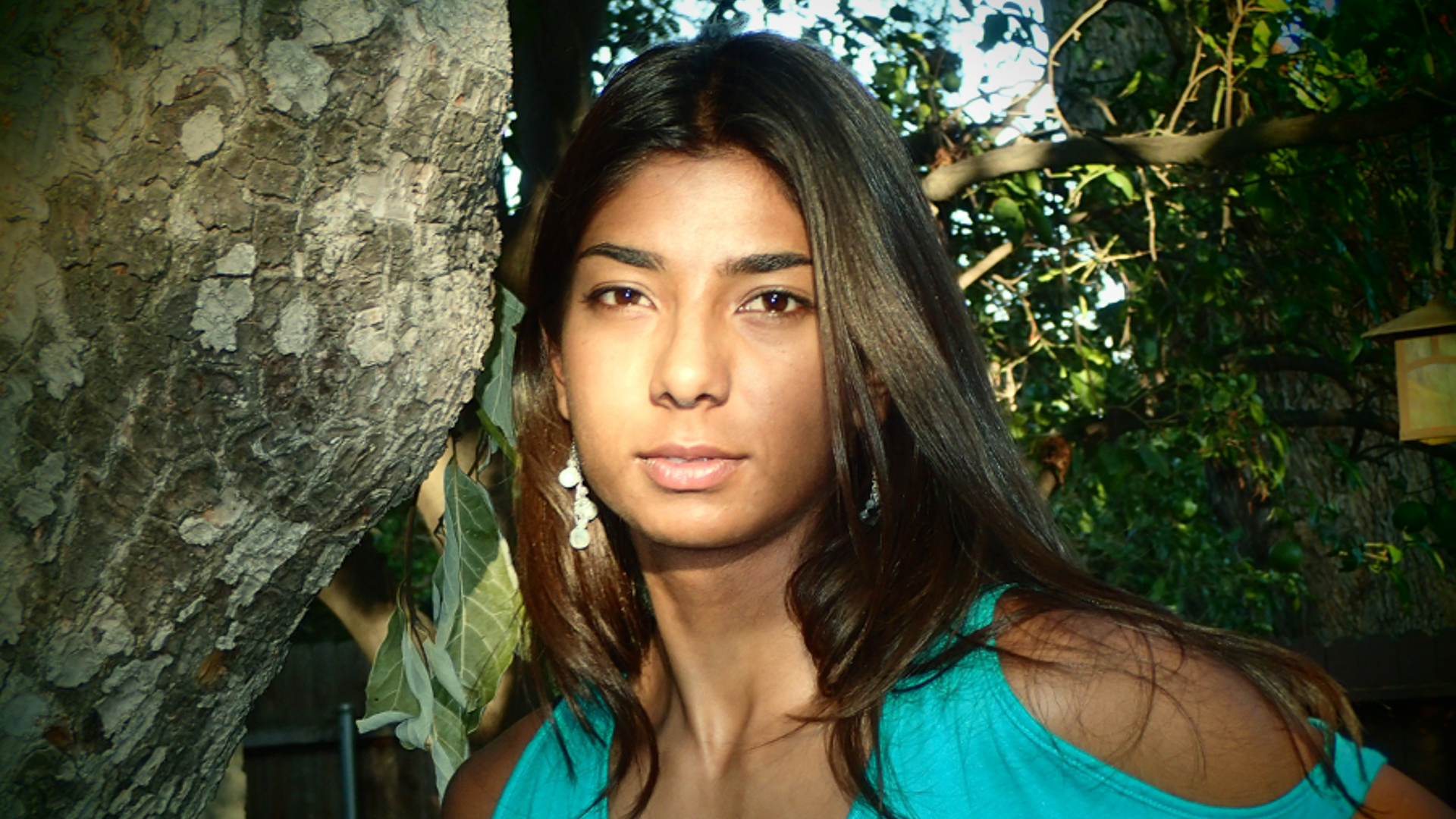

On April 11, Los Angeles Chamber Orchestra presents the world premiere of Juhi Bansal’s Fire Cycle at Zipper Hall—a work shaped as much by lived experience as by artistic intent.
Fire, in Los Angeles, is never theoretical. It is seasonal, historical, and increasingly personal. For Bansal, it had long existed as a subject of creative inquiry: a force of destruction and renewal, equally essential and devastating. But in January 2025, when the Eaton Canyon fire destroyed her home, that duality ceased to be an idea. It became a reality to navigate, endure, and, eventually, translate.
What emerges in Fire Cycle is not simply depiction, but transformation. The piece moves through overlapping cycles of fire, of grief, of return.
Its language built from texture, instability, and the fragile reemergence of sound after silence.
What follows are excerpts from our conversation that have been edited for length and brevity.
Q: This is your second Sound Investment program. You were part of Oregon Mozart Players program in 2021–22. How are those two experiences similar or different?
I think they are very, very similar, in all honesty, because I believe the program in Oregon was modeled directly after the program that LACO runs. It was a little smaller, both in timeline and scope, so it’s been interesting making the switch, but it also feels strangely familiar. It is so uncommon as a composer to be sharing a piece before you’ve finished it, so I’m glad there’s a little familiarity there.
What was that first experience of sharing a piece in progress and hearing thoughts from people who may not be musicians?
I loved it, to be honest with you. It brings so much energy and it brings some interesting challenges.
I remember going to the very first salon before there was any music to share, and two investors had completely different reactions to what they wanted. I remember leaving thinking, okay, we’ll bring the energy. It’s always an interesting thing to navigate, because you’re not necessarily writing something to somebody else’s vision, but you also want the investors to be excited about it. So I find it energizing and kind of an interesting challenge.
Q: What were the conversations the investors had with you as this piece, Fire Cycle, developed?
My piece is so strongly rooted in the fires in LA that a lot of the conversations I was having early on were with people who had been directly impacted, or people who were grappling with the fear of it. You can’t be in Los Angeles and be unaffected by it—it’s just the degree of closeness that changes.
People were talking about catharsis, about it being difficult to have this be part of the process, about seeing this theme come up in musical projects. This is such a personal piece, and it has a story that is so rooted in people’s experiences that I think that has been the largest thread of conversation.
You were commissioned to write a piece about fire which is aligned with your interest in music inspired by ecological forces. Before January 2025, what were your initial thoughts about what you wanted to express and how?
It’s never been not a personal thing as a resident of Los Angeles. I remember the Station Fire in 2009 very vividly. We had friends whose home was within two meters of the fire line. I remember going with them to spray barricade all over the house and then driving down the freeway and seeing the fires across the hills.
So on that level, fire as a destructive force was always very personal. But I also spend a lot of time in our mountains, and fire is a necessary part of the ecology for growth. The plant life we have doesn’t exist without it.
I was always fascinated by Indigenous cultures here and the way they would tend the land. This careful balance of respecting fire for the destructive force while also trying to manage it. So it was always about this duality of fire, although it became something larger last year.
All of that changed on January 7, 2025, with the Eaton Canyon fire. What was your experience, and how did you begin to process it?
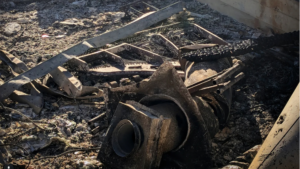
It was very challenging. We were in Altadena, west of Lake Avenue, and we didn’t get evacuation warnings. We lost everything in the fire. We left with a couple of small bags thinking we’d be back the next day, and then found out from the hotel that everything was gone overnight. We were more fortunate than many. We found housing, had support, but it was extremely difficult.
A lot of where the piece came from is me grappling with what it means that this force, something that is truly inescapable if you live here, is also something that can take everything from you.
What does it mean to process that as a human being? I started thinking about fire cycles and the stages of grief, and how they overlap. There are these cycles where something begins, grows, explodes, declines, and then there is regrowth. I was living that in the process of writing, but also finding some comfort in the idea that both are cyclical.
After something like that,how do you get back to writing?
This is one of the places where the Sound Investment format has been really helpful. Most of the last year didn’t feel like a time for creativity. But being in conversation with the investors, sharing that I didn’t know how I was going to turn this into music but wanted to, and hearing their stories. That started to open something.
The turning point came at the second salon. I had a few sketches for string quartet and percussion. I had spoken with our percussionist, Wade Culbreath, about creating sounds that evoke fire, and he had built instruments inspired by a Brazilian reco-reco, using aluminum resonators and spring coils.
When we brought those sounds into the room and hearing them with strings, it was chaotic and lovely. After losing everything, hearing sound again in that way was incredibly powerful. It started to feel like the piece could become something more open. I began to find creative flow again.
When you think of fire one thinks of heat, color, wind and sound. How do you musicalize that?
A lot of that is texture. Thinking about sparks; these really sharp sounds that die away quickly. Thinking about flame as something more sustained but unstable. And wind, especially here, where fire and wind are so tightly connected.
Strings can create these incredible textures of movement and flurry, and then you can layer percussion or winds on top of that. So for me, it was about breaking things down into very discrete sonic impulses—spark versus flame versus wind—and then figuring out how to evoke those in the orchestra.
What role does structure play in shaping that experience for the listener?
It’s a set of variations. The first variation is this feeling of normalcy, the “before.” The harp and solo violin introduce the theme. As it moves through the variations, that theme is transformed by fire. And in the final variation, the harp and solo strings return, but changed. There’s this sense of a new normal—something that’s been touched by fire and transformed by it.
How have you been transformed by this experience and has there been catharsis in writing Fire Cycle?
Definitely. Oh my goodness, huge catharsis. I’ve never put anything this personal into a piece of music before. It’s still a work in progress. I don’t think it ever fully stops affecting you. It’s easier now than it was in year one. I hope it continues to be easier.
You’ve also been developing your opera Star Singer with Beth Morrison Projects.
Did this past year change how you think about that work?
Absolutely. Music has been the thing that has lifted me through the past year.
The opera is about a world where it’s always night, and a family of women whose song keeps the stars alight. When the mother dies before passing on that song, the daughter has to journey through the spirit world to recover it.
It comes from my experiences as an immigrant; thinking about language, heritage, and loss. But after this past year, those ideas feel even more immediate. Loss, memory, what gets carried forward, those questions have taken on a different weight.
D.H. Lawrence wrote that tragedy reveals “the gold of truth.” Has that been true for you?
Oh, my goodness. So much. All the things that used to matter don’t matter the same way. Something like this shakes everything you thought was stable.
If I think about the core of both my experience and the piece, it’s that there is a time after. If you survive it, you start to see things more clearly: what matters, what’s beautiful.
The piece isn’t meant to be heavy in the way you might expect. The ending is not an ending. It’s a new beginning. Just like in fire, where the earth is nourished and new growth begins again, I think the experience is the same for us. And I’m excited to see where that goes.
Main Photo: Juhi Bansal (Courtesy Los Angeles Chamber Orchestra)