








There is a version of Carmen that audiences think they know: seductive, reckless, untouchable. But beneath the myth is something far less comfortable—a woman fully aware of her fate and unwilling to escape it.
For mezzo-soprano Sasha Cooke, making her role debut as Bizet’s heroine at Seattle Opera* is not about embodying an operatic archetype, but interrogating it: stripping away the clichés of sexuality and rediscovering a character defined by intelligence, resilience, and a dangerous commitment to her own freedom.
You’re making your role debut as Carmen at Seattle Opera, and I’m curious what that feels like given how long this role has been in your orbit without actually singing it.
Sasha Cooke: I’m pinching myself. At the first rehearsals, I was kind of pinching myself. I feel like I’ve been preparing for it my whole career. I’ve been around it so much, and I’ve always thought about it, but I never rushed into it. So to actually be here now and doing it feels really special.
When did it start to feel like something you were ready for, not just vocally but as a person?
I think it’s both. The voice has to be there, of course, but it’s also about life experience. Carmen is often portrayed as impulsive, but I don’t think she’s impulsive at all. I think she’s incredibly aware of her situation and of the consequences of her actions. I don’t know that I could have understood that ten or fifteen years ago in the same way. Now I feel like I can approach her with more depth.
There’s a version of Carmen that exists almost outside the opera, the stereotype of her. When you went back to the score, what immediately didn’t line up with that?
There’s such a strong cultural image of Carmen that it can flatten her into something very one dimensional. But when you go back to the text and the music, she’s so much more complex. She’s not just sensual. She’s intelligent, she’s perceptive, and she understands people very well. Reducing her to a sexual figure misses so much of what’s actually there.
That intelligence is not always the first thing people talk about. Where do you see it most clearly?
In the way she navigates every interaction. She’s always aware of what’s happening around her and how people are responding to her. She knows how to shift the energy in a room. There’s also a kind of clarity about her. She doesn’t pretend to feel things she doesn’t feel. That’s a strength, and it can also make people uncomfortable.
And yet she’s still often described as reckless.
I don’t think she’s reckless. I think she knows exactly what she’s doing and what the risks are. The tragedy is that she refuses to change course. She won’t compromise who she is, even when it might save her. So you have to ask whether that’s recklessness or integrity.
That makes her relationship to fate feel very different, almost something she’s choosing rather than something happening to her.
Yes, I think she understands where things are heading. It’s not that she’s being carried along by fate without awareness. She’s making choices, even when those choices lead somewhere difficult. That’s part of what makes her so compelling.
You mentioned feeling intimidated going into this. Was that more about the history of the role or something personal?
It’s both. It’s such a well known role, and there are so many expectations attached to it. But it was also personal. I don’t naturally walk into a room with the kind of confidence that Carmen has. So I had to find a way into that for myself.
What did that process look like for you?
It’s been about figuring out how that confidence exists in me. Carmen is very clear about who she is and what she wants. Exploring that has been challenging, but also really empowering. It’s not about becoming someone else. It’s about accessing something that’s already there.
Do you feel a sense of relief that you waited to take this on?
Yes, absolutely. There’s always a temptation to do big roles as soon as they come along, especially something like Carmen. But not everything is right at every stage. I’m really grateful that I waited, because I feel ready now in a way that I wouldn’t have before.
How do you take ownership of a role like this without getting pulled into everyone else’s expectations of what Carmen should be?

You have to let go of trying to meet every expectation, because you can’t. There will always be ideas about how she should look or sound or behave. For me, it’s about focusing on what’s truthful in the moment. What does she want, what does she mean, and how do I communicate that honestly.
You’ve done a lot of new work alongside standard repertoire. Does that change how you approach something as familiar as Carmen?
Yes, I think it does. With new work, there isn’t a long history to rely on, so you have to trust your instincts and build everything from the ground up. That carries over into standard repertoire. Even with something as well known as Carmen, you want it to feel alive and immediate, not like something that’s preserved.
Carmen is often described as one of the most accessible operas, and yet people still feel like opera is not for them.
I think that’s more about perception than reality. The music is very direct and the story is compelling, but there’s still this idea that opera is exclusive or intimidating. Part of what we do is try to break down that perception and show that it’s something people can connect with.
You’ve been open on social media about the realities of this life. Is that part of that effort?
I think it can be. It helps people see that this is a real life, not something distant or unreachable. At the same time, it’s important to keep a balance. This career can be isolating, and social media isn’t the same as real connection.
What keeps you grounded in that?
The connection with audiences and with colleagues. Those moments when you’re sharing something together are what make everything worthwhile.
Has your definition of success changed over time?
Yes, very much. Early on, it’s easy to focus on external things like where you’re singing or what roles you’re doing. Now it’s more about how I feel in the work. Am I growing, am I connected, and am I fulfilled. There’s a sense of gratitude that comes with that.
What do you hope audiences take away from your Carmen?
I hope they see her as a real person. Not a stereotype, but someone with agency and complexity. If that shifts how they think about her, even a little, then that’s meaningful.
*Sasha Cooke alternates the role of Carmen with J’Nai Bridges. Sasha Cooke performs the role on May 8th, 10th and 16th. J’Nai Bridges performs the role on May 9th, 13th and 17th.
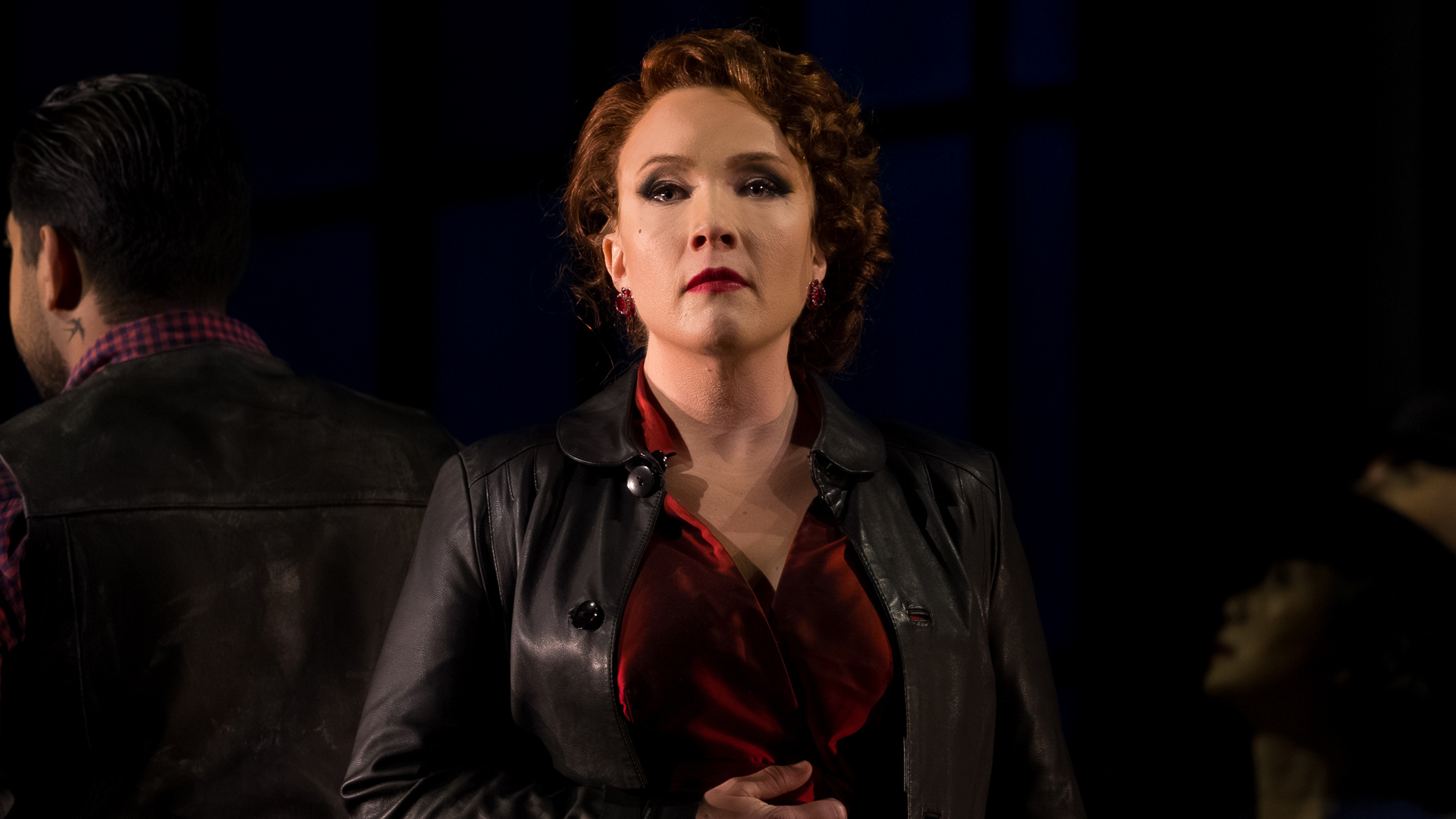
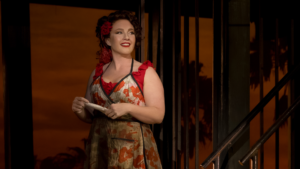
All photos: Sasha Cooke in Seattle Opera’s Carmen (Photos by Sunny Martini/Courtesy Seattle Opera)