








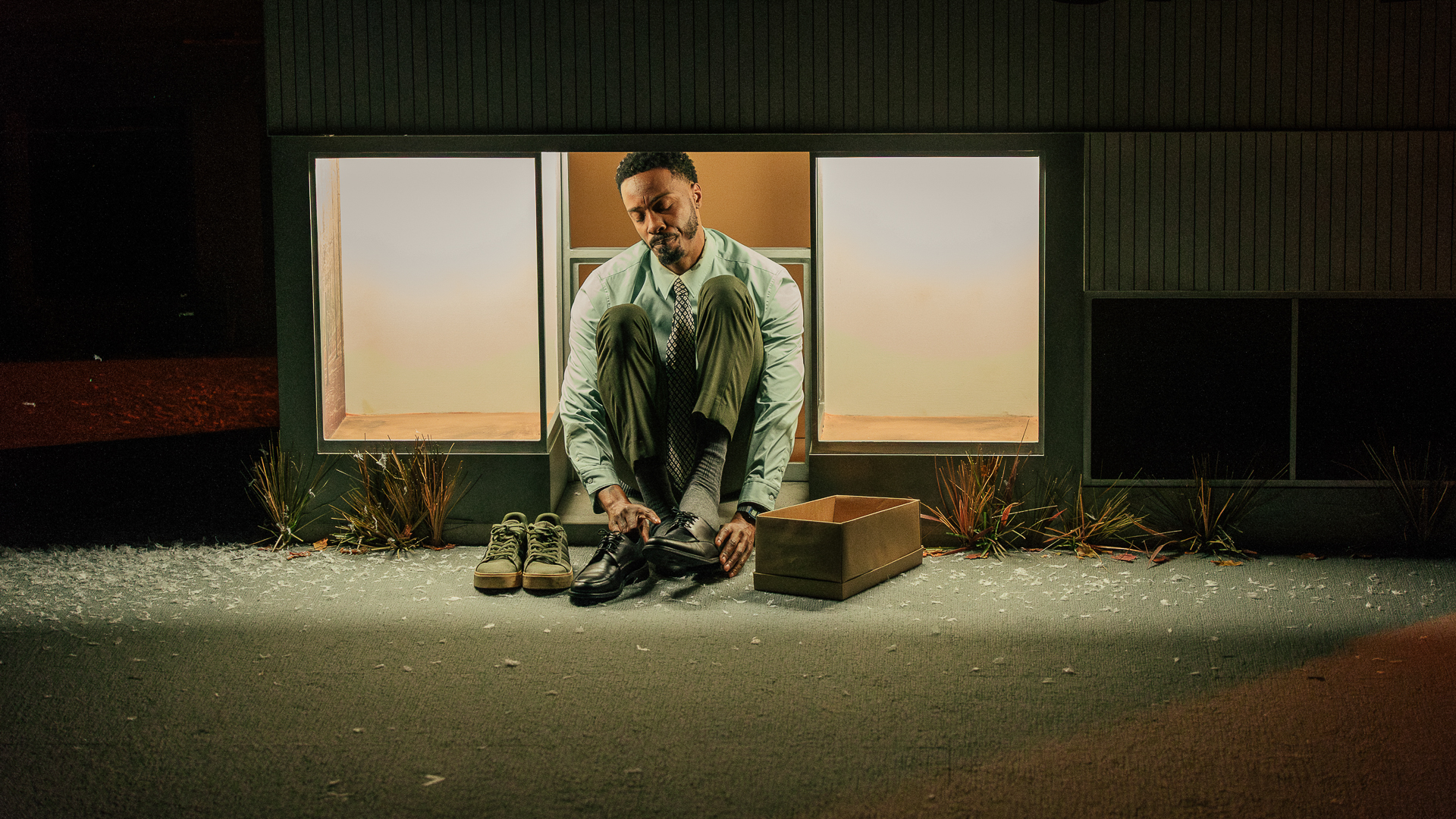

At the center of Primary Trust is Kenneth, a man cautiously emerging from a life shaped by grief, routine and emotional isolation into one defined by connection, risk and possibility. Actor Petey McGee takes on the role in a new production of Eboni Booth’s Pulitzer Prize-winning play at the Mark Taper Forum in Los Angeles which officially opened on May 27th.
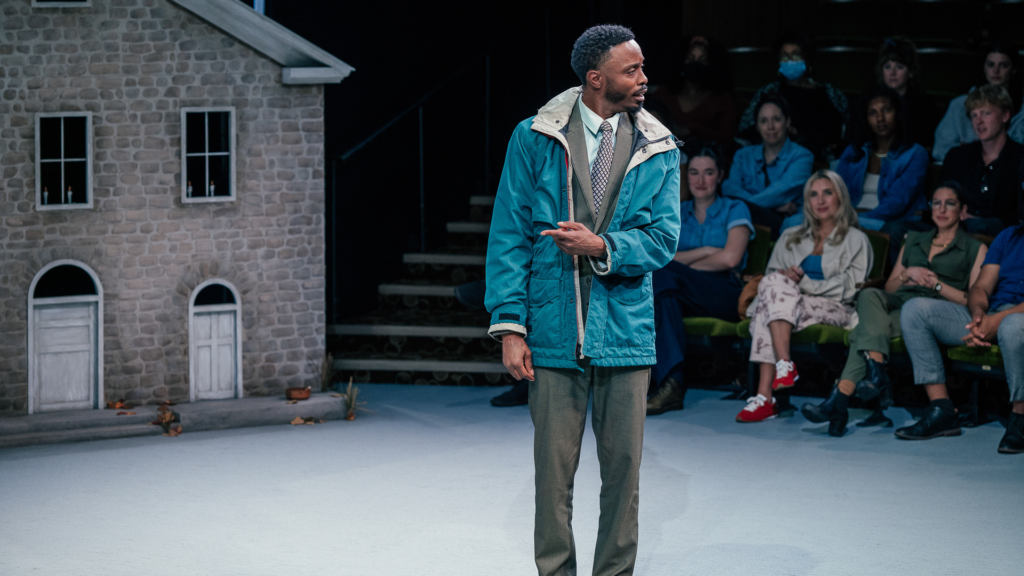
It is a deceptively difficult role because Kenneth exists simultaneously in reality and in the intimate landscape of his own mind. He speaks to imaginary companions, directly addresses the audience and navigates a world that often feels overwhelming in its vastness.
For McGee, the challenge has become an opportunity to explore not only Kenneth’s journey, but his own relationship with grief, vulnerability, and what it means to remain emotionally open in a world that often encourages the opposite.
McGee speaks thoughtfully and candidly about the process of joining an established production, the emotional demands of Kenneth’s direct audience address, and the deeply personal ways the play intersects with his own life experiences. What emerges is not simply a conversation about performance, but about empathy, survival, and the courage required to begin again.
Q: You are joining a company where several actors have already worked together on previous productions of the play. What has the experience been like coming into something that already had its own history and rhythms?
Coming in, I was very nervous for that exact reason. I was like, “Oh, they already know this play. They already have the groundwork of it,” especially the people who had worked together before. I did not want to come in and mess up what they had already built. But I ended up coming in and messing up everything they built so we could all rebuild it together in a new way. And it has been beautiful.
The cast is incredibly supportive. The characters in the play are already supportive of Kenneth and that has translated into real life tenfold. Everybody has been making sure we are all moving together toward the same destination.
Did you discover that your interpretation of Kenneth changed the play for the people who had been living with it for a while?
Absolutely. From what the cast has been telling me, it feels like a brand new play to them. We have reshaped it and created something very different from the previous versions. I was talking to Luke, the musician for the play who has been there since the beginning, and he told me my take on Kenneth changes everything. He said he had never seen this version before and that it felt beautiful and fresh.
That is the exciting thing about theater. You get to tell the same story again, but from a completely different perspective. Kenneth is the center of the play, so naturally everybody else has to adjust and find that symbiosis around him.
Every actor brings different instincts to a role. What discoveries did you make about Kenneth and about the people surrounding him?
Kenneth is someone who experienced trauma and grief very young. The challenge for me became figuring out whether I wanted to play those issues directly or not. What I ultimately latched onto was the idea that everything Kenneth is now comes from what happened to him.
I think he got emotionally stuck at a very young age. So I tapped into my inner child a lot while working on him. But I also tapped into what it means to live with grief and trauma. Kenneth is really investigating life throughout the play. It is like someone taking the blinders off for the first time and suddenly realizing how huge and unfamiliar the world is. That is where Kenneth is living.
What struck me reading the play was that it never really feels like it is about trauma itself. It feels more like it is about his path out of it.
Exactly. That is one of the most beautiful things about the play. It is really about new beginnings. It almost starts at the end and ends at a beginning. Trauma created Kenneth, but the play is not about him sitting in it. He does not even know how to process those experiences yet.
The story becomes about what happens after the trauma. How do you actually live in the world after something breaks you open?
Kenneth is also unusual because he exists on multiple levels at once. He talks to an imaginary friend, directly addresses the audience, and then exists inside scenes with the other characters. What was your process for making all those different realities feel cohesive?
That was actually one of the hardest parts for me. At first I felt like I was playing two different characters. There was the Kenneth who speaks to the audience and then there was the Kenneth inside the scenes.
Ursel helped me tremendously in blending those versions together. I initially thought Kenneth was more grounded and clear when speaking directly to the audience, but eventually I realized he is all of those things at all times. He shares things with the audience because he cannot share them with the people around him. The audience becomes his outlet.
Direct address is always difficult because you have to truly connect with the audience. You cannot just play emotion. You have to communicate clearly enough that they understand what the character is experiencing. But those speeches are beautiful because they root Kenneth more deeply in the world of the play.
The final monologue affected me deeply even just reading it. It is emotional, but not in a tragic way. It feels hopeful. Did you have that same reaction when you first encountered it?
Absolutely. More than anything, I hope audiences walk away with something personal from this play because it has so many layers to it. When I first read it, I immediately connected it to my own experiences with grief. I lost my mother in my early twenties and I understand how loss can shape who a person becomes.
I think audiences will feel what Kenneth is going through because he is not trying to make people feel sorry for him. He is exploring those emotions in real time. The audience ends up getting pulled into that exploration with him.
You are watching somebody discover what love is, what grief is, what connection is. I hope people identify with it and continue thinking and talking about it after they leave the theater.
During rehearsal, those monologues exist without an audience present. How much do you think audience response will influence those moments once performances begin?
I am already learning in rehearsal how to tell the story without depending on the audience. That has been important for me because I cannot rely on a reaction in order for the scene to work.
At the same time, when there are people in the room, the energy naturally changes. You cannot help connecting with them. But whether the audience responds or not, I still have a story to tell and I still need to communicate clearly. So my focus stays on the work itself rather than trying to predict reactions.
Kenneth reveals that he found his mother after she died. You have spoken publicly about experiencing something very similar yourself. How does that personal history affect your relationship with this role?
It definitely hits close to home. Early in my acting career, I used to rely heavily on sense memory and pull directly from painful experiences in my life. I thought that was what acting was supposed to be. But through training I learned that can actually become dangerous.
Now I understand that I do not need to relive those moments directly. I know what those emotions feel like, so I can recreate the emotional truth without reopening wounds every single night. That has been incredibly important for me.
Of course, there are still moments where flashes come up because Kenneth’s experiences parallel my own in certain ways. But sometimes those moments become useful because Kenneth himself is trying not to let his emotions overwhelm him. He is trying to communicate something. So when emotion unexpectedly pushes through, it feels organic to the character.
Working on the play has also made me revisit my own healing process in some ways. That has actually been beautiful.
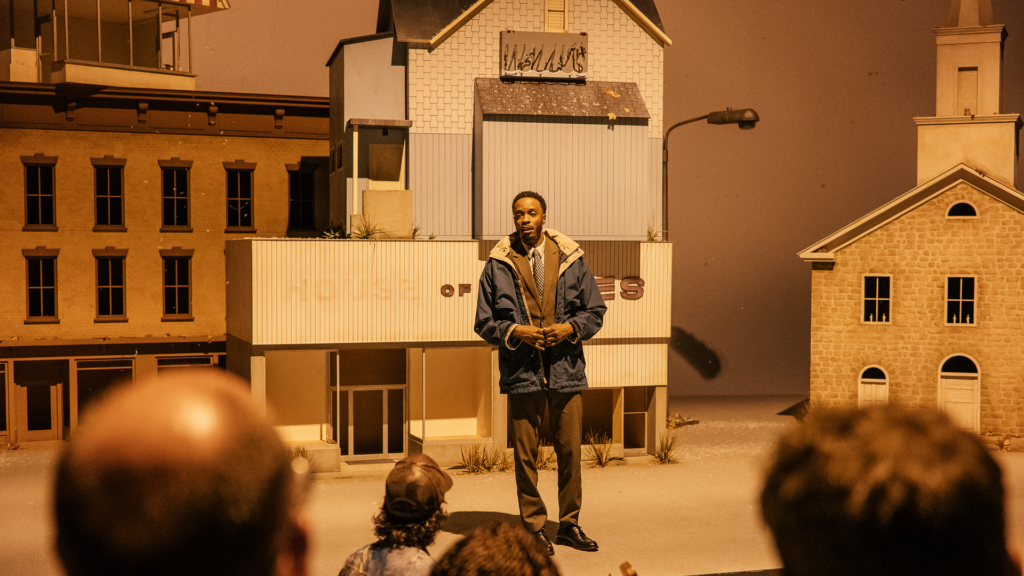
Grief feels especially present culturally right now. There are public conversations happening around it everywhere. Do you think you have a healthy relationship with grief?
That is such a good question. I do not think I would call it healthy or unhealthy. Grief feels like a constant presence in my life. I have lost a lot of people, friends, family members, younger relatives, older relatives. Literally right before rehearsals this week I lost one of my younger cousins.
You would think after enough loss you become used to it, but you do not. What you become used to are your coping mechanisms. I am somebody who stays busy. I work constantly. Sometimes that means I do not fully process things when they happen because life keeps moving.
So maybe that is not entirely healthy. But I have found a way to keep grief from crushing me completely.
There is another line often used to describe the play that it captures “the awkwardness, the messiness, and the unanticipated joy of being alive.” How has your own life and career reflected those ideas?
Being an actor is one of the messiest careers there is. But I have been lucky because I have experienced so many different things already. I was doing Shakespeare in London at Shakespeare’s Globe, which felt like one of the greatest achievements imaginable for me because I love Shakespeare so much.
All of those experiences have given me tools. Kenneth does not really have those tools yet. I remember periods in my own life where I also did not know how to navigate things, where I felt awkward or like I did not belong. Kenneth carries a lot of that.
Life is messy. But there is also joy in watching someone build coping mechanisms for the first time and learn how to move through life. Kenneth is learning how to exist emotionally in real time.
In an interview about the original New York production, William Jackson Harper, who first played Kenneth off Broadway, said one of the lessons of the play is that you never know what somebody else is carrying. What lessons do you take away from it?
Very much the same thing. Everybody’s journey is different and you never know what somebody has lived through to become who they are. That is why kindness matters so much.
One thing I kept asking myself while working on the play was why people are so naturally supportive of Kenneth. I think it is because people instinctively recognize vulnerability and humanity in him.
The other lesson for me is not being afraid to step outside your comfort zone. Life really begins outside of that space. Sometimes opportunities are terrifying, but you never know what is on the other side of the door unless you open it.
I was looking through your earlier work and found Echoes of Octavia at the Melting Pot Theatre in Kansas City back in 2014. How formative was that period for you as an actor?
That was one of the most formative periods of my life. It was really when I started acting seriously. Working with playwright Michelle T. Johnson was incredible because it was my first time collaborating with a playwright while they were actively shaping the piece. You get this rare look into the mind of the writer.
At that point, acting frustrated me because it was the first thing in my life that did not come naturally. I had always been good at most things immediately, but acting challenged me. I wanted to conquer it.
I remember struggling through rehearsals and not understanding why I was not already great at it. But that process taught me so much. It also showed me that I wanted to spend my life doing theater and exploring big themes and complicated ideas.
Only a few years later you were performing Hamlet professionally and eventually at Shakespeare’s Globe itself. That seems like proof that the work paid off.
Absolutely. Shakespeare deals with the biggest themes imaginable and getting to perform that work was life changing for me. I feel blessed to return to theater now because there really is nothing like live performance.
I have spent the last few years working more in television and film, but theater allows you to use your voice differently. It lets you wrestle with larger ideas in real time with an audience. That is something special.
There is a line late in the play where Corrina tells Kenneth, “You’re real,” and Kenneth responds, “Sometimes I am.” So let me end with this: when and where do you feel most real?
Probably when I am around family. And I do not just mean blood family. I mean the family I have built for myself. I feel most real when I am with people where I do not have to hide anything.
Honestly, I also feel most real on stage. When I am able to be vulnerable and fully present, I feel complete. I think being present is difficult for all of us because there are so many distractions in life. But when I am truly present, whether it is with people I love or on stage, that is when I feel most like myself.
Primary Trust runs through June 28th at the Mark Taper Forum in Los Angeles.
Main Photo: Petey McGee in Primary Trust (Photo by Jeff Lorch/Courtesy Center Theatre Group)