







Few American playwrights have inspired composers the way Tennessee Williams has. His language is lyrical, his emotions are heightened, and his characters often find themselves trapped between illusion and reality. Those qualities have drawn composers to works such as A Streetcar Named Desire and Summer and Smoke. Now Williams’ Suddenly Last Summer joins that lineage in a striking new adaptation by composer Courtney Bryan.
In Williams’ play Mrs. Venable is trying to convince a doctor to give Catherine, her niece, a lobotomy because she tells the story of the death Sebastian Venable that includes a truth his mother doesn’t want the world to know. The procedure would make it impossible for Catherine to ever repeat a story Mrs. Venable cannot accept.
Receiving its world premiere at the Fisher Center at Bard beginning June 25, Bryan’s one act opera takes an unusual approach to Williams’ story. Catherine is the only principal character who sings. Everyone else speaks. A chamber orchestra underscores the action throughout, while the Young People’s Chorus of New York City serves multiple functions, from birds and witnesses to something resembling a Greek chorus.
The result is an opera built around a compelling dramatic idea: the only character who sings is the one telling the truth.
Bryan is a 2023 MacArthur Fellow and the composer-in-residence at Opera Philadelphia who co-produced Suddenly Last Summer‘s world premiere.
I recently spoke with her earlier this week about adapting one of Tennessee Williams’ most poetic works, finding music inside his language, and why truth became the opera’s central musical force.
Q: Like all good Tennessee Williams stories, it’s all about not wanting to face the truth, isn’t it?
Yeah, and then the truth coming out in one way or another. There’s a lot of connections with this and some of his other works I realized.
One of the most fascinating aspects of your adaptation is that Catherine is the only principal character who sings. The person telling the truth is the person given music. How did that idea develop?
It started off differently. I had some music examples for Mrs. Venable as well. After the first workshop, [director] Daniel Fish presented the idea, and the three of us talked about it. It was really the concept itself that was interesting. There would be one main singer, the Du Bois Boys Chorus, and everyone else would be acting.
It was a nice challenge for me as a composer because it’s one thing to write knowing words will be sung. It’s another when part of it is acted. It wasn’t like some musicals where everything stops and then someone sings a song. There’s always an overlaying of singing and acting. Sometimes it’s almost like two different things are happening at one time, and then by the end they’re all together. So it was a challenge to think about how to write these different things but make them all fit musically.
So even when characters are speaking, the music continues?
Yeah. Once the music starts in the opera, it continues. Even when there’s no singing, the orchestra is always playing as a chamber orchestra. There’s usually not too long where there’s no singing or acting. The whole thing is scored throughout.
That creates a challenge because you don’t want the music overwhelming the dialogue.
I think that has been the main challenge in general. We’ve had different workshops along the way, so we’d see the parts that worked well and the parts that needed more work. It also helped to know the role of the boys.
We knew we wanted a boys chorus, and they represent a number of things. There were boys in the story, so sometimes they can represent those boys. Sometimes they’re the voice of Sebastian. Sometimes they’re functioning more like a Greek chorus. It’s never really in your face who they represent.
A lot of the first music I wrote was Catherine’s sung material, especially near the end of the piece. Then it became figuring out the other parts and how the balance worked. There was a lot of back and forth and trying things out.
André Previn famously adapted A Streetcar Named Desire into an opera, and Lee Hoiby adapted Summer and Smoke. What is it about Tennessee Williams that makes composers want to engage with his work?
For me, it’s all of the emotional places that you have to go musically to bring out the story. He actually writes some musical ideas into the play. He has a lot about birds throughout the piece, so that became a big part of this opera. Often he’ll describe what’s happening in a scene and it has something to do with sound.
There’s something about Tennessee Williams in general that inspires other art. The intensity of his writing, the stories, the characters. I think it inspires different interpretations.
I reread Suddenly Last Summer before speaking with you, and so much of the libretto comes directly from Williams. Since he’s one of our most poetic playwrights, how did you approach adding music to language that already feels musical?
That was an interesting part of the process because Gideon Lester and Daniel Fish worked together as co-librettists. There were certain things Tennessee Williams’ estate established. One thing is that you couldn’t add any text. We could delete text, we could move things around, but we couldn’t have any words that weren’t originally there.
We had workshops with actors and got to hear the language before I started thinking about musical ideas. Tina Benko was there from the beginning, so I got to hear her voice reading Mrs. Venable as well as the other characters.
It’s been a process. We had drafts with more words, and then once I wrote music to them, we’d go back and think about how the text fit the music. Sometimes they’d take away more words or change the order of things. There was a lot of back and forth until we found the right balance of words and music.
Was there a moment during the composition process when you realized how emotionally demanding this piece would be?
I’ve enjoyed the process, but because of the subject matter and the emotional spaces I had to go to, I would get very into it and then need to step away from it. The very first thing I wrote involved sexual violence. It isn’t one of the main parts of the piece, but after writing it I realized I needed to take a break for a few days before getting back into it.
I was drawn to the piece, though. I kept thinking about it and wondering how it would happen musically.
One thing I found was that I always needed to be near water when I was writing. I drove from New Orleans to Gulfport, Mississippi, and worked near the water. Later I went to the Camargo Foundation in Southern France. Part of the story takes place in a fictional Mediterranean town, so being there felt connected to the piece.
The other thing I didn’t expect was hearing church bells every hour. Suddenly these bell-like ideas started appearing in the score, and they connected naturally to Mrs. Venable because she’s always thinking about time. Everything in her world happens on the clock.
I always feel one of the most powerful things in music can be the absence of music. Is there power in Suddenly Last Summer through restraint rather than silence?
The opera starts without music. It begins with other characters before Catherine enters, and Catherine is offstage even while she’s singing. But there isn’t much silence after that.
What I’m always thinking about when orchestrating is when things should be full and busy and when it can be maybe just the bass and cello playing something. A lot of times it’s not silence. It’s deciding when the instruments are supporting what’s happening and when they move to the foreground.
The same thing happens with the chorus. Sometimes they’re background voices and sometimes they’re not. One thing I was excited about during a workshop was hearing the boys do bird sounds. That eventually became a choral feature where a lot of what they’re doing is bird sounds with the orchestra.
Birds are everywhere in Tennessee Williams’ play. How did those descriptions shape the music?
I have a sketchbook, and I went through the libretto writing down every bird reference. Sometimes it was a bird singing sweetly in the garden. Other times it was flesh-eating birds or carnivorous birds. I wrote all those phrases down and then started making a chart of different birds.
I ended up with this collection of bird sounds connected to New Orleans and the Mediterranean. Then it became figuring out how to use them in the piece.
Tennessee Williams is so closely identified with New Orleans, and so are you. How much does New Orleans find its way into the score?
New Orleans is such a part of my soundscape that it helps me to know it’s there without trying to think about it too much. There were moments where I thought about things like the Mardi Gras ball mentioned in the play, but whenever I tried to approach it too directly, it didn’t feel natural.
Instead, I found myself responding to places. There’s a mention of the Dueling Oaks in City Park. I went there and spent time looking at the trees and the moss. There are references to the Roosevelt Hotel, which I’ve known since growing up, and all the histories attached to it.
It’s a very specific part of New Orleans. I think the music naturally sounds like that environment because it’s influenced me for so long.
I read an interview in which Tennessee Williams spoke about incomplete people and said he wasn’t sure he’d ever met a complete person. How did you think about these characters musically?
I didn’t think about completeness specifically, but I did have musical approaches to the different characters. Even though Mrs. Venable doesn’t sing, she still has musical themes associated with her.
One is a kind of twelve-tone theme that appears throughout the piece. Then there are themes built around the number five because she’s always talking about needing her five o’clock cocktail and everything in her world is organized around time. I have chords built around intervals of fifths and patterns built around groups of five.
With Catherine, it was really about building her voice over four scenes. She’s introduced as an institutionalized young woman who’s being silenced and described as babbling. Then she eventually takes the truth serum and sings this long aria. I wanted to think about how to build that over time.
In an interview with Boosey & Hawkes, you said Tennessee Williams’ text pushed you in new musical directions. What were those directions?
I found that even if there were musical tendencies I already had, I had to stretch them in a different way. I had themes that came from improvising at the piano and recording voice memos. One of those themes ended up fitting the final scene.
The challenge was figuring out how to build it as Catherine’s story becomes more intense and more expansive.
I also found that I wrote one kind of music in Mississippi and New Orleans and another kind when I returned to the piece in Southern France. I came up with different harmonies and even a scale connected to the sea turtle imagery in the play. I found myself trying different things harmonically, and that was a nice adventure.
As an artist from New Orleans, how large a shadow does Tennessee Williams cast?
I feel like Tennessee Williams is always around. There’s a strong Tennessee Williams Festival every year, and my mother was involved with it when I was growing up, so I was always hearing about him.
Working on this opera made me realize how present he still is. There are references to him all over the city. People travel to New Orleans because of Tennessee Williams.
For me, he’s one of those figures, like Louis Armstrong, where you think of New Orleans and immediately think of their art.

Mrs. Venable talks about becoming “suddenly peaceful.” What role does peace play in this opera and in your own life?
When it comes to peace, or hope, I spent a lot of time thinking about where hope existed in this story because it’s so dark. It ends unresolved. Catherine tells her story, the doctor says it could be true, and then it ends.
The hope we found as a creative team was in the fact that Catherine insists on telling the truth. She’s been institutionalized. She’s been medicated. There’s the threat of a lobotomy. Every force around her is trying to silence her, and she insists on telling the truth about what happened. That’s where we found hope.
As for peace in my own life, I try to find balance. Music is everything for me. I write music, perform music, teach music, organize concerts. My whole life is music.
But I also try to save a part of music just for myself. I play things at the piano that are only for me. I do musical meditations. Music has always been a place where I can communicate emotions separate from things that are commissioned or publicly shared.
One last question. Tennessee Williams once said, “Keep awake, alive, new. Perform the paradox of being hard and yet soft. Survive without calcification of the tender membranes. Be a poet. Be alive.” Does that resonate with you?
Wow, I love that. I didn’t know that quote. It’s great coming from him because for him to create the kind of work he did and not let it harden him is really amazing.
I think that’s one reason we’re still drawn to his work. It’s not hopeless. It’s complicated. There are elements of hope, but nothing is ever neatly resolved. It feels like real life.
For me, preserving that balance is important. I try to preserve joy in what I do. Even though music is most of my life and most of it is professional, I try to keep some of it for myself. I also try to do things that aren’t music, stay close to my family, maintain strong relationships, and keep learning. It balances everything out. But it always takes work.
Suddenly Last Summer opens June 25th and runs through July 19th.
Correction: In an earlier version of this interview, we stated that the DuBois Boys chorus was in the show. It is actually the Young People’s Chorus of New York City. Cultural Attaché regrets the error.
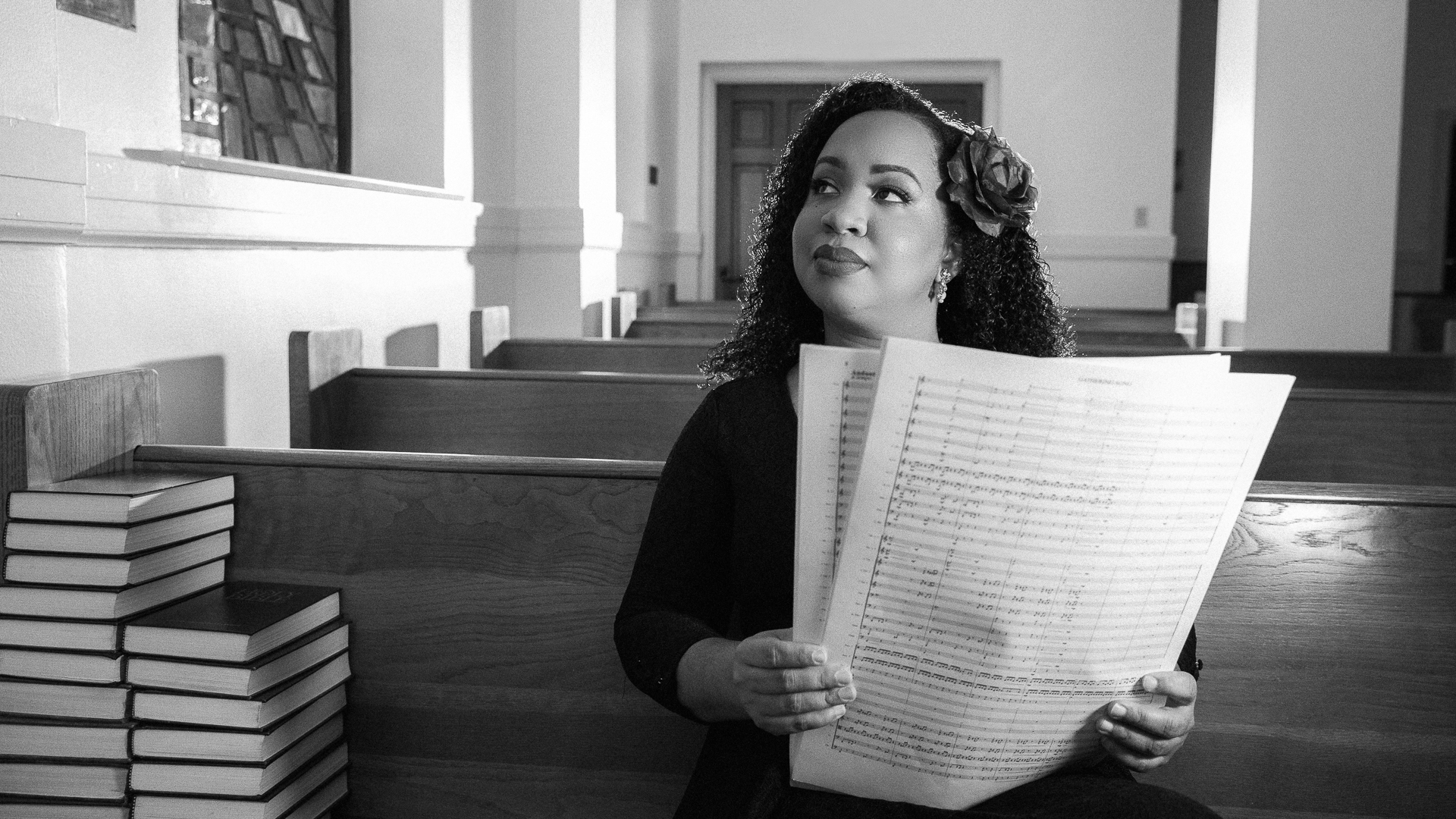
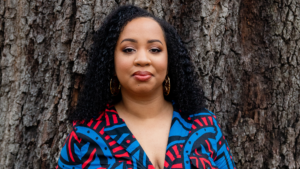
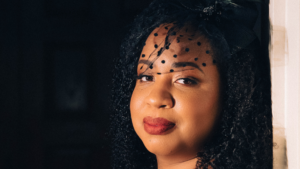
All photos: Courtney Bryann (Photo by Taylor Hunter/Courtesy Fisher Center at Bard)