









What seems like a meteoric rise for jazz saxophonist/composer Lakecia Benjamin was anything but. Her first album, Retox, came out 13 years ago. Her third album, Persuance: The Coltranes in 2020 gained her more significant attention. It was 2023’s Phoenix and last year’s Phoenix: Reimagined (Live) that really cemented her reputation as one of the finest saxophonists of her generation. As did the five Grammy nominations the two albums received.
Proof of her success can be found in the two concerts she’ll be doing this weekend. Benjamin will be appearing at the San Francisco Jazz Festival on Friday, June 13th. She jets down to Los Angeles to appear at the Blue Note Jazz Festival at the Hollywood Bowl on Saturday, June 14th. She also has a new single, Noble Rise, coming out on June 27th.
Pretty heady times for Benjamin. It’s a time where she’s asking a lot of questions about herself, her music and about us. Which is part of what we discussed in our interview earlier this week. What follows are excerpts from our conversation that have been edited for length and clarity. To see the full interview with her, please go to our YouTube channel.
Q: Mary Lou Williams told Marion Partland in 1964, “Anything you are shows up in your music. Jazz is whatever you are playing yourself, Being yourself letting your thoughts come through.” Now that the Phoenix has clearly risen, what are the ways in which you are playing yourself, whether in new recordings that we can anticipate or what you will be on the stages of the San Francisco Jazz Festival or the Blue Note Jazz Festival this weekend?
I’ve always believed that you can only play who you are and kind of what you live or what you’ve seen and experienced. I do come from a very, I guess, rich background. But I just think that the Phoenix albums, to me, was [sic] really a story of how I’m coming up and how things have been going for me.
It was a little bit of a story of how my life has consistently been about what it is to get a no and try to create yeses and try and find a way out of that. Just like that, I’m still evolving and I’m still growing and I still finding who I am and I still trying to navigate in a world that may not even want me in it. I guess I’m moving. I’m trying my best to reflect the times that are going on and I try my best to be the best type of person I can be throughout all the adversity to lead in a way of grace and honor while still digging deep and staying true to the integrity of it all.
Given everything that’s going on, how difficult is that to maintain that grace, to maintain your own integrity through it all?
You try to be positive. I do a lot of traveling. I’m all over the world and unfortunately the chaos is everywhere, everyone’s feeling unsettled. What happens in one nation affects another and we kind of domino. So humanity, in general, is kind of forgetting what it is to be human beings, what it is to love, what is to get away from these devices and machines and spend time with each other. And we’re losing a little bit of empathy and compassion in the process of it because we’re just so focused on the self and survival. So I’m trying to make uplifting, positive, energetic, high music that feeds people. And I’m trying find a way to change that darkness into something that when people hear [it] they feel uplifted. So it’s hard not to go James Blake on people, but you know…
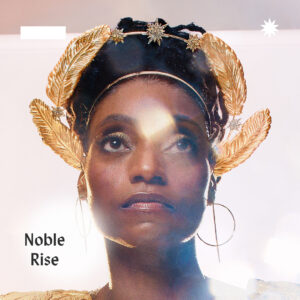
Noble Rise, which I’ve been listening to for the past few days, feels like music that can give us a reason to believe. Can you tell me about the track and about getting Immanuel Wilkins to join you for it?
There’s a legacy of alto players, Gary Bartz, Kenny Garrett, Vincent Herring, Steve Wilson, a whole bunch of guys like, 60s and up that have made their mark there. If you go to see alto these days, you’re going to go see them. So I wanted something that reflected the shape of the alto and where it is.
And I felt that, you know, in a humblest way, I could say me and Immanuel are kind of the prime time people that are out there right now, at least on the alto saxophone alone, that are kind redefining our own music in a certain way.
I wanted a song that moved past Phoenix. Not just the adversity of that and we’re rising from the ashes and the red and everything like that, but just show the grace that I’ve tried to accept this new found attention that I’m getting. And to show people what I’m intending to do with it, how I’m attending to handle it, and to move forward to some of the sounds and things that are coming up soon.
What do you think future sounds are going to be?
I’m looking for a way to kind of combine all of my, I don’t want to say personalities like I’m bipolar or something, but just all the aspects of my personality. I don’t really feel until the Pursuance: The Coltranes album came out that maybe the jazz world really got a sense of who I was as a band leader. Some people didn’t even know I had played with Clark Terry or that I had played with Rashida Lee. They just kind of just met me at the Coltranes place. And I had two albums before that. I wouldn’t say they were flops, but they weren’t as widely recognized.
So there’s a lot of different genres and styles and things that I’ve moved into, but I’ve always stayed true to my home base, which is jazz and the people that have raised me in it. I’m trying to find a way to deal with more legendary people that are genre bending and breaking, but stay true with their integrity and styles. There’s a lot of people out there that are changing the boundaries. You look at Terence Blanchard, look at Herbie Hancock, you look at Wynton Marsalis, Christian McBride. They’ve redefined what it means to be a musician as well as a business person, as well as music has no limits.
Part of what you’re gonna be doing this weekend that is truly part of great jazz tradition and that’s playing at the Hollywood Bowl. What does being part of that tradition and all of the thousands of artists who have played jazz on that stage mean to you personally?
It’s absolutely insane that I’ll get to play in front of an audience that size. Every little kid knows what Hollywood Bowl means. Bowl or not, Hollywood is the mainstream, it is the limelight. A lot of my favorite artists that have played that festival. It was at a time when people were just clamoring for jazz. And I really feel like we’re having a resurgence now with Jon Batiste, Samara [Joy], everything. So to reintroduce the audience to jazz in a way that they may not have heard before and just bring back the crowds to really understanding what live music is like and what you can feel when you actually are present in a show. It’s a one in a lifetime opportunity, really.
Also on the bill this weekend is somebody who’s been a role model and mentor for you and that’s Dee Dee Bridgewater. What role has she played for you?
Dee Dee has shown me that anything is possible. Just from our first meeting, I didn’t even know her and my band was trying to convince me not to go over and talk to her. I was like, I’m out of here, I’m going to talk to her. Just the way that someone could come up to her, you know, out the blue as a stranger and she was accepting it and warm to me. To go from a place of just begging for help to now full-blown friendship and mentorship with me…We always have a joke with each other that she’s always like five steps ahead of me, no matter how I could grow in stature.
I went this past spring to Bern, Switzerland to play a club that I played the first time ever there with Clark Terry. And on the wall was a picture of Dee Dee with Clark. These are the two people that have given me the most and she’s still here. So I don’t know how to say it more. I’m so grateful for who she is and what she means. She’s really almost like a mom.
Since you chose to be a band leader and make all the calls for yourself, what has surprised you most about your journey so far and what are the things that you think need to change or could be better or easier for you?
My god. I guess picking the right team. Traveling the world can be difficult depending on how you look and how you know all kinds of things. Picking a team of people that is supportive and the same goal as you, that is supportive of your safety, supportive of just having good times in the music, picking management, everyone around you almost has to have the same drive as you. So that’s been the most difficult thing.
It’s like these days as an artist, you’re the web designer, you’re the manager, you’re the booking agent. Now where I’m delegating things, you start realize you’re still the gas in the tank. So I have more people working for me, but I’m still working even harder. So I think the workload of the band leader is, I don’t even know what the right word is, but it’s enormous. I would advise people to learn how to take care of you.
A few years ago I spoke to Terri Lyne Carrington, who told me that that her gender justice hat, as she called it, was just one of the things that she she addresses. But she says that women jazz musicians have always had faced different problems just because of their gender. And she said, “If you keep having art reflect one group of people that it’s not good for the art.” It’s only been three years since I spoke to Terri Lyne, but have you noticed any improvements? Are things getting better? Are there more cracks in the ceiling as it were?
There’s always more cracks the same way as time goes on, there’s always more wrinkles. But the adversity is still there. When I found out that for these five Grammys, there had only been three women in this category nominated and [they] were all alive. Note: That category was Best Jazz Instrumental Album.
So the struggles are still there. As long as you can say what’s it like to be a woman doctor? What’s it to be like a woman lawyer? What’s is like? Art only reflects a society. So that’s just the role that we have. And we were in a habit of right now creating, I don’t wanna say hyper masculine music, but we’re only seeing that half and the women that do succeed have to feed on that half of it. Otherwise the guys don’t want to play with you. So it’s tricky.
You’re a saxophone player. You’re not a female saxophone player. You shouldn’t have to be qualified by your gender or by anyone’s sexuality or whatever.
The biggest thing I learned from Terri when I got her to produce Phoenix, I had realized that in order to play with Christian [McBride], in order to play with Clark Terry, all those people, you have to be friends with the guys. And not just be friends with the guys, you have to garner their respect and they have to enjoy hanging out with you and also not over-sexualizing. So therefore you put yourself in like a little box of hoodie wearing, covering up, try to figure out how to be cool. And a whole other side of you does not get expressed and does not come out because you’re so busy trying to be somebody else so that you can survive.
How much do those ideas impact the way you communicate on stage with fellow musicians, if you know that they’re having these thoughts? Is there a way where that interrupts the ability to communicate well on stage as you’re playing?
I kind of see it as almost like a cheat sheet. If I know from experience this is how you’re thinking and I need to say eek, ock, ork to get you to communicate back to me, I can go ahead and say it. But I can say it a little differently. Every time I go to a jam session and sit in and someone thinks, oh God, they don’t know me, who is this? She’s gonna be terrible. And I wear this audience out, their whole mind is shifted. You’re slowly, one person by person, tour by tour, gig by gig, breaking the mold.
So I could choose to see it as like, oh, they’re huge roadblocks. But I’ve always seen them as opportunities. Because if you don’t look at it that way, you will just give up because it’s such a bleak chance of you actually getting where you’re trying to get as a woman. If you look at it that way, you’re going nowhere.
You referenced earlier about responding to the times with your art. What’s uppermost in your thinking these days and how might that inspire the writing that you’re going to do or has inspired writing you’ve already done?
I just wonder why we all hate each other so much. We’re all stuck here. We’re on this planet. Even before me and you came along, it’s been centuries. And we’re repeating the same things over and over again. You know all this greed and power. I really don’t understand it. We’ve created the system. We’re concerned about who has enough money, but we’ve created a currency. So it’s like we have an opportunity to create any type of world we want to.
I just don’t understand why we’ve chosen to just live in a way where everyone is oppressed. Everyone doesn’t feel free. Everyone’s overworked. Everyone is tired. When I go to a show, it doesn’t matter who you are, everyone feels oppressed. And I’m just like, I don’t know how you feel oppressed, but they do. So I just don’t understand why we’ve chosen this. And why don’t we just get along? Like what is the problem with getting along?
How has hip-hop made jazz more interesting for you? And how has jazz made hip-hop more interesting for you, if it has?
It definitely has because that’s the soundtrack of my life. I didn’t come out the womb to Duke Ellington, you know? You come out to womb to like Biggie Smalls, that’s what everybody was dancing to. [In] my neighborhood, I grew up around a lot of Latinos, so they had their own thing going on too, for sure. The flow of a hip-hop thing can influence a horn player, the rhythm behind it, the beat behind it. The way I hear jazz, the way I hear my two and four, maybe a little bit more, I guess rhythmic, in terms of what is possible and what was not.
I wonder what John Coltrane would think today if he landed in the United States and heard what jazz was in 2025.
He’d probably mess it all up. I think he’d be like, what are you guys doing? What is this? I’ve wondered that about him. I wondered that about Miles. And I’ve definitely wondered that about Monk and Dizzy for sure. Where would they sit in? We have a lot more chaos.
Let me finish our time by asking you something that I asked Charles Lloyd when I interviewed him a few years ago. It was something Beethoven said. He said, “Don’t only practice your art, but force your way into its secrets, for it and knowledge can raise men to the divine.” What are you most excited about to discover amongst those secrets on your way to the Divine? Note: Lloyd is also playing the San Francisco Jazz Festival on June 13th.
I try to really understand who I am. You don’t really know who you are til you get to certain circumstances. Until your back is against the wall and you have nowhere to go but right or left. So I’m really trying to like break down the rawness and the vulnerability level of me. I’m trying to find a way to be brave, to be courageous and in a world where the wrong move could change your whole financial trajectory. So I find that my last albums, I’ve always been true to who I am. Now I’m being faced with other decisions. You know, can I just keep doing what I know will be all right? Or should I just continue to reach?
I think you know the answer to that. Yeah. I think in your heart what you want to do, too.
Yeah. Either, I go that way or nothing happens. So guess we’ll see what’s next.
To watch the full interview with Lakecia Benjamin, please go HERE.
All photos of Lakecia Benjamin by Elizabeth Leitzell