


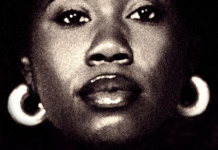






Composer Joel Thompson is clearly having a good, if not great, year. In June, Houston Grand Opera (where he was named the first Composer-In-Residence in 2022), gave the world premiere of A Voice Within. On Sunday, July 20th, his String Quartet No. 1 will have its world premiere at the Ravinia Festival. That concert will be live-streamed on YouTube. Ravinia’s Steans Institute commissioned this composition.
On July 31st The Dream Unfinished will give the premiere performance of Thompson’s setting of poet James Emanuel’s Love’s a Crazy Scrapbook in New York.
Looking forward to 2026, the New York Philharmonic will be giving the world premiere performance of an orchestral version of Rzewski’s The People United Will Never Be Defeated with variations composed by a slew of composers including Thompson, Conrad Tao, Maria Schneider and more. Those concerts, March 12th – March 17th, will be conducted by Gustavo Dudamel.
It is also inevitable that an opera will be forthcoming from Thomspon given his role at Houston Grand Opera. When? We’ll have to wait and see. What will it be? Only time will tell.
Yesterday I spoke with Thompson about his approach to composing, the politics that are inherently a part of his work and how he uses composition as both a journal and spiritual practice. What follows are excerpts from our conversation that have been edited for length and clarity.
Q: You’re a big fan of Rachmaninoff – his Symphony No. 2 in particular. He is quoted as having said, “The new kind of music seems to create not from the heart, but from the head. Its composers think rather than feel. They have not the capacity to make their works exalt – they meditate, protest, analyze, reason, calculate and brood, but they do not exalt.”
I believe your music does both. What are the challenges of writing music that does both?
It’s something that I think a lot about, knowing my own music tastes, knowing that I have music that probably Rachmaninoff would think is in one camp versus the other, that I really hold there to my heart and feels maybe exalts my spirit.
Because composition is a part of a journal practice for me. It is a way for me to analyze what is disturbing my heart through an analytical lens. So my music ends up, as you say, sort of living in between those two separate worlds. I think that the music that exalts, this might be a controversial thing to say in response to Rachmaninoff, but I feel that the music that exalts, that lifting of the human spirit, rarely taps into something that is new. I think it taps into what has already existed. A lot of the new music that really lifts my spirits is the music that taps into something that seems like it’s always existed and I think it gives it that staying power as well. So as a composer of contemporary classical music, I, like Rachmaninoff, don’t try to be new. I don’t to be avant-garde, per se. I try to be honest and tap into what lifts my spirit or what exalts, like Rachmaninoff says.
If you focus on what exalts you, isn’t that really the role of an artist to sort of bring out what’s in them and hope that the audience will go along on that journey?

It’s something I’ve tried, and I think many artists have tried, in the early stages of my career, to attempt to write for someone else. To write from someone else’s ears. It almost never goes well. You have to follow that inner muse, that inner drive, that inner child, in order for something to be successful to you as the artist. I think that has to be held in balance also with the fact that this is not just an expressive art, but a communicative art.
When you prioritize communication, that means you have to prioritize the person you are in conversation with. So I think the foundation of this form of craft is actually listening, not only to one’s internal ear and one’s self, but learning how to listen like someone else.
You’ve commented that one of the things you like about Rachmaninoff is that he just did his thing and he wasn’t concerned with fads and trends and things like that. But we live in a very different time than Rachmaninoff did where everything anybody does is so heavily scrutinized through social media and any other opportunity that they have to express their opinions. What are the challenges of being able to tune all of that out? To write just what you want to write and not care about the trends, the fads, or even the response?
It’s quite difficult. I think this age that we’re living in is full of paradoxes. I feel that social media has given us a lot of access to each other. But at the same time, it’s created an environment in which I feel that everyone is performing for everyone else, rather than authentically communicating one’s lived experience. We end up performing for some sort of benefit. That way of looking at the world has affected even artistic imagination, so that we’ve seen a lot of art that’s being made in the last five years that seems devoid of any heart.
So I feel that it’s important in my own craft not just to tune out the fads, but to try to within myself make sure that I’m not falling into that trap of performing myself. To really try and communicate, not some sort false avatar of who I am, but to really take a look and excavate my own soul.
With my first piece, Seven Last Words of the Unarmed, I found that the vulnerability that’s in that piece has been responded with vulnerability. People who have encountered that work, we have conversations that we otherwise wouldn’t have. And so I think one of the most amazing things that art can do is to create that ability to connect to each other and see each other more clearly, especially in this age of division right now.
We’re talking on the cusp of the world premiere of your String Quartet Number 1. One could argue that is it tougher to communicate without words what your ideas are. What is the conversation you want to inspire with this particular work? And does it matter if the audience understands what it is you’re saying with this piece of music?
I think that’s one of the beauties of this abstract form of art where the organization of these sounds somehow might communicate something to an audience. It is titled String Quartet Number 1, but the titles of the movements might give a hint as to what I’m trying to explore. This quartet is essentially a manual I’ve written for myself to survive this current moment in history. The first movement is Scream, the second movement is Cry, the third movement is Plant, and the last movement is Fight. The first movement is actually a reworking of another piece I wrote in 2019 called In Response to the Madness. It was in response to all of the things that were going on.
It ended up being a scream into the void. I decided to follow it with these three other movements that would help me work my way out of that emotional turmoil and fog. The second movement is an attempt to try and access my own grief – which is actually quite difficult to do nowadays. The third movement is attempt to plant one’s feet in the ground to access your roots, your community, your family, the things that have worked for your ancestors [that] might work in this present moment. The fourth movement is taking all of what has proceeded and using it to resist. In the midst of all of the sort of militant energy of that last movement, there is a moment for love because I feel that love is also an act of resistance.
Was there a form of catharsis for you in writing it?
It was, perhaps, one of the most cathartic writing experiences for me in a long time. Seven Last Words probably was. That was before I was a composer and I didn’t even plan for anyone to hear that piece. I don’t think I will ever be able to reach that level of vulnerability again, but I think this string quartet comes closest to it because my blood pressure was lower. It was like Prozac for me, writing the string quartet, and as soon as I reached the double bar line, I felt depressed again. So I think getting to hear it will give me the boost I need to survive this year.
What did you learn from the composition of that work in 2019? How did that guide you through the composition of this string quartet?
That piece, I chose to write it in a sort of stream of consciousness way. I didn’t really choose a form before working it. A lot of my work is in the vocal realm. It’s so different composing to words. It’s a scaffolding that’s already there. At that time, it was such a challenge for me to think in the purely abstract musical realm without any sort of verbal or literary scaffolding. Writing that piece took so long. It was such a challenge for me.
Whereas this string quartet just flowed out of me. So I think in the time between the compositions, I’ve grown more confident in my communicative powers in the purely instrumental realm. I think that the main difference really between these string quartet works is my own confidence in my ability to communicate what I need to. I’d be interested to hear people’s opinions who have heard both pieces and see what they would think.
Six years have gone by since the debut of that particular work. A lot has happened in the last six years since you first composed that. Let’s say, in the last year, without getting too specific, it feels like we’re regressing in this country. I’m wondering how your thoughts have evolved about what has gone on in those six years.

Honestly that’s what writing this string quartet reminded me of. It’s almost become a spiritual practice. When I was writing the third movement, which is sort of rooted in Afro-Caribbean rhythms, because that’s my heritage, an idea came to me and I had to put it in the piece. And it was just a half step up. It falls down a minor third, and it works itself back up. And it’s just a simple melodic turn. But to me, it represented that, especially from the Black American experience, progress has always been one step forward, a huge swing back, and then we try and work our way forward.
Unfortunately, our history also shows us that blood is the cost. There is always some sort of death. And then we look at the lack of humanity in that situation, and then we decide to do something about it and fix it and move forward. Medgar Evers, Malcolm X, MLK lost their lives. Their histories are a little bit sanitized, but it’s what allows me to write a string quartet in 2025 in spaces people before were not allowed in.
I agree with you that there has been a regression, but history also shows us that there is a way forward. We have to make sure that we don’t let that become permanent. If we all collectively do what we can to move that pendulum in the right direction, we can do it. It’s just right now we’re so individualized. Our technology has forced us apart, but the solution has always been elective. It is always been people from all walks of life working together to lift all of us up. I think that’s the way forward. I’m just trying to write music that will help galvanize that and make that a reality.
Do you consider yourself a political composer and is the writing of music alone in 2025 itself a political act?
I think my identity is inherently political, so anything I do or choose not to do will be a political act. And I think I’ve made my peace with that already. If I chose not to address the issues that are plaguing my spirit and my community, that would be a political act in and of itself. But I want to be able to use the skills I’ve tried to cultivate to do something about these things that are happening. So I guess that does make me a political composer. But it’s a label that that that feels a little uncomfortable simply because it’s so rooted in my identity within this American context.
The acts of composition in 2025, I feel that we are returning to an understanding that has always been there: that all music, all art, is really political. I think there has been some work to sort of erase that reality in our education, in our communication of the canon. But if you look really closely from Fidelio to anything Shostakovich wrote. There’s so many examples of composers doing exactly what I’m doing, commenting on the criminal justice system that they were adjacent to.
There’s a famous prisoner’s chorus. I don’t think Ludwig was not being political. Just the reality of composing in the Soviet Union with Shostakovich. Even some of the composers we don’t think of as political, like Tchaikovsky was wrestling with his own identity through his music. You can’t listen to Tchaic Six without pondering all of the things that he was going through. I think a lot of times the canon is communicated to us as great men touched by God giving us these gifts, but they were human beings like the rest of us grappling with existence and it’s present in their music and by definition is political. I think that exists as much in 2025 as it did in the 1730s.
To hear more of Joel Thompson’s music, you can visit is SoundCloud page HERE.
All Photos of Joel Thompson (©Rachel Summer Cheong/Courtesy Primo Artists)