







Soprano Nicole Cabell has performed the roles of Mimi in La Bohème many times. It is, by a hair, her favorite role. The other is the Contessa in La Nozze di Figaro. So when she had the opportunity to sing the title role in Handel’s Alcina in 2016, it was an opportunity she couldn’t resist.
Nine years later that opportunity presented itself to her again. She will star in Haymarket Opera Company’s semi-staged concert presentation of Alcina at Ravinia Festival’s Martin Theatre on Sunday, August 24th at 1:00 PM.
As it is a concert presentation, there will be edits.
As she told me recently, “This is a slimmed down version, everybody should know. You know, it’s an afternoon concert at Ravinia. So we have a bit of a time crunch, but we think that we will be able to put on a show with all the highlights.”
In the opera, Alcina is a fickle woman on an island with the power to turn the men she seduces into rocks or animals once she tires of them. She has set her eyes on Ruggiero. That doesn’t go over well with his fiancée, Bradamante who dons mens clothing and pretends to be “Ricciardo” in hopes of being able to bring an end to Alcina’s powers. Things don’t go quite as planned, but can Alcina maintain her power by the opera’s end and earn Ruggiero’s love?
In my conversation with Cabell, we discussed how this story might have modern parallels, the operas she’d like to perform in the future and how singing Handel makes her a better artist.
What follows are excerpts from our conversation that have been edited for length and clarity. To see the full interview, please go to Cultural Attaché’s YouTube channel.
Q: Alcina, is 290 years old. What do you personally feel is the resonance of this mystical story today?
It’s interesting, if you look at operas rom all periods of history, the themes generally all revolve around the same things: love, greed, jealousy, heroism. So this opera really has it all. Of course, what I love about this writing is it’s universal. Handel has this wonderful way of writing human emotions in a very transparent way. You absolutely know exactly what the character’s going through via the music, regardless of whether or not you can speak the language. I find it to be somehow a little bit more accessible than some of the music that was written after it in terms of communicating raw human emotion.
I didn’t know the opera, so I spent some time in the last week-and-a-half listening to it while I was working out. I was more productive and accomplished more listening to Handel’s opera than I ever would have been without it, or sometimes with other music. What are the qualities you think that Handel has that could inspire that three centuries later?
That’s a great observation and a good question. I think if you’re not familiar with Handel and you listen to his operas, you’ll find immediately that there is this wonderful sense of rhythmic variety. You might have been listening to a couple of what they call rage arias, where it’s fast and the beat is very strong. It has sort of like an echo to modern music, got this real beat going. You have a lot of what we call fioritura, coloratura around that. So the singers sing a lot of notes around these beats. It’s just very invigorating to listen to. That is supposed to inspire you to say this person is so overwhelmed with emotion that they have to do this much with their voice. I can actually imagine working out on a treadmill to Handel myself.
Also the music has a mathematic complexity, just like Mozart. I think it inspires us on a subconscious level to make a little bit stronger neurological connections with our brain. Then you connect that to the rhythm with the body. You get this sort of listeners high by listening to Handel or Mozart or Bach or Vivaldi.
You sang this role in Geneva in 2016. It’s nine years later. What do you think your relationship and understanding of this opera is now?

I think I have a slightly different vocal approach. One’s voice usually evolves when they get older. So my voice might be in some ways centered a little bit lower. I find that there’s a little more meat in the middle and in the bottom. Those parts of the opera I can lean a little but more into. Also, the older I get, the more subtext I might be able to dig into when it comes to the language. So I spend a little bit more time on how I’m pronouncing things.
But I think the real interesting part is this is semi-staged. Which means it’s basically going to be entrances and exits and implication, as opposed to a fully staged, very active production; what I did nine years ago. I do think that ultimately is going to change some of the intention. I really can’t tell you how yet until we start that process.
Midway throughout act two, Alcina is finally seen through more forgiving and perhaps sympathetic eyes. What do you have to do to gradually reveal that side of her over the course of this story?
Alcina is a very complex character. We learn that Alcina has probably had many lovers in the past that she has enchanted. Who knows how they would have felt about her before she put her spell on them. And when she got bored with them or displeased with them, she turned them into animals or rocks or anything that could please her on her island. This one, Ruggiero, is why this whole moment changes everything for her. She actually does love him. There’s just something about him that made her actually fall in love with him. And so when his lover, Bradamante, dressed as a man, comes to the island to rescue him, and he eventually finds out the truth and goes back to her, it’s a real heartbreak for her.
The challenge is making sure you see her character arc. Really it’s not as black and white as one might even read because of the way Handel writes it. Who knows if it’ll be successful what I do, but that’s my intention is to have a gradual reveal of her character to rebuild the sympathy.
The end of this story is not happy for Alcina, but at least you don’t die. That’s unique for sopranos. You have played a lot of female roles who inevitably have to die at the end of the opera. How refreshing is it to play a figure that doesn’t have to?
That’s really funny, too. I think it was 2019. I did four rolls in a row and I died in the first three. So it was La Traviata, La Bohème and Romeo and Juliet. I really mastered dying. But [Alcina] gets left on that island by herself in the ruins. Her entire fantasy collapses. The magic is snuffed out. So she is spiritually dead. But no, it’s refreshing
Doesn’t she sort of start spiritually alone? I mean, isn’t that what brought her to the place where she is at the beginning of the story anyway?
She is spiritually bankrupt, right? She has this power and she’s used it for really nefarious purposes. Why does she keep using it to enchant these men who happen to get lost on this island? One could say she’s lonely. But she’s actually not a morally good person. It could just be that she’s been on this island for so long that she’s kind of gone mad. Let’s just put it this way. I think she gets what she deserves. You can feel sorry for her, but she absolutely gets what she deserves, she’s not a good person.
As we’re talking about this, I sort of feel like Alcina is no different than people using social media today. She presents herself the way she wants to be seen. She tries to control how that image is accepted and feared in her particular case. But ultimately, she’s no different than the Wizard of Oz.
She’s a catfish. They actually see her for what she is once the magic’s broken, right? You’ve seen some productions where she’s an old hag. Other productions where she is just a monster. But whatever she is, it’s not what she has presented. So I think that’s a really interesting and relevant comparison to say that she’s using the smoke and mirrors of her time comparable to social media. Oh, absolutely. The interactions that she has with people are disingenuous. That tracks.
You’ve performed roles in operas and in concerts by composers, Mozart, Puccini, Gershwin, George Walker, William Grant Still, Poulenc, Barber and more. What roles and composers do you feel fit best in your voice today and fill you with the most personal satisfaction?
Great question. So my favorite role to sing is Mimi in La Bohème. She is and has always been. When I was younger and I couldn’t sing the big roles, I said, well, can I please just get to the point where I can sing Mimi? I started out singing the other character, Musetta, in the opera. When I started singing Mimi, it just fit like a glove. So I’ve sung that in a lot of places and it is definitely my favorite role.
However, I’ll say this, I’m still not the optimum Puccini singer. My voice has a soft hue. I can’t imagine singing Mimi in a 3000 seat house necessarily. If pressed, I would say if there’s a role I could sing anywhere all over, it would be the Contessa in the Le Nozze di Figaro, a Mozart opera that you can have a slightly warmer, richer voice for, but you don’t have to compete with the orchestra. It is just written optimally for my range. So I’d say 51% Mimi, 49% Contessa.
In 2015, you told Schmopera that, “I never thought I would sing Alcina. I never thought I would sing Merry Widow.” Ten years later, are there other roles you never thought you would sing that doing Alcina and Merry Widow have given you the confidence to tackle?
Yes, actually. I have never sung Strauss. I think Strauss can be big again for my voice, but I do think there are some Strauss operas…Rosenkavalier, I would love to sing. There are a few roles I’d still like to stuff in there before before the dreaded change happens in women’s voices. This typically happens in their fifties. So I would like to get in some Strauss before that happens and just see what that feels like. And I do have the confidence to move forward with that.
I’m actual singing my first Cendrillon [Cinderella] this year, which is hilarious because I am in my late 40s. This is North Carolina Opera. I love that they can trust me with this to try to give that youthful color to this role. You have less fear when you get older because you know you’re at that point in your life where, okay, I don’t have to carry this role for the next 20 years.
Doesn’t getting older not only come with less fear, but also greater acceptance of what reality is at this point?

Yes. I hate what happens to the body and I love what happens to the mind. With the exception of forgetting where my keys are sometimes. But I really enjoy this increased sense of confidence and just not caring as much what people think. It just doesn’t matter. But that comes also with the fact that I have a legacy now. I’m very happy that my career has been nice and full and fat. And I have recordings to show for it. And I’ve done everything that I wanted to do. So at this point you say you have funny money. This is like funny years. I can play with these years now at this point in my life.
Handel is quoted as having said, “I should be sorry if I only entertain them. I wish to make them better.” How has performing Alcina made you better?
Handel’s made me better the way any great composer makes you better when you sing their music. That you’re able to challenge yourself beyond what you initially thought you could do. You’re living in a place where you’re creating music that, again, I think creates stronger neurological links in your brain. It’s just like brain food, but it’s also really healthy for the body and so it makes you a better singer.
If you start to dig deep enough into the music and into the text, learning about the human condition always makes one a stronger human, right? To understand how you might be similar to even the worst characters and to look inside yourself and say, how do I avoid these kinds of behaviors. What can I learn from the justice that was heaped upon her at the end. What can any of us learn from that? It challenges you to just make sure you’re genuine and honest and a good person.
To see the full interview with Nicole Cabell, please go HERE.
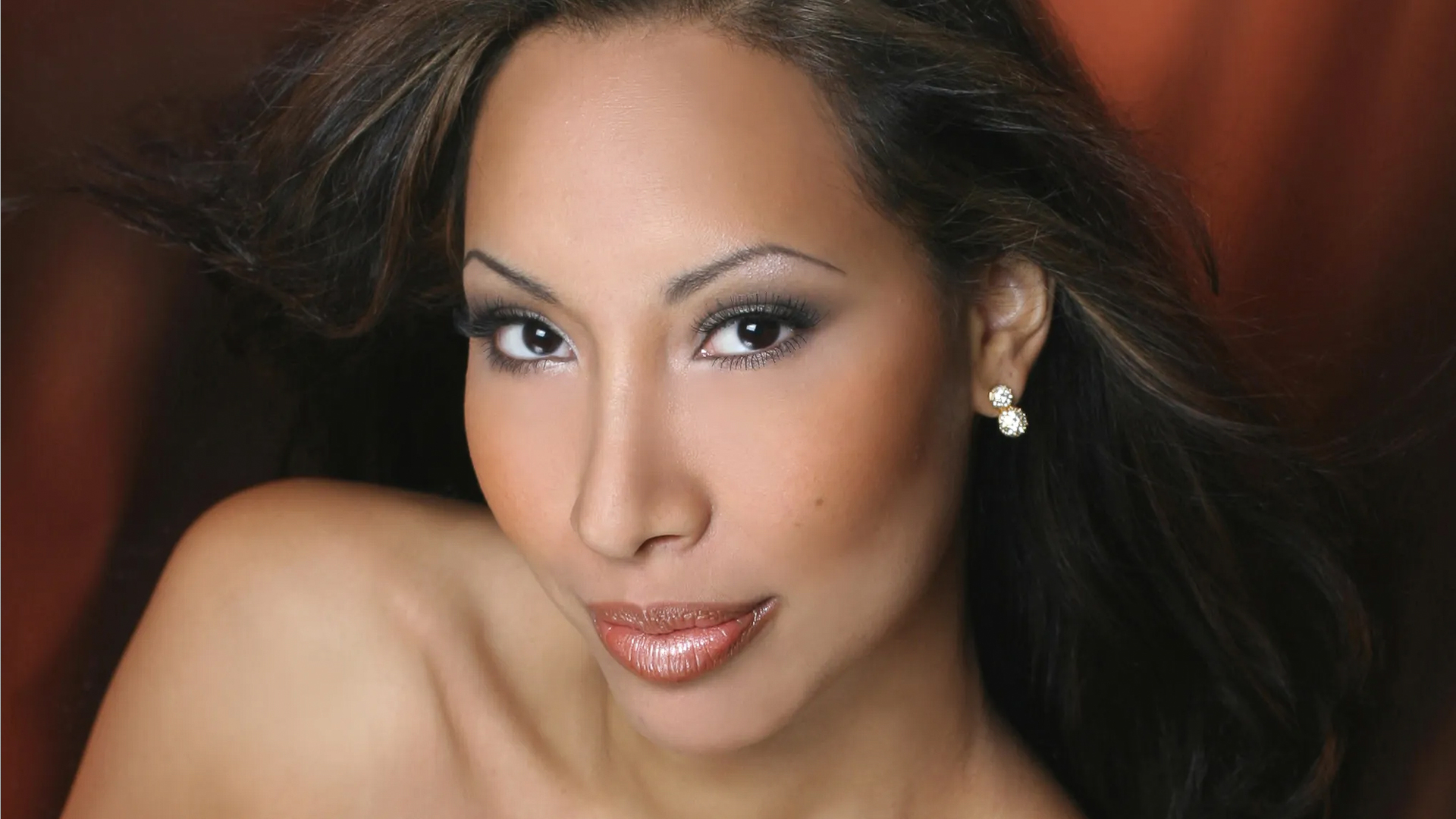
Main Photo: Nicole Cabell (Photo by Devon Cass/Courtesy Minerva Artists)