


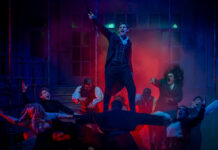
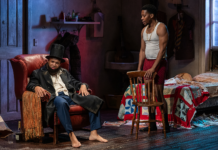




When Maurice Ravel composed Boléro in 1928, he could not have known that the relentless, hypnotic rhythm that made it one of the most performed works of the twentieth century would also come to embody the early symptoms of his own neurological decline. Nearly a century later, playwright, actor, and composer Jake Broder has found in that same music a vessel for a deeply human story — one that connects art, illness, and the fragile persistence of love. That is his play Unravelled having its world premiere this weekend at The Wallis in Beverly Hills from October 17th – October 19th.
Broder’s play draws its inspiration from Radiolab’s Unraveling Boléro, a 2011 broadcast that first brought to public attention the theory that Ravel may have been suffering from frontotemporal dementia (FTD), a condition that can paradoxically spark bursts of creativity even as cognitive function begins to fade. For Broder, who was facing his own father’s uncertain diagnosis at the time, the story struck a chord that was as personal as it was artistic.
What began as a moment of empathy in a parked car became a theatrical journey across time — linking Ravel and his muse, Ida Rubinstein, with a contemporary couple, Robert and Dr. Anne Adams, navigating the same haunting terrain. She, too, found inspiration in Boléro. Unravelled fuses narrative, music, and visual art into a meditation on the brain, creativity, and the hope that flickers in even the darkest spaces.
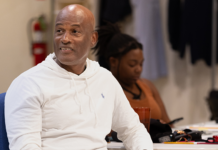
Last week I spoke with Broder about Unravelled. What follows are excerpts from our conversation that have been edited for length and clarity. To watch the full interview with Broder, please go to Cultural Attaché’s YouTube channel.
How did you first become aware of this story?
I was listening to Radiolab, and Jad Abumrad and Robert Krulwich did this great twenty-minute piece called Unraveling Boléro. I had one of those public-radio, sitting-in-my-car moments where I couldn’t get out until it was over. At the time, my father had something going on — we didn’t know what it was yet, no diagnosis — and that was a really fearful place. I realized later that some people never even get out of that kind of nameless fear. I was scared.
Then I heard this story about a kind of dementia that provides a burst of creativity before things start to deteriorate. It filled me with hope. That hope was stronger than the fear. And I knew I was duty-bound to tell this story, because if it could make me feel that, it could help others too.
Ravel is quoted as having said, “I did my work slowly, drop by drop — I tore it out of me by pieces.” I’m hoping your process of writing Unraveled wasn’t quite so torturous.
I’ve been working on this since 2017. Ravel was a major composer, and I’m just a monkey throwing spaghetti at the wall — not comparable. But I think of him as slow and methodical rather than tortured, like a watchmaker.
My process is fits and starts. I drafted this three times before I found the one that worked. Those early versions came fast, then came the slow process of revision — the watchmaker details. Sometimes it’s tortured, sometimes slow and methodical, sometimes trying to capture lightning in a bottle. But this project is deeply collaborative — about thirty people are working on it. There’s direction, acting, music, paintings, video, set, costumes. All of it integrated to tell the story. So a script is merely a blueprint.
Boléro premiered in 1928. One woman in the audience shouted “Au fou!” — “The madman!” Ravel supposedly said, “She gets it.”
His relationship to Boléro was ambivalent. He knew it would be the top line of his obituary, and he hated it — both true at once. He was not comfortable revealing himself. Boléro came from a different place, maybe too revealing. It made him uncomfortable, so when someone called it madness, that was almost a relief. An artist’s relationship to their work is often unimportant, but in this case it’s part of the drama: when you know your brain is changing, how do you treat yourself? It’s a question more than an answer.
Take me back to 2021, when you presented a version of Unravelled virtually during the pandemic. How has it evolved in the years since?
The script has been given FTD. The form and the content have become more married. There’s a scene in 1927 Paris where Ida Rubinstein and Ravel meet for the first time. Then there’s a scene of Robert and Anne at home having supper. Both Ravel and Anne pick up a steak knife from the wrong end and cut their hands — evidence to their partners that something is wrong.
Those scenes used to be separate. Now they’re fused — we call it the “fugue,” where two couples in different times interact simultaneously, like a string quartet. That bending of time and space now runs throughout the play.
You’ve been open about your father’s illness. How much did that experience inform the relationship between Robert and Anne?
The dynamics of dealing with a dementia diagnosis in a family occupy a big space inside me. It informs the play emotionally. The relationship between Anne and Robert is about the mistakes — the red herrings, the misnomers, the moments when we get it wrong. It’s about how we misattribute behavior when there’s a diagnosis. Love between two people is tied to identity, and when identity changes, how does love transform? Where are the boundaries? Those are the questions.
I think I wrote this because I was looking into the abyss and wanted to find a way through it. Characters who struggle and still find love — maybe that’s wish fulfillment. But I often write about what I fear most. It’s how I process publicly.
Does looking into that abyss allow you to see something beautiful on the other side?
Sometimes. Usually that’s the hope. That’s why you go through the fire — to try and share what you find.
You’ve written about Louis Prima and Keely Smith (Louis & Keely Live at the Sahara) and about John Wilkes Booth’s brother, Edwin (Our American Hamlet). What fears led you to those stories?

Louis & Keely was about a man incapable of love, addicted to the approval of an audience. He blew it because he chased relevance through fans. That was me wrestling with ego — the worst version of myself.
The Booth story was different. It’s not about politics; it’s about fame. Edwin Booth could have stopped his brother. He withheld kindness, clung to his status as the best actor in the world. John Wilkes Booth became the first celebrity murderer — the first school shooter.
It’s a parable about who we are — a family sickness visited on a nation.
What was your relationship to Boléro before all of this?
I played it in orchestra when I was young. I appreciated its mechanics — it felt mechanical but had this emotional punch. I always wondered why it was so popular. The piece reminds me of genetics: the same information repeated with small variations — like mutation. When I learned about FTD and Ravel’s condition, it freaked me out. Boléro felt like a perfect expression of the disease — not just coincidentally, but profoundly accurate. Ravel was articulate enough to capture what was happening inside him. His technique allowed him to express it. The piece becomes a feature, not a bug, of the condition. It gives it a new layer of meaning.
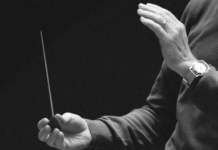
Watching Boléro performed live is an amazing lesson in orchestration. [You can watch a live performance of Ravel’s Boléro HERE]
And listen to the audience at the end — it’s designed to blow your face off.
Bruce Willis’s FTD diagnosis has brought new awareness to the disease. What do you hope Unravelled can do for public understanding of the disease and how it manifests?

The fact that Bruce Willis has this, and that his wife, Emma, has become an extraordinary FTD advocate — she’s helping us with outreach — it’s huge. When a disease has a name people recognize, like Lou Gehrig’s, it unlocks empathy. FTD is different — it’s behavioral, not about memory. It’s the most common form of dementia under 60, but people still whisper about it. Having someone like Bruce Willis associated with it makes people listen. God bless Emma for turning pain into help — that takes courage.
We’re ready for a pink-ribbon moment. Cancer used to be whispered; now we can talk about it. Dementia is still terrifying, and people say, “If I ever have that, just shoot me.” We’re living in the dark ages about it. There are real advances happening — therapeutics, treatments, hope. We’re at the beginning of being able to arrest certain dementias early.
But first we need a cultural shift — an emotional language. You move people past fear by giving them something positive to hold. That’s hope. And that’s what this story shows: a neurodegenerative condition that also produces creativity. The proof is Boléro. If that’s true in the extreme, how much is it true for all of us?
How do you balance what you want people to learn with entertainment?
Absolutely. I want people to have such a good time they don’t realize what a bad time they’re having. My job is to insorcel and amaze — to get into your heart. I hope audiences feel mystery and wonder.
We’re also building outreach around the play — a “brain health festival.” When people see the show, they want to talk, to share stories. So we created a way for that energy to go somewhere positive. It also takes pressure off the art to be “worthy” or didactic. Theater isn’t a lecture — it’s a journey. Strap in. We’ll take care of you.
To watch the full interview with Jake Broder, please go HERE.
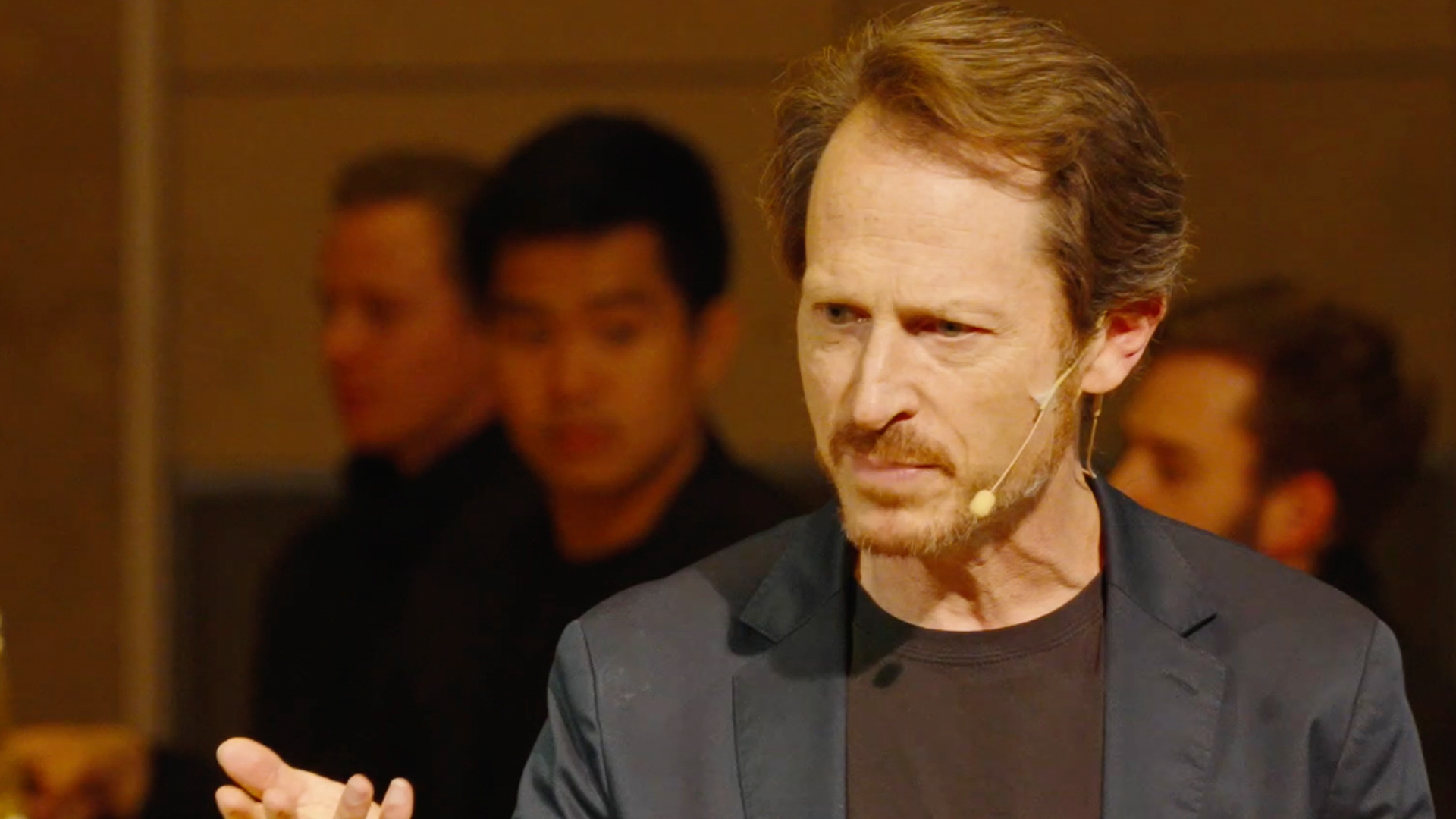
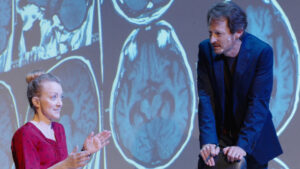
Main Photo: Leo Marks in Unravelled (Photo courtesy Rapt Productions and The Wallis)