








When playwright, actor, and composer Douglas Lyons made his Broadway debut as a writer with Chicken & Biscuits in 2021, he didn’t just introduce a new family comedy — he introduced a new sensibility: unapologetically joyful, emotionally grounded, and vibrantly Black. Since then, Lyons has expanded his creative universe with Beau the Musical, a show he co-wrote that explores love, legacy, and chosen family, and Don’t Touch My Hair, which completes his “Deep Breath Trilogy.”
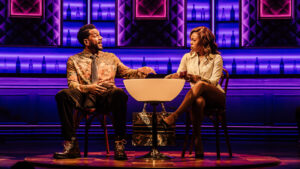
Now, as Table 17 which officially opens tomorrow night at the Geffen Playhouse, Lyons turns his attention to romance. The second play in that trilogy, it’s a bold reimagining of the rom-com form — one that invites the audience into the story as active participants. Mixing fourth-wall breaks, flashbacks, and bursts of stand-up humor, Table 17 celebrates both imperfection and connection. “I’m not writing for critics,” Lyons says. “I’m writing for audiences — and I’m writing for Black women.”
I spoke with Lyons about breaking theatrical conventions, writing through Broadway performances, and insisting that joy — especially Black and queer joy — deserves a central place onstage. What follows are excerpts from our conversation that have been edited for length and clarity. To watch the full interview with Lyons, please go to Cultural Attaché’s YouTube channel.
Q: You said that Chicken & Biscuits made you realize, “Maybe I’m not writing for New York. I’m not writing for critics. I’m writing for audiences. I’m writing for Black women.” Was there a sense of liberation in that?
Absolutely. The world is bigger than New York. Broadway is the NBA or NFL of theater, sure, but as a storyteller, you can take your stories wherever they’re received. This year alone, I’ve been in Los Angeles twice — with Don’t Touch My Hair and now Table 17. The realization was simple: go where they want your story. That’s the beauty of it.
You spent years performing in musicals, both on Broadway and on tour: Beautiful, The Book of Mormon, Parade. How does being an actor influence your writing?
Completely. The actor in me asks, “What did the writer intend?” And when I’m the writer, I obsess over rhythm — the tempo of every line, my own sort of iambic pentameter, even if it’s modern speech. I want it to sound like real conversation but land like music.
I imagine it’s a revelation hearing actors interpret your lines.
It’s the best kind of collaboration. Before we came to Los Angeles, I emailed the cast — “What do you need? What feels off?” I always do a polish before a production. But once you’re in the room, you also have to say, “Let’s try it this way.” It’s a constant conversation.
Table 17 is part of your Deep Breath Trilogy, following Chicken & Biscuits. Romantic comedy is a tricky genre. What made you take it on?

I wanted to break form. Table 17 is inspired by those late-‘90s, early-2000s rom-coms — Love Jones, Two Can Play That Game, Love & Basketball. I wanted that feeling of love through a Black lens, but I paired it with stand-up comedy. The characters talk to the audience, check their outfits before the date, invite you in. The audience becomes the fourth character. What’s wild is how people react — older white women and young Black women yelling together at the same lines. It’s community. That’s what theater should be.
Did you expect that level of audience participation?
Not at all! It’s beyond what I imagined. At the Geffen, we seat over 500 people, and they talk back. I’ve had young Black men come up and say, “Yo, we see you.” That’s the dream — a space where people don’t just watch theater, they engage with it.
Without giving spoilers, you make a bold narrative choice near the end — one I’ve never seen in a rom-com. How did that come about?
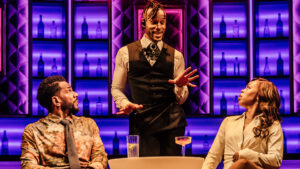
Honestly, discovery. The play evolved through workshops. It was first commissioned by the Provincetown Theater, and I was finishing it backstage during Parade. Each time we mounted it — in New York, now in L.A. — I listened. I wanted the audience to be constantly surprised but emotionally grounded. The real question at the end isn’t who’s right — it’s is the love worth fighting for?
How were you balancing being on Broadway in a heavy drama with complicated music by Jason Robert Brown and writing a romantic comedy?
[Laughs] Carefully! During Parade, we were onstage for most of the show, but I’d steal five-minute breaks to write. I’d climb to my laptop in the tower, type a bit, go back down. I finished Table 17 that way — between matinees, naps, and meals. When the story’s humming in your head, you’ll find any window to get it out.
I laughed out loud several times reading the play. That rarely happens. How do you know when something is funny before hearing it onstage?
“I’ve learned to trust my silly. The humor I grew up with — my parents’ quick wit, Black family banter — that’s gold. I used to overthink it. But now I know, if it makes me laugh, it’ll land with the right actor. Working on Fraggle Rock taught me comedic structure — the setup, the blow, the rhythm. Everyone’s silly is different, and finding mine changed my life.”
The script I read was dated just a few days ago. Are you still making revisions?

Always. For this production, I adjusted the character balance so both leads carry equal weight. Dallas needed more space to stand in his truth. I also localize the play — in New York it referenced the Knicks; in L.A., the Clippers. And sometimes a rewrite is purely logistical — giving an actor time for a quick change!
You’ve mentioned that “joy” is your mission as a writer. Why is joy so important to you — and why is it missing from so many stories?
It’s not the writers — it’s the programming. Theater likes to be elitist, “high-brow.” That’s whack. We tell working people their stories aren’t smart enough. Comedies are dismissed as lesser art, which is ridiculous. There’s a generation that would love to come to the theater if they saw themselves reflected there.
Look, the world’s heavy. People scroll their feeds and see trauma. So when they come into a theater, joy is an offering — a reprieve. I want to be that conduit.
At the risk of making comparisons — would it be so terrible if you became the Neil Simon of this generation?
[Laughs] Not terrible at all! I’ve also been compared to Norman Lear — another New Haven kid. But I’ll always be the Douglas Lyons version. What matters is making space for all kinds of stories. Theater should have genres like film and TV do — horror, rom-com, suspense, everything. It’s not “worthy or unworthy.” It’s alive or it’s not.
You were in Los Angeles earlier this year with Don’t Touch My Hair, the third play in your trilogy. What did that workshop teach you?
That I like stirring conversation. The show’s highly technical, very opinionated, and audiences leaned in. We sold out the final weekend. It already has a production at the Unicorn Theatre in Kansas City, with others in discussion. I love that theaters are starting to say, “We want all three plays.” You can actually stage them in repertory with just 11 actors.

In New York, your musical Beau has returned to St. Luke’s Theatre. How does it feel to see that show back onstage?
It’s been a long journey, and deeply moving. I’m proud to bring fellow alumni from the Hartt School with me — Michael Rishon, Seth Eliser — these are family. Beau is like if Rent met Once, but queer. It’s about music, memory, and love. People cry, they come back multiple times. One woman even got a Beau tattoo. That’s impact.
Looking back, do you think Chicken & Biscuits and other plays by Black playwrights carried extra pressure, coming during that 2021–22 Broadway season focused on Black voices?
The pressure was there — but I chose not to carry it. I knew why we were programmed, coming off the George Floyd moment. I’m not grateful for the reason, but I’m grateful that it made people rethink who they put onstage. What I learned is that success isn’t defined by Broadway alone. Chicken & Biscuits opened doors everywhere else.
Last question — what would 17-year-old Douglas, playing Tony in West Side Story at Hill Career Regional High School in New Haven, say about your career now?
[Smiles] He’d say, “Damn right.” I was ambitious even then — auditioning for Rent at 19. That spark never left. The surprise would be that I became a writer. I wrote songs for years before I wrote plays because I was afraid to fail. But now I know words can move people just as much as music ever did.
To watch the full interview with Douglas Lyons, please go HERE.
Table 17 is now playing at the Geffen Playhouse in Los Angeles through December 7th.
Beau the Musical is now playing at The Distillery at St. Luke’s Theatre in New York through January 4th.
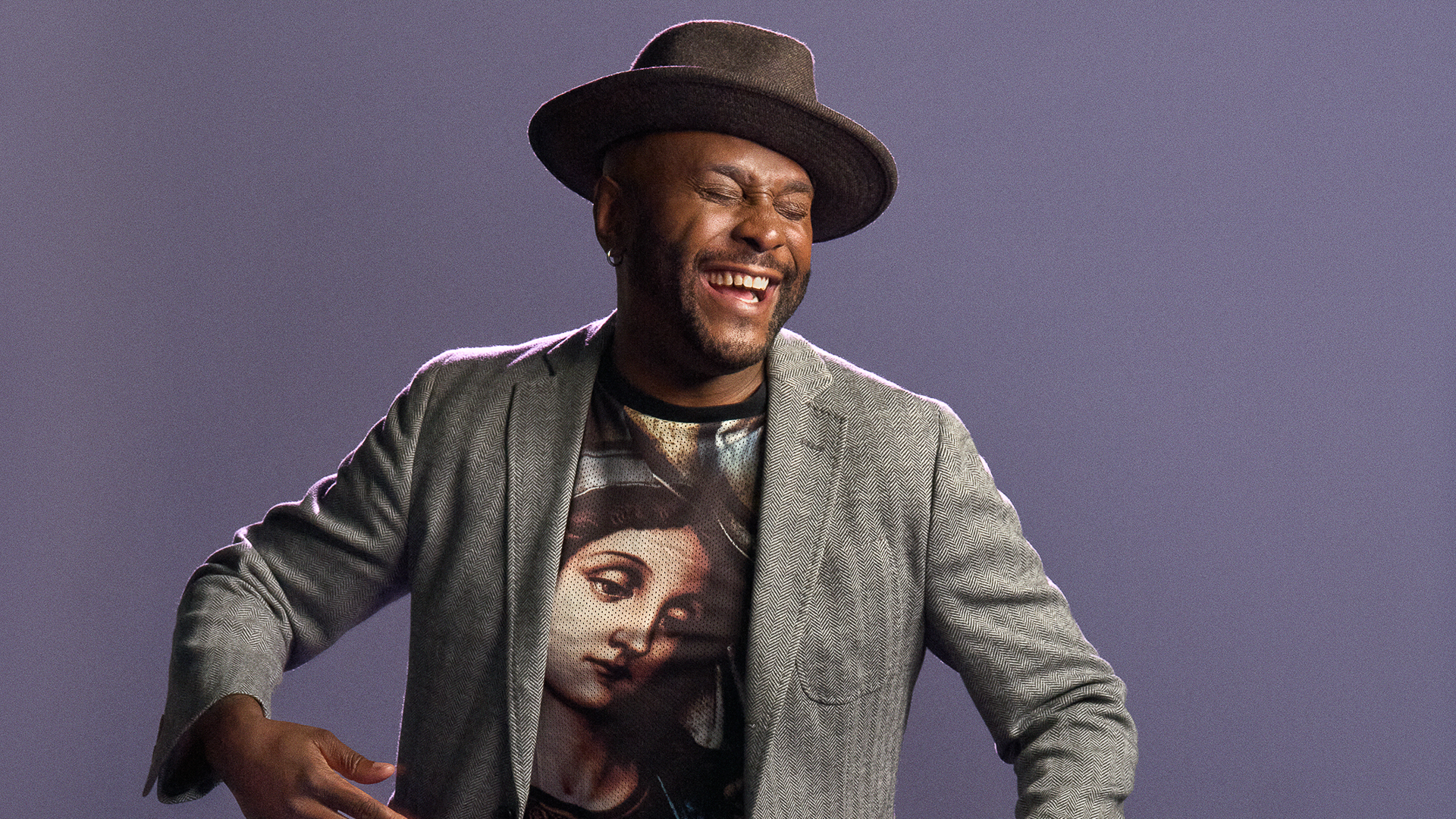
Main Photo: Douglas Lyons (Photo by Corey Olsen/Courtesy Geffen Playhouse)