







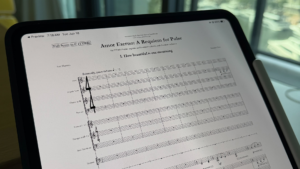
The Gay Men’s Chorus of South Florida will present the world premiere of Amor Eterno: A Requiem for Pulse on June 19, marking ten years since the Pulse nightclub shooting. Just days later, composer Saunder Choi will see another major work unveiled when the Gay Men’s Chorus of Los Angeles premieres Credo on June 27 and 28.
For Choi, Amor Eterno is both a deeply personal response to a tragedy that affected him profoundly as a gay immigrant and an ambitious artistic undertaking. Drawing inspiration from Brahms’ Ein Deutsches Requiem, the work explores grief, remembrance, love, and the possibility of healing. In this conversation, Choi discusses the emotional toll of creating the piece, the role of art in memorializing collective trauma, and why he believes music can still move us toward a more compassionate future.
Q: How did the commission for Amor Eterno: A Requiem for Pulse come to you, and what made you want to take it on?
Saunder Choi: Gabe Salazar and I know each other through Southern California choral circles. He did his master’s degree at Cal State Fullerton, where Rob Istad teaches. Rob has been a friend of mine for years, and I sing with Pacific Chorale, which he directs. Through those connections, Gabe and I met and stayed in touch.
I had also been writing for GALA choruses for a while, mostly arrangements but also some original works. I do a lot of arranging for the San Francisco Gay Men’s Chorus and the Gay Men’s Chorus of Los Angeles. After reconnecting at a GALA conference a few years ago, Gabe reached out and invited me to write a larger work. At that point, we did not know it would be a requiem. He simply knew he wanted a substantial piece that would commemorate ten years since the Pulse tragedy.
That event changed something in me. I grew up in the Philippines and always viewed America as a place where people could be whoever they wanted to be. I moved here in 2012, so Pulse happened only four years after I arrived. My understanding of American politics was still pretty naïve.
Of all the mass shootings happening at the time, Pulse felt personal because I am a gay man. I had come to America believing it was a place where I could freely express who I am, and then suddenly there was this horrific act of homophobia displayed in broad daylight with so many lives lost.
That year I actually wrote another piece responding to Pulse called American Breakfast. So Amor Eterno is not my first response to the tragedy, but it is a much more mature one. It has been almost ten years since I composed that earlier work. On a purely artistic level, writing a requiem is also one of the summits of being a choral composer. It is something I have always wanted to do, and this felt like the right cause and the right project.
Q: You have spoken about Pulse as shattering certain illusions you had about America. Was there also a visceral emotional response?
Saunder Choi: Absolutely. There was sadness and disgust. It felt like the vision of the American dream that had brought me here was fractured. It was a stark loss of innocence for me and a shattering of my perception of America.
Unfortunately, events since then have not exactly repaired that perception. When Hillary Clinton lost the election, that was even more heartbreaking. I felt hopeless, like many people did. It seems that every time you think things cannot get worse, they somehow find a way to get worse.
But I remain hopeful. That is why we create art. We memorialize events because these stories matter. Art has this remarkable ability to honor tragedy, joy, and everything in between.
Q: We often talk about art providing catharsis for audiences, but what kind of catharsis do you experience as the creator?
Saunder Choi: I think it happens in two ways. First, when you are creating a work like this, you spend so much time with the text. You are engaging with it every day.
For this requiem, I worked with poetry by Leo Herrera, Brian Sonia-Wallace, Amir Rabiyah, and Andrea Assaf. Their words broke me open. I kept telling Gabe that this work chipped away at me emotionally. It was painful, but it also offered comfort and hope.
That is partly why I leaned on tradition while creating the piece. I used Brahms’ Ein Deutsches Requiem as an architectural model. Brahms created a requiem that was focused on the living rather than the dead. It is one of the most human centered requiems ever written. I really connected with that idea.
As a choral singer, I have performed the Brahms requiem multiple times and have always found profound beauty and emotional weight in it. That became an important guidepost for me.
Q: At what point did you realize the piece needed to be a requiem?
Saunder Choi: It became obvious pretty quickly. If you are creating a large scale work to honor people who died, a requiem feels like the natural form.
Today, the definition of what a requiem can be is much more fluid than it once was. Modern opera, oratorio, and requiem traditions have all expanded. I felt free to create something that honored those who died while also providing an emotional journey for those still living.
That was the lesson I took from Brahms. The work moves from grief toward comfort.
Q: This is by far the longest piece listed among your works. How did you push yourself as a composer to sustain a work of this scale?
Saunder Choi: The piece is actually closer to forty five minutes than thirty five.
The original commission was for thirty minutes, but once I started studying the Brahms requiem more closely and working with the texts, I realized the piece needed additional space. I commissioned four writers to create the libretto, and as the poems arrived, it became clear that the music needed room to breathe.
I have never really struggled with length. I tend to write longer pieces anyway. Even when someone commissions a standard choral octavo from me, it often ends up being five or six minutes long rather than three or four.
Storytelling is important to me. Most of the poetry I set is new poetry. Audiences are hearing these texts for the first time. I want the words to unfold naturally and communicate organically. Sometimes that takes time.
Q: Earlier you said the piece chipped away at you emotionally. Was that because of the scale of the work or because of the material itself?
Saunder Choi: It was definitely the material.
One of my favorite moments in the requiem comes from a text by Amir Rabiyah. In Brahms’ third movement, the baritone soloist contemplates mortality and asks, “Lord, make me know mine end.”
Amir responds with these lines: “What happens after bones and ash? What happens after your scent has faded from here?”
I find those words heartbreaking and beautiful. When I was composing that section, I found myself tearing up.
Q: When you encounter a question like that in the text, is your music trying to answer it or illuminate it?
Saunder Choi: I do not think the piece answers it because none of us really know the answer.
The music can offer comfort, but it cannot provide certainty.
My own spirituality certainly influences the work. I am a Unitarian Universalist and have served as a music director in a Unitarian Universalist congregation since 2018. I connect deeply with the openness of that tradition.
Whether there is an afterlife or not, that question remains real. What happens after bones and ash? What happens after our scent has faded from this earth? Those are questions all of us eventually confront.
Q: Did your spiritual life help shape how you approached those questions musically?
Saunder Choi: I think it is all of it. My spiritual life, my musical experiences, the requiems I have sung and studied, all of those things contribute.
There is certainly some influence from De Profundis. There is definitely the influence of Brahms. But more than anything, I focused on the emotional arc of the work.
I wanted it to move from grief toward comfort.
Musically, that means beginning in a darker place and gradually opening up. By the final movement, I wanted to honor both the traditions of the requiem and the culture surrounding Pulse.
Pulse was Latin Night. There was bachata, salsa, reggaeton, banda. That music was part of the community.
At the same time, I wanted to honor the tradition of writing a fugue at the end of a requiem. Leo Herrera wrote the line, “It is a blessing to close your eyes on the dance floor. For what is a dance floor after all but a vision of heaven?”
So I thought, if heaven is a dance floor, then the music should become one. The final movement is essentially a salsa fugue.
Q: How important is it for you to bring your own experiences into your music?
Saunder Choi: I think it is inevitable.
One of my favorite hot takes is that no music is truly original. As composers, we are curators. We curate everything we have studied, heard, learned, and experienced.
That is true for all artists.
The originality comes from how we put those influences together. The best artists have no choice but to incorporate themselves into their work because that is where authenticity comes from.
Q: How have your own experiences with loss and grief informed this piece?
Saunder Choi: Quite a bit.
Loss takes many forms. It is not always death. We grieve many things throughout our lives.
My grandfather died during COVID. It was an incredibly difficult time because I was here in the United States and could not go home. In the Philippines, restrictions were very strict. My family was not even able to properly see him. They stood outside the hospital while he was taken away by people in hazmat suits.
My great grandmother died while I was on tour in Canada. I could not attend her funeral either.
Even while I was orchestrating this requiem, two members of the Southern California choral community passed away unexpectedly.
Loss is everywhere. We see it in our families, our churches, our choirs, and around the world. Grief takes many forms, and all of those experiences inevitably become part of the work.
Q: Is it naïve to think that a composer can move the needle by creating a work like Amor Eterno?
Saunder Choi: I certainly hope not.
Whenever I think about that question, I think about Craig Hella Johnson‘s Considering Matthew Shepard. He took a very specific story and transformed it into something people could connect with on a deeply human level.
The choral art form is uniquely powerful because it is communal. You are not dealing with a single performer. You have dozens, sometimes hundreds, of people embodying a story together.
With the Gay Men’s Chorus of South Florida, more than a hundred singers are bringing this work to life. My hope is that the piece continues to be performed so that the story of Pulse continues to be remembered.
Ultimately, I do not want audiences to think of Pulse solely as an LGBTQ+ story or solely as a mass shooting story. I want them to see it as a human story about grief, loss, love, and resilience.
Q: Maya Angelou once said, “A great soul serves everyone all the time. A great soul never dies. It brings us together again and again.” How has writing Amor Eterno served your soul, and how would you like it to bring people together again and again?
Saunder Choi: I would like people to leave realizing that no matter who we are, gay, straight, Democrat, Republican, whatever race or background, we all share these universal experiences of grief, love, loss, and sadness.
One of the mothers of a Pulse victim kept repeating a phrase during interviews we conducted for the project: “Grieve with love, not hate.”
That line became part of the text.
No matter what happens in this world, I think that is the lesson we need to carry forward. We have to approach things with love.
The requiem ends with a call to action: “Honor them with action. Honor them with action. And when change comes, we shall all rejoice.”
I want audiences to leave understanding that there is still work to be done. Singing about these stories is a form of action, but there are many other ways to create a better future.
That is what I hope people carry with them after hearing the piece.
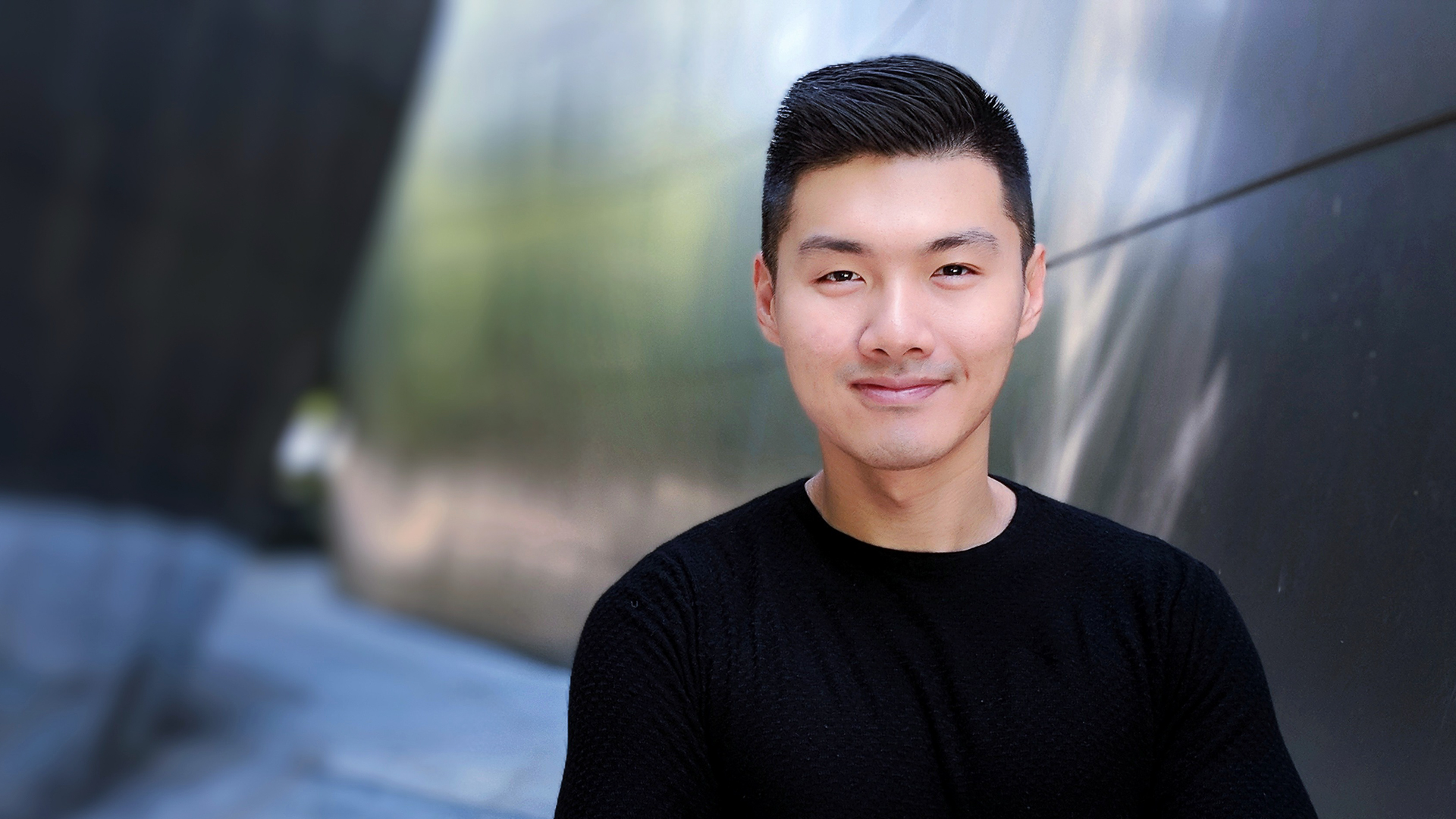
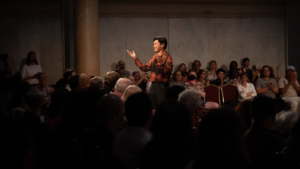
Main Photo: Saunder Choi (photo by Pete Agraan) All images courtesy Saunder Choi