





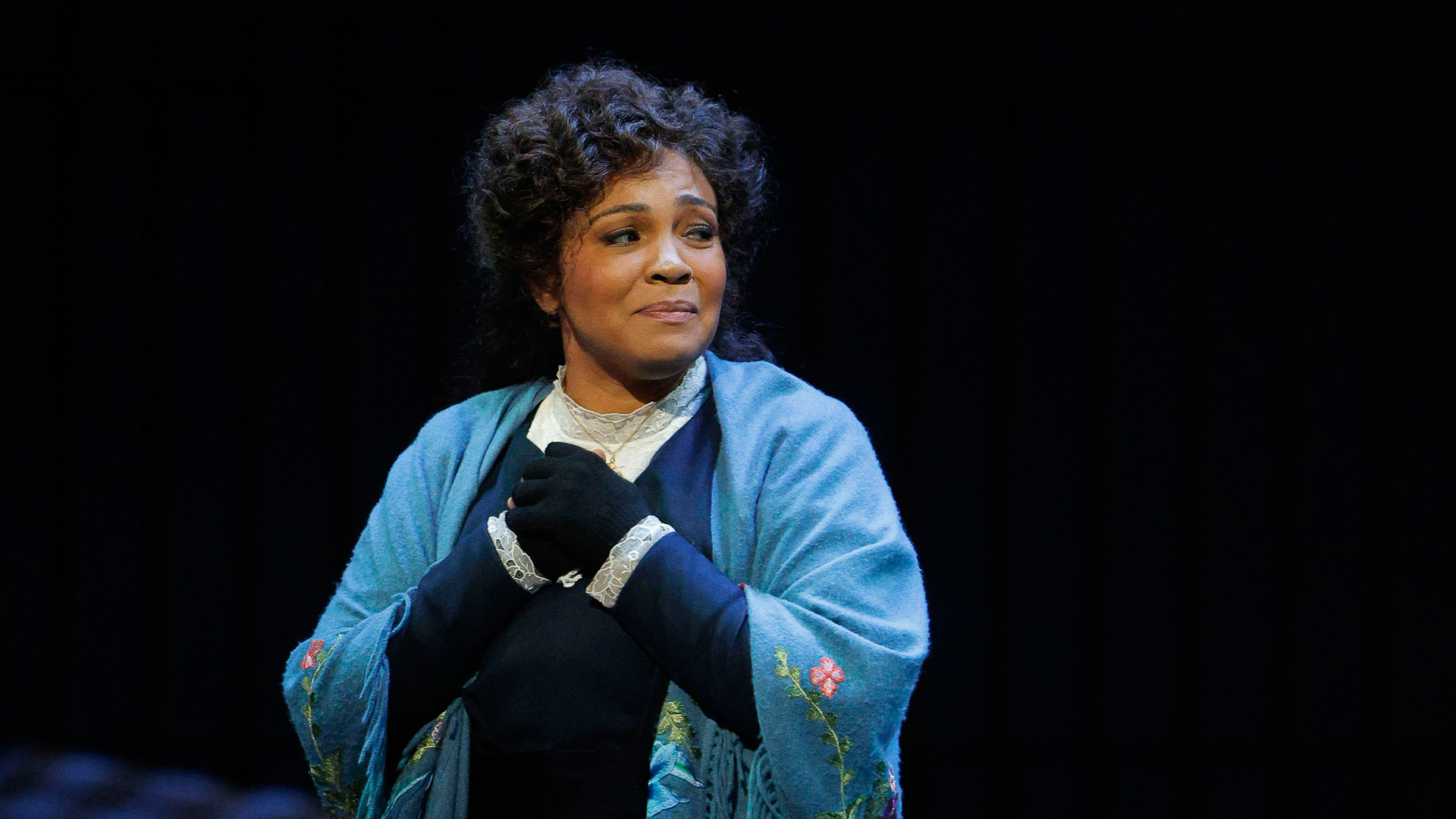

This month, LA Opera audiences welcome the return of one of the company’s most beloved artists: Grammy-nominated soprano Janai Brugger, who makes her long-anticipated role debut as Mimì in Puccini’s La Bohème. The production marks a homecoming for Brugger, who first came to prominence with LA Opera as a young artist and later made her role debut as Musetta—in the very same production—back in 2016. Nearly a decade later, she steps into one of the most iconic roles in opera, one she was originally scheduled to perform in 2020 before the world stopped.
Much has changed since that canceled debut. Brugger has sung at the world’s leading houses, including the Metropolitan Opera—still a pinch-me moment for her—and expanded into repertoire that revealed new possibilities for her evolving instrument. Yet returning to LA Opera, she says, still feels like returning to where she “blossomed,” a stage and community that took a chance on her early and helped shape the artist she is today.
For Cultural Attaché, Brugger spoke about her path to Mimì, the unexpected gifts of waiting five extra years, the emotional demands of Puccini’s score, the realities of back-to-back role debuts, and the wisdom she draws from Kathleen Battle—one of her early inspirations.
What follows are excerpts from our conversation that have been edited for length and clarity. To see the full interview, please go to Cultural Attaché’s YouTube channel.
Q: La Bohème is one of the most beloved operas in the world. You made your role debut as Musetta in La Bohème with LA Opera in 2016. What do you remember most about that opening night on May 14, 2016?
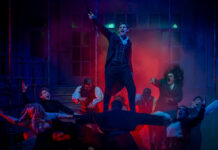
Well, first of all, the production itself—it’s so magical and grandiose, especially in Act Two, when, I mean, there’s literally hundreds of us on stage. It’s quite a big spectacle. But I was overwhelmed with the set. I think it’s so beautifully timed with the period that this is taking place. And my colleagues—I mean, I was on stage with some amazing colleagues. Nino Machaidze was…well, she was one of my Mimis. I’ve gotten to do it twice, but I believe that opening night it was Ailyn Pérez and Stephen Costello who were Rodolfo and Mimì. And I was incredibly moved by their version of those characters. I’ve even reached out to Ailyn just to be able to chat with her about how she approached Mimì, and she’s such a gracious colleague to offer that support. But yeah, it was just magical. It’s surreal to be up there any time on the LA Opera stage, but for that production it was pretty epic.
Patti LuPone once said that with opera, you really know what you’re doing by the final performance. What did you know about Puccini’s opera at the end of that run on June 12 that you didn’t know when you started?
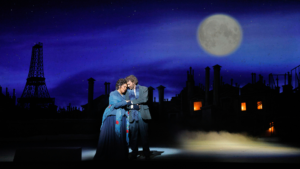
How much fun it was truly going to be. When you’re making any kind of role debut or house debut, it’s nerve-wracking. I was still a young artist, so I took it very seriously, but with that extra pressure of wanting to make sure I could meet the expectations of the people who believed in me—and make sure I believed in myself. There were challenges: technical things like standing on a table and falling backwards after singing “Quando m’en vo’,” and riding in on my first entrance on this big old car that takes up the whole stage.
But I think how much fun I had is what really registered. In the moment you’re so focused, but afterward I realized: that was a really fun run, even though the story itself is heartbreaking. There are fun elements, lots of laughter amid the heartache. I had a blast being up there with my colleagues and realizing, “Okay, I did it.” It was a great experience, and I was grateful.
Four years later, you sang La Bohème again. How would you compare the first production to the one you did later?
I had more confidence, for sure. I knew my pacing, I knew what my stamina would be—how much to give in each scene. With that comes confidence. And what a blessing to do it in the same production, because I already knew the set and how everything worked. So I felt more relaxed from the beginning the second time around, and I got to enjoy showing more of my interpretation of Musetta.
You were supposed to make your role debut as Mimì in 2020 before the pandemic shut everything down. What has been the advantage of having five extra years to prepare?
Truthfully, having sung roles that were already starting to move outside what I normally sang—roles that were heavier, bigger repertoire—really helped. Usually I sang Mozart and lighter soprano rep. But I started with Glauce in Medea at the Met, which was heavier. Then I did Susannah in Carlisle Floyd’s Susannah, which is meatier in terms of technique. And then Donna Elvira in Don Giovanni. All those roles helped me sink into the fact that my voice has changed, and it’s changing in a direction where I can start taking on fuller lyric repertoire. Mimì is one I’ve been dying to sing. I would’ve been excited to sing it in 2020, but I definitely feel more grounded now—and grateful for those other roles that prepared me.
Do you still get a little thrill when you say, “which I sang at the Met”?
Yes. Every time. That never gets old. I’m grateful to be working, period. But to sing at the Met? Yes. Although to say “LA Opera” also means so much, because this is the theater where I feel I really blossomed, and they took a chance on me as a young artist. I’m eternally grateful.
You’re in the unique position of getting to live out Joni Mitchell’s “Both Sides Now,” because you’ve played both lead women in La Bohème. What does playing Musetta tell you about Mimì, and what does playing Mimì tell you about Musetta?
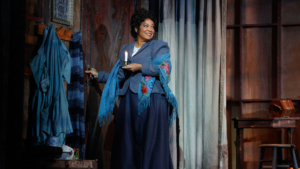
With Musetta, she’s very confident, very sassy, attention-grabbing—a firework that appears and everyone is drawn to her. And when I look at Musetta and then incorporate that into Mimì, I think there’s a little bit of Musetta in Mimì. Maybe not as outwardly shown, but she’s flirtatious. She’s confident—just quieter about it. She loves to have fun. If she weren’t as ill as she is, she’d be out having a blast like the rest of them.
And for Musetta, you see a different side of her in Act Four. She’s humbled, vulnerable, worried, scared. She sacrifices things that mean something to her to get help for Mimì. That’s beautiful. So I see both of them in each other, and that’s unique. “Having done Musetta helps me bring things into Mimì, and if I do Musetta again, Mimì will inform her too.“
You’ve described Mimì as someone who would enjoy life as much as she could if she weren’t sick. What are the challenges of playing someone with that joie de vivre but also that fragility?
Without sounding cheesy, it’s one of the things that makes me cry whenever I start listening to the score. I feel so bad for her. She knows she’s ill, but she’s not really accepting it. She’s holding onto Rodolfo, to her friends, to life. She doesn’t take anything for granted.
As an actor, the challenge is the physicality of the illness—there’s coughing, breath changes. You have to know your body and your instrument. In rehearsal, I push to see how far I can go emotionally and physically without compromising my voice. If I reach the brink, I know where to scale back. It’s a lot of trial and error, and that’s why we rehearse.
Maestro James Conlon has written that Violetta and Mimì are the two most universally beloved women in opera. What makes Mimì so beloved? And when might Violetta be on your dance card?
Well…Violetta has been brought on the horizon. We’ll see. It’s being discussed.
As for Mimì, I think she’s beloved because she’s relatable. She’s not rich. None of them are. But she lives in the way that matters: in her relationships, in not taking things for granted. In her first aria, she says that when the snow melts, the first sunlight of spring is hers. Something so simple—she doesn’t take it for granted. We can all appreciate that. Many of us have been ill or have loved someone who was ill. Mimì is young, vibrant, falling in love—we’ve all hopefully experienced that. She’s open-minded, well-rounded, educated, open to life. People identify with her.
Dramatic love stories often center on couples who don’t end up together. Why are we drawn to doomed love?
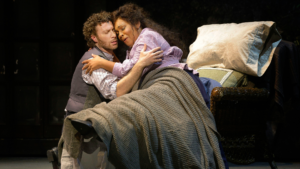
Because we all go through it. It makes you feel like you’re not alone. Heartache is real. Not all of us meet the person we’re meant to spend our lives with on the first try. Rodolfo and Mimì love each other, but they have a very hard time—especially in Act Three. They love each other, but how does it end? That’s what makes it bittersweet. They still come back to each other. There’s always love, even if the relationship breaks.
And then, of course, there’s the ultimate breakup – death.
Yes. And yeah…that’s devastating.
Some audiences who know Rent don’t realize its ending differs from La Bohème. Has Rent been a blessing or a curse for Puccini’s opera?
Oh gosh, you’re putting me on the spot! I haven’t seen Rent in a long time. I’d like to say a blessing, for the reasons we’ve been talking about. We’ve all experienced things similar to what these characters go through—maybe not directly, but through someone we know. It makes them human, not fictional, because you can see yourself in them.
You just came off nine performances as Donna Elvira at the Met and almost immediately began rehearsals in Los Angeles for La Bohème. What are the physical and mental challenges of back-to-back productions—especially back-to-back role debuts?
I think I’m waiting to exhale on December 14. That’s when I’ll finally breathe. I’ve gotten more gray hairs since the summer learning these roles. It’s a huge undertaking, and I definitely didn’t take it lightly. I thought, “Is this the right time? Can I do this?” But that’s when you dig into the toolbox you’ve been building since school and young artist programs—preparing big roles in short periods. When the opportunity presents itself, it’s hard to turn down if you’re vocally ready. I’ve been offered roles when I wasn’t ready, and that was a hard no—but necessary to protect my voice.
So if it was an easy hard no before, was this an easy yes?
It was not an easy yes because I’m a mom. I haven’t been away from my son like this in a long time—maybe ever. He always traveled with me. But now he’s almost 13, and he has soccer and basketball and friends. He’s doing okay. It’s more me with the separation anxiety. That was my biggest concern. I asked myself, “Is this something I’m ready to do?” But every time, the answer came back: you’ve got to do this. What an opportunity.
How daunting are role debuts for you?

They’re daunting because I get nervous—but nerves mean I care. I care about what I put out there, about the audience who pays for a ticket, about my colleagues on stage and behind the scenes. It’s a huge collaborative effort. I always want to do my best, while realizing I’m human. Life happens. Weather, sleep, colds—it all affects the instrument. You go out every night giving your best and hoping it’s enough.
But debuts are nerve-wracking because they’re new. You don’t know how it will be received. It takes time for a role to settle into your voice and body. Even when you’ve worked on it for a long time, it’s different onstage. That’s why doing Musetta four years later felt so grounded compared to the first run.
The 2012 Metropolitan Opera National Council Auditions went extremely well for you. Zachary Woolfe, writing in the New York Times about the event said, “Competitions like this often feel stuck in an earlier era. Maybe that’s one reason opera in America feels stuck, too.” Thirteen years later, what do you think opera in America looks like as we approach 2026?
You’re seeing more contemporary works about historical figures—like Intelligence, which tells the story of the two women who helped during the Civil War by passing information. My character, Mary Jane Bowser, was put in a very dangerous situation to gather and pass on intel. It’s interesting to see these works entering the repertoire. We all love Bohème, Traviata, Mozart—those never get old. But contemporary stories garner younger audiences, more diverse audiences, people who feel represented onstage. And younger kids are coming to the opera now, enthusiastic about it. That’s different—and wonderful.
I’m a big fan of your recording on Black Manhattan Volume 3. What role do you see non-operatic singing playing in your career?
I love recording. During the pandemic, Laura Karpman asked me to sing for Lovecraft Country on HBO for the episode about the 1921 Tulsa massacre—something I didn’t know about in our history. I’d love to do more of that. I’d love to sing for movies and TV, voice recordings. I would love to do Disney or Pixar one day—if you know anybody!
I still love musical theater. That’s where I started. I’d love to sing Maria. I did Kim MacAfee in Bye Bye Birdie—in high school! But I’d love to take a chance at musical theater repertoire again.
As a recording or onstage?
I don’t know about eight shows a week, but I’d give it a good Girl Scout try. It’s daunting, but I’d try.
One person I know you saw at Lyric Opera of Chicago was Kathleen Battle. She is quoted as having said: “The question is not if art is enough to fulfill my life, but if I am true to the path I have set for myself. Am I living up to the reasons I became a singer in the first place?” Do those questions resonate with you?
Yes, they do. This industry is demanding. You’re on the road a lot, living in hotels and Airbnbs, away from loved ones. As glamorous as it seems, it can be lonely. After rehearsal or performance, you sit in your room and say, “Well, now what?” So yes, I ask myself those questions—especially now as a mother. My career and getting pregnant happened at the exact same time. It was: jump in with both feet and hope for the best. I was nervous, but I had a lot of support—companies took care of me, understood the challenges. That has changed dramatically in the industry, and I think that’s why more of us are embracing having families.
When I have doubt, I check in with my five people: my mom, my vocal coach, my agent, my husband, and myself. If I start doubting, they remind me why. I get all the information—good and bad—and then I decide, “Can I still do this?” And the answer always comes out yes. Even when I’m unsure, it’s yes because I’ve been called to do it.
To watch the full interview with Janai Brugger, please go HERE.
La Bohème continues at LA Opera through December 14th
Main Photo: Janai Brugger in LA Opera’s La Bohème (Photo by Cory Weaver/Courtesy LA Opera)