






Jeff Beal’s music has long lived at the intersection of intimacy and scale, personal reflection and communal experience. Known widely for his work in film and television, his concert music increasingly reveals a composer drawn to spaciousness, restraint, and the emotional resonance of shared listening. With The Beatitudes, a newly commissioned choral work receiving its world premiere from the Los Angeles Master Chorale at Walt Disney Concert Hall on February 1st, that trajectory comes fully into focus.
Premiered as part of a program titled Common Ground, alongside Henryk Górecki’s Miserere, the work unfolds as an extended meditation on one of the most enduring texts in the Christian tradition. Scored primarily for voices, with piano and flugelhorn, The Beatitudes expands upon an earlier movement, Poor in Spirit, written a decade earlier, transforming it into a large-scale, contemplative journey. In conversation with Cultural Attaché, the composer speaks candidly about time, grief, artistic freedom, and the responsibility of both composer and listener in bringing new music fully to life.
Q: What a lot of people may not know is that you wrote a piece ten years ago, Poor in Spirit, derived from the first Beatitude. How did that earlier work inform, if at all, your compositional approach to The Beatitudes as a full-length piece?
Yeah, I mean, it really was the genesis of the whole thing. I picked that text and, in a way, I got lucky because it’s literally the first Beatitude. Something began there that I sensed might eventually want to grow into something larger. At the time, I didn’t know what that larger thing would be, but because the piece worked and had a life, it stayed with me. Over the ten years between that movement and now, I’ve written a lot of choral music, and I think what I learned—especially about bringing the flugelhorn into a choral context—carried forward very naturally. You’ll hear that voice throughout the full piece. And honestly, I also hear myself differently now. There’s personal growth and musical growth in those ten years, and I’m actually grateful I didn’t rush into the full version. It really did feel right to let it gestate.
You’re not the same composer you were a decade ago. When you revisited Poor in Spirit as part of a larger architecture, did you hear things that needed to be modified so it would live organically within the whole?
That’s a great question. My wife is one of my most trusted listeners—we went to music school together—and she heard the full mockup. Her first instinct was that the opening movement might be too long now that it’s part of a larger structure. We adjusted the tempo slightly when we first rehearsed it with the choir, and that helped. But I wrestled with whether to cut it, and ultimately I didn’t. I kept coming back to the feeling of the opening and its shape. After that first rehearsal, she actually said she was glad I left it alone—that when you’re inside it, it really works. That was reassuring.
On a broader level, the challenge of the larger piece was architectural. I spent a lot of time on just a few very simple lines of text. If Poor in Spirit was about five minutes, I started thinking practically: there are eight Beatitudes, so maybe this wants to be thirty or thirty-five minutes. That’s exactly where it landed. When [Artistic Director] Grant Gershon and I talked about programming it, I hadn’t finished writing it yet, which is a very familiar scenario in classical music. But once I committed to that scale, the challenge became how to sustain it musically without adding words. The text is relentless in its simplicity. Each movement sits with one idea. You live with that emotion, then you move on. For me, it felt almost like walking through a series of rooms, or stations—meditating, then turning the page and continuing the journey.
Is there something to be said for beginning the journey with something listeners may already know, especially since Poor in Spirit has had a decade-long life?
I don’t know how widely known it is to audiences, but I hope that for people who do know it—and I’ve performed it several times since its premiere—it creates a deeper sense of continuity. One of the hardest things about new music is that audiences often hear it only once, and that’s a lot to ask. I think about that constantly, both in concert music and in film. Repetition and return are powerful tools. Hearing something again, even subtly, creates memory. That sense of musical rhyme is a big part of how music gives us pleasure—it lets us say, “Oh, I recognize this,” without feeling like we’re being hit over the head with it.
There’s very little text, which puts a lot of weight on the music itself. How did you approach expanding such short phrases into full movements without the music feeling static?
This piece definitely tips its hat to much earlier traditions—chant, plainchant, early polyphony. Those composers were masters of invention. When you don’t have many words, invention is everything. A good example is Those Who Mourn. It’s not a strict canon, but it unfolds as a sequence of melodies. The tenors begin, then they repeat their line as the basses enter with something new, then altos, then sopranos. That process alone allows the music to breathe and expand over time.
My first instrument is trumpet—flugelhorn as well—so melody is always my entry point. When I write for voices, I want every singer to feel like they’re holding something meaningful, something beautiful to sing. Even if there are multiple melodies happening simultaneously, each one needs its own integrity. That was both the challenge and the joy of writing this piece.
When I looked at the score, I was struck by the gentleness of Poor in Spirit and Those Who Mourn. Then Meek and Mild arrives and feels anything but meek and mild. What led you there?
I had a lot of fun with that movement. Sometimes it’s exciting to work against expectation. Meekness doesn’t mean the absence of energy or inner life. And the payoff of that Beatitude, “they shall inherit the earth,” is huge. There’s a built-in paradox there that I really wanted to lean into. This text, for me, is incredibly sophisticated. It almost feels like a Buddhist koan. Every condition contains its opposite. With Meek and Mild, I went straight at that duality.
The same thinking applies to Peacemakers. The vocal writing is intentionally calm and centered, but underneath it, the piano ostinato is spread across the entire keyboard. If you stacked those notes together, they’d be intensely dissonant. I told the singers that even though we’re singing about peace, the landscape underneath should feel unstable—like a battlefield. Peace only has meaning when it’s forged in tension.
That feels unavoidably connected to the world we’re living in now.
Completely. I wish it didn’t feel so current, but it does. I never wanted this to feel like a museum piece, something sealed off in history. I wanted these words to feel alive now. Music has the ability to reframe familiar texts, to place them firmly in the present moment—in this decade, in this year. That urgency was very much part of what propelled me forward.
The program is titled Common Ground and pairs your work with Górecki’s Miserere. Do you hear a dialogue between the two?
I do. Grant’s instinct to pair them felt exactly right. There’s an obvious textual and spiritual connection, but also a musical one. Both works rely almost entirely on voices. Knowing I was writing for an eighty-voice choir was extraordinary. I worried briefly about intimacy at that scale, but what it actually gave me was range. The choir can be incredibly delicate, and then suddenly vast and overwhelming. That resource allowed the piece to fully breathe.
That kind of freedom must feel rare, particularly in contrast to film scoring where time and budget constraints are always part of the equation.
It really does. I’m very aware of impermanence at this stage of my life. This feels like something I’ve always wanted to do—a substantial choral work that might live beyond its premiere. I don’t control whether that happens, but I got the chance to try. After decades of working within constraints—budgets, timings, visuals—having a blank canvas feels deeply liberating.

The score notes mention that this piece took shape after both of your parents passed away. How personal is this work for you?
All art is autobiographical. I didn’t set out for it to be that way, but the timing made it unavoidable. Losing parents is something we all eventually face, and it’s seismic. When I sat down with this score and came to “Those Who Mourn,” there was no way around it. Art becomes a form of catharsis. It’s a way of making sense of emotional life, and of allowing others to recognize their own experiences inside the work. Sharing that vulnerability feels important to me.
Górecki once said that the audience must also put effort into listening—that the composer doesn’t write for the audience so much as invite them into the work. Do you agree, and what role does the listener play in completing this piece?
I agree with that very deeply, and I think I’ve come to understand it more clearly as I’ve gotten older. I don’t feel like the piece is finished when I write the last note. That’s just one part of the process. The final, essential part happens in the room, when someone sits down, quiets themselves, and gives the music their attention. I can’t dictate what they should feel or think, and I wouldn’t want to. What I can do is be honest—emotionally and musically—about where I’m coming from when I write it.
I think listening is an active act, even though it looks passive from the outside. In a world where we’re constantly multitasking, scrolling, reacting, and moving on to the next thing, simply staying present for thirty or forty minutes is already an effort. But it’s a meaningful one. When listeners lean in and allow the music to unfold at its own pace, something opens up. The music has time to do its work on them rather than just wash over them.
I’m not interested in making things difficult for the sake of difficulty, but I also don’t want to make things so obvious that there’s no mystery left. Mystery is important. Some of the most meaningful musical experiences I’ve had as a listener were moments I didn’t fully understand right away, but that stayed with me—something I kept thinking about afterward. That kind of delayed resonance feels very human to me, and I think it invites a deeper relationship with the work.
With The Beatitudes in particular, the audience’s role feels essential. These are familiar words for many people, but I’m asking listeners to slow down with them, to sit inside each idea and emotion rather than rush past it. If they’re willing to do that—to meet the music halfway—then the piece becomes a shared experience rather than something delivered from the stage. That sense of communion, of people breathing and listening together in the same space, is ultimately what I hope lingers when the last sound fades.
If you’d like to learn more about members of the Los Angeles Master Chorale through previous Cultural Attaché interviews, please go HERE for Artistic Director Grant Gershon; HERE for Associate Director Jenny Wong; HERE for chorale member Luc Kleiner. You can also revisit my 2017 interview with Jeff Beal about his score for Buster Keaton’s silent film, “The General” HERE.
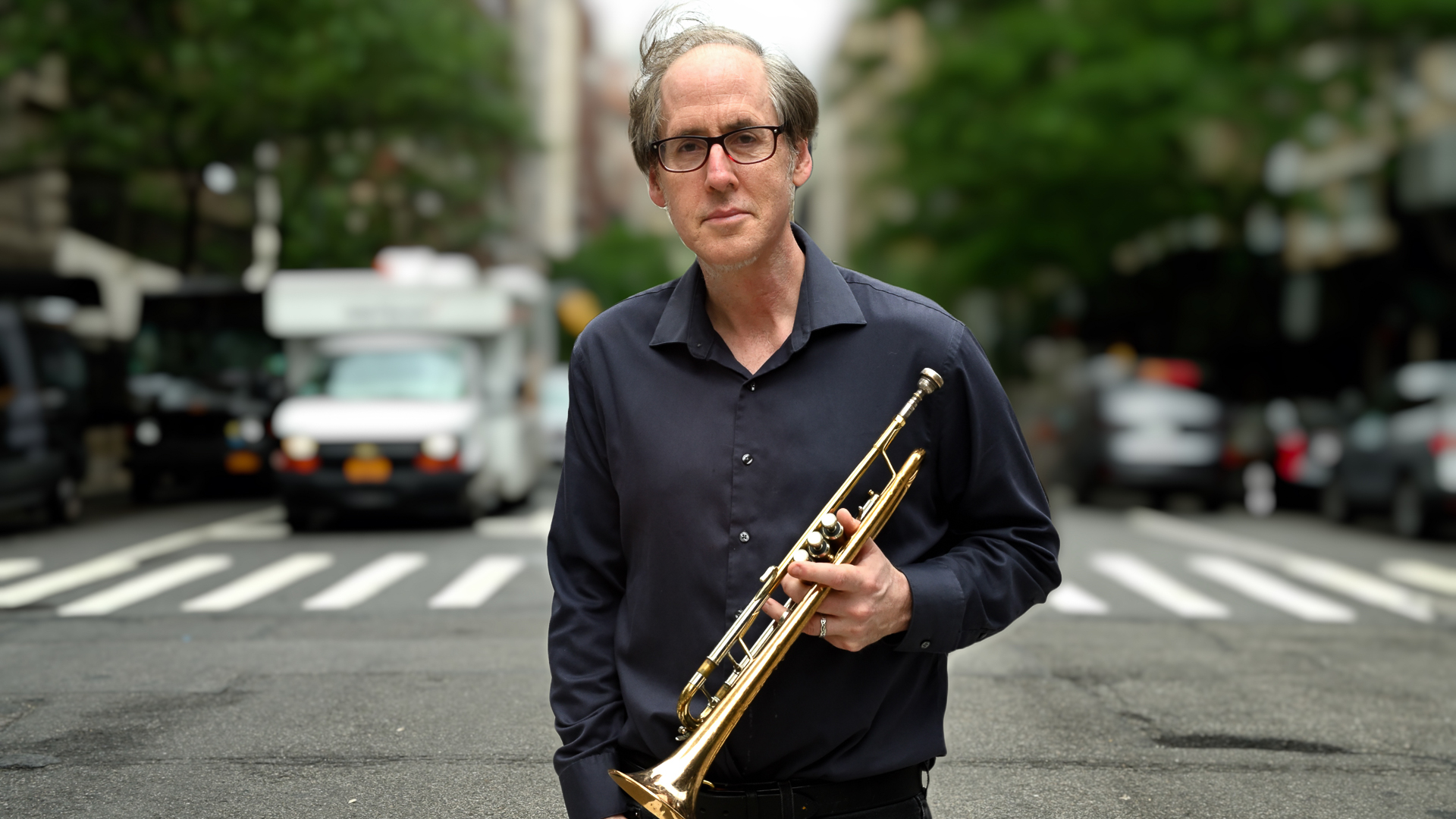
Main Photo: Jeff Beal (Photo by Fritz Myers/Courtesy LA Master Chorale)