





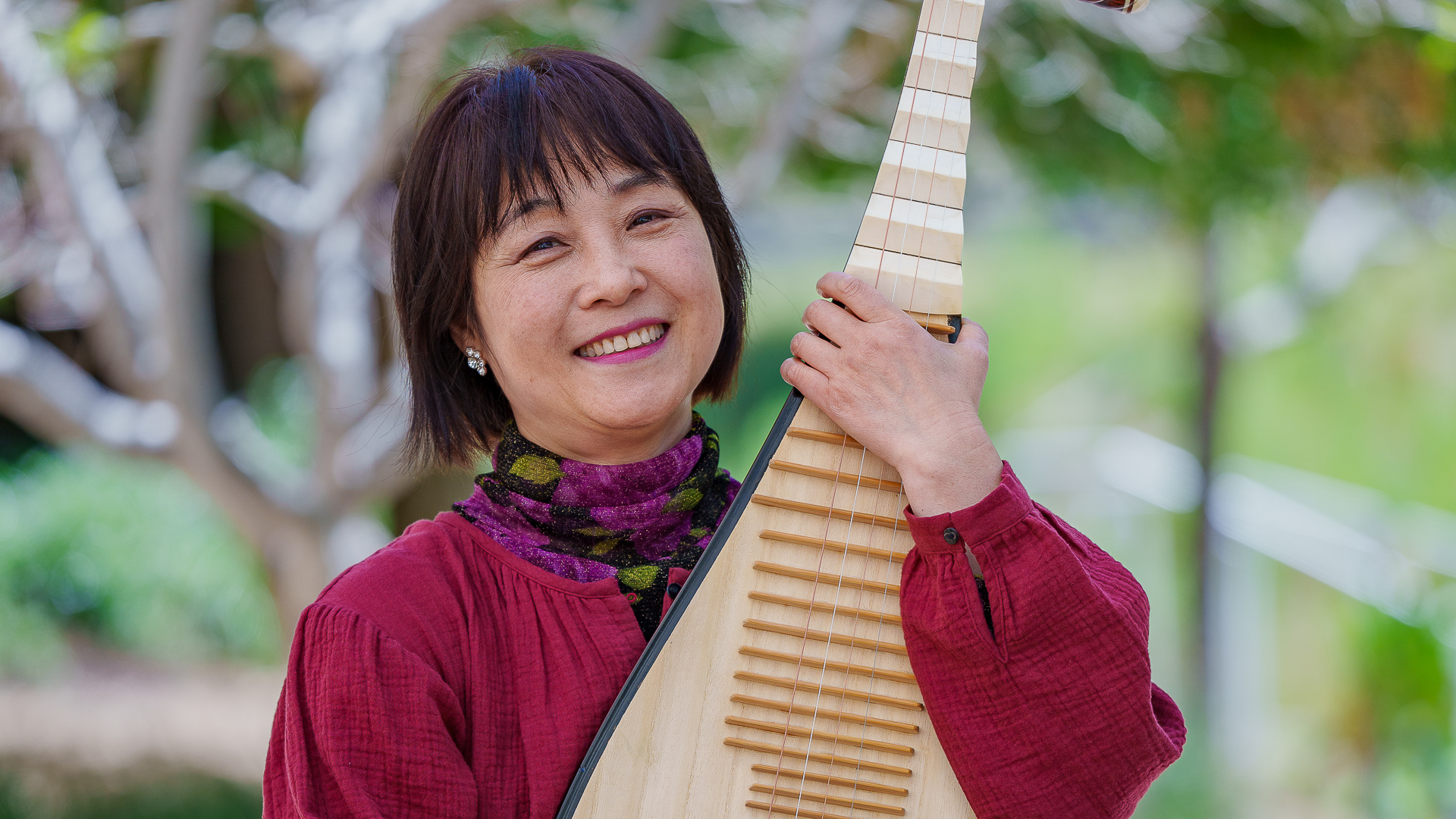

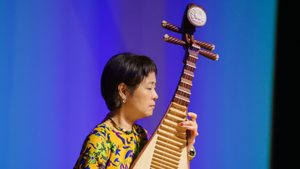
For more than three decades, Wu Man has been taking the pipa, a Chinese stringed instrument with a history stretching back nearly 2,000 years, into musical territory few could have imagined. From the Kronos Quartet and Yo-Yo Ma to composers Lou Harrison and Du Yun, she has helped introduce the instrument to new audiences while discovering new possibilities for its distinctive voice.
Her latest collaboration is with composer Mason Bates, whose new pipa concerto receives its world premiere with Los Angeles Chamber Orchestra on November 19th and 22nd. Drawing on American blues, jazz and minimalism, the work presents another opportunity for Wu Man to explore what her instrument can do.
But after a lifetime spent opening doors for the pipa, Wu Man finds herself increasingly concerned about what’s being left behind. For an artist who has spent so much of her career looking forward, she can’t help but wonder if her instrument’s history is being forgotten.
Q: There’s an ancient Chinese adage, “Music Before Medicine.” I’ve always interpreted that as suggesting there’s something healing about music. What is your earliest memory of music being medicine for you?
Wu Man: When I was very, very young, my mom mentioned maybe 11 months, before one year old, and radio always, you know, some music going on. And every time whatever the music going, I’m going to sleep. And then a little bit older, maybe in the kindergarten, I started singing with the radio, exactly the music I heard when I was infant. So I guess that probably the power of the music.
In 1992 Kronos Quartet discovered you at Music Lives! in Pittsburgh. In 1996 your recital with Yo-Yo Ma led to your joining the Silk Road Project. In 1999 you performed at the White House. But before those extraordinary things happened, you thought you might have to give up music. How close did you come to making that decision, and what kept you going?
I’ve been learning instrument since I was nine years old, and I’ve been studying in the music school in China, very intensely training, and went to the competition, got the first place. So obviously, I think I have that kind of talent of music at a very young age.
And since early ’90s, I moved to US. Suddenly to me, it very, very challenge. I feel like maybe the American audience doesn’t like it. And maybe I should give that up. But another voice told me, well, you can do it. People will really appreciate your music if you share with them, if you introduce the music they never heard. So that kind of come and go, come and go.
But since you mentioned all those, ’92, ’96, ’99, that’s kind of a turning point for me to give me that strength, to say, okay, I’m still gonna be playing music.
Did you feel like you had achieved the American dream?
Definitely. I always tell my friends, this is American dream come true to me. When I was in China, I wouldn’t say American dream, but I have a dream. Music had been a bigger part of my life. My dream is I want to be played on the stage. I wanted to share, to tell people, this is a cool instrument I will play. You may not know, but as soon as you heard that, you may be interested. So I think this is kind of my dream come true now.
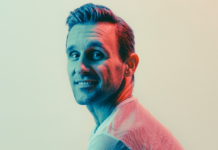
You met Mason Bates two years ago in Beijing. When a composer is writing something specifically for you, how much of the process is a conversation between the two of you?
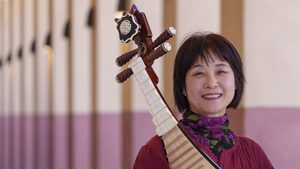
Mason came to the concert that I was playing. He was in the audience. So afterwards, we chat. And he really expressed he interested to write a piece. And I was very, very excited. I really enjoyed what he wrote, that vocal piece with orchestra, based on Chinese ancient theme or ancient philosophy, ancient poem. I like his vocabulary.
We all back to wherever we are, we travel busy, but we email, mostly email, to talk about it. So he will finish one movement, his second movement, he just send me material.
If I have any question, so more like a back and forth.
He will say, “Oh, I wanted that passage like a guitar.” So I have that picture, that image of that sound in my mind. But work with a different composer, they have a different approach.
I premiered two years ago the Du Yun, the Chinese composer lives in New York, her concerto. I look at the parts and so many notes and I said, “So what do you want? Can you sing to me?” So she started singing. So that’s, I got it. I said, “I understand what you wanted to say. I can make that.”
Each composer very different way they explain their music, what is sound in their mind. My job is to bring their mind, to understand this music myself and then share it to the audience.
Do you also want there to be space for you to have ideas of what the piece can be or what it can sound like?
Definitely. The notes on the paper is a paper, right? It’s on the paper. But how can I make that the notes become sound? That’s my job.
For pipa, most of the composers, they don’t play the instrument. So if there is a long note, right? How do I play those notes? Should I do tremolo? Or should I do vibrato? Should I bend the notes? So it’s all space given to me to create that sound.
On his website, Mason Bates says the concerto is “informed by American blues, jazz and minimalism.” Those aren’t genres one normally associates with the pipa. What’s your response to the music he’s written?
Definitely, definitely I can hear that. Five movements. So each movement to me, it’s like story. Some are longer, some shorter. Each story gives different voice. Some a little bit blues-ish, some a little jazz, some minimalism. (Laughs.)
But to me, the music language is different. Some very exciting, fast. Mason’s piece very fast, a lot of fast tempo and a lot of notes. Very melodic.
How would you describe the color of this concerto?
I think this is very exciting and bright. If I say color is a bright color of this concerto, you know, some concerto may be kind of little dark gray, kind of sad. But this piece is exciting, colorful. Kind of like California sunshine to me.
You’ll be performing this concerto in Beijing during the 2027–2028 season. When you bring Western compositions for your instrument back to China, do Chinese audiences hear something different from American audiences? What do you think will surprise them about this concerto?
Yes. I played Lou Harrison’s pipa concerto in China, and Chinese audience reactions are different. Very modern sound, the piece. It’s also new, fresh to them. So I’m sure Mason’s piece will be new experience for Chinese audience.
Pipa concerto is not strange anymore to Chinese audience. But American composer write for pipa concerto, that’s not often happen. Use a different vocabulary, different color. That’s exciting to share with the Chinese audience.
The rhythm Mason wrote is very, very different than Chinese music, or Chinese composer. And some of the melody, definitely not Chinese. It’s amazing, Mason’s melody. So that part, I think, definitely will be surprise, fresh to Chinese audience.
When Lou Harrison wrote his concerto for you in 1997, you were helping establish a new place for the pipa in Western concert music. Nearly 30 years later, what can composers do with the instrument that they, and perhaps even you, might not have imagined then?
Since 1997, Lou Harrison’s first American composer write for pipa concerto, through all those years, I think in both ways. Now they’re open, they’re really open, take that challenge to write a piece like a pipa, not piano.
For a lot of Western composer, they wanted to know the instrument, they wanted know the culture and they wanted the language of the instrument. So learning from the player. But for player, for me, I play Mason’s piece, Lou Harrison’s piece or Du Yun’s piece. They have a different language also. So their music, I also learned from them.
I think in the future, pipa will be some kind of, I hope there will be a space for this instrument in the music scene.
Well, you realize if there is a space for it, it’s because of you. You broke new ground at the end of the last century. You can take some credit for that, can’t you?
I guess, I guess so. (Laughs.)
The other day my friend talked to me. They said, “Wow, you work so hard. Look at your Facebook, Instagram, you’re everywhere. When you’re gonna be retired?”
Well, if you look back, like you mentioned, that’s my responsibility to bring this instrument, to introduce this instrument to the world. But when I simply doing project, doing work, play, I did not think it that way. To say, “Oh, this is, I want to promote whatever.” No, that wasn’t the case.
I just simply, I love music. I wanna be a musician. I enjoy to play with different instrument. I enjoy to play with different people. And I also enjoy to visit different country, different cities.
But if you look back, I look, “Oh my God, this is crazy. I am doing so many different kind of things.” But I’m happy. I think it’s important for musicians to be brave, to try something and to understand the world better.
In a conversation posted on your website, you said the pipa “draws composers in and they discover a different color in their vocabulary.” What different colors have you discovered in Mason Bates’ new work?
First time Mason sent me the first movement, the second movement, and then also sending me demo recording. And a couple of measures after, I started smiling. I said, “Wow, that’s cool.” Very exciting.
A lot of pipa concerto, we don’t have that kind of exciting, the rhythm, the color, the orchestration. It’s very different. That’s what I discovered, the unique from Mason brings to this instrument, brings to the pipa, and brings to my playing.
And that’s why I said I’m nervous. Very challenging, but I’m really excited.
In 2006 you told The New York Times that your biggest goal was “that the next generation may grow up knowing different cultures.” Twenty years later, how much of that dream has come true? What still needs to happen?
I’ve been back to China often lately because they gave me a visiting professorship. So I have to back to the conservatory in China, my hometown, and teaching.
You look at the younger generation. They’re excellent pipa players. At their level, at their age, that was impossible in my generation. At that time, I cannot imagine at that age we already played that difficult piece. Very good technique. This part I really appreciated. Everything is kind of moving forward, to change, to revolutionize the fingering faster.
But musically, the younger generation, they have so many possibilities. They have so many resources to listen to different kind of music. Internet, there are a lot of CDs, TVs, games, everything. So they can learn. The knowledge is much, much more than 30 years ago. So this is a great, great, to me, it’s an exciting time.
But now, if I say the flip side is, okay, what is a pipa? What is the history? What is original voice of the instrument? What is old piece, ancient music, sound like? That part kind of slowly fade away.
So you feel you need to remind your students that they can’t forget what came before.
Yes. I do hope I can remind what is a pipa sound. Pipa is not guitar, right? Guitar is a guitar, mandolin is a mandolin, ukulele is ukulele, banjo is a banjo. We all came from the same family, string-plucking family, but each individual, we have our own identity.
Pipa still have pipa language vocabulary. There is certain style, ornamentation, details of left hand, the language. That’s I try to remind younger generation to go back to study all the pieces. You need that foundation.
Not always jump and want to be fast. Fast is fine, but to me, they’re also different kind of musical languages. So I think modern days, how you’re going to balance those two. It’s quite important.
We began our conversation with the idea of music as medicine. Looking at the world today, do you still believe music has the power to heal us?
It’s a huge part of healing people. Especially I remember when we all locked in the home, that couple of years, and musicians still try to do online. And as soon as we opened up the concert hall, everything sold out. People wanted to hear music. They wanted to go into concert hall to sit there, to have that kind of medicine for each of us.
Definitely music can have that function. I think music is powerful. And also I think music kind of connecting people as well. Each listener, they can find something inside it to relate what they hear. What medicine give to each person will be different results.
I do think music is powerful. It’s human beings’ wisdom. It’s natural. It’s not like a car. People build a car, but music stays in everyone’s mind, inside. Doesn’t matter who you are. Each person have their own music. So I feel like I’m very lucky to being a musician.
And how does it heal you?
Healing me every day, healing me every day. Sometimes frustrated. Sometimes, if I solve some problem, I’m very, very happy, relieved. If something happened, something stuck, I just put on my fingernails. I have my fingernails on now. And then play a few notes, close my eyes. My whole world is go somewhere. And I forgot all the trouble, all the depressed, all that. Life was difficult. Healing me every day.
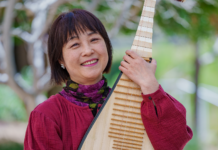
Main Photo: Wu Man (Photo by Gary Payne/Courtesy Wu Man)