










Nicolas King was just 17 when he found someone who spoke his musical language. That someone was pianist and arranger Mike Renzi, whose collaborations with singers including Mel Tormé, Peggy Lee, Lena Horne, and Liza Minnelli made him one of the most admired accompanists in American popular music.
For King, Renzi became much more than a musical director. He was a collaborator, mentor, and friend.
Their relationship lasted 14 years, until Renzi’s death in 2021. King has now released No Bad Chords: Live in New York City – A Tribute to Mike Renzi, recorded at 54 Below, celebrating the music they made together and the friendship that shaped his life.
Our conversation explored the unusual connection between two musicians from different generations, the communities that have sustained King throughout his life, and what remains when someone who understood you so completely is gone.
Q: You and Mike had something in common that I find interesting. He started playing when he was eight or nine years old and had his first job at 12. You made your Broadway debut in Beauty and the Beast at eight, yet your imaginary career as a singer began in your living room when you would pretend to perform for thousands of people. Do you think the fact that both of you found your passions at such a young age influenced the relationship you developed and the music you made together?
Nicolas King: We never talked about that particularly, but I think Mike found in me someone that he could identify with, because he also had such a passion at such a young age for this type of music, specifically the Great American Songbook and jazz. Those are the meat and potatoes that he and I both just loved.
I don’t think it is very often that you meet a 17-year-old who loves Jerome Kern or who knows every Gershwin song ever written. I think that’s a very rare thing. So I understand now why Mike found a pal in me.
Q: Your first collaboration with Mike was the pairing of “Where Is Love?” from Oliver! and Oscar Levant’s “Blame It on My Youth.” When you listen to that arrangement today, what do you hear about the singer you were then that you might not have recognized at the time?
You’re gonna make me cry, Craig. It’s very touching, very personal to me because that was the first collaboration we did. I remember it so specifically, sitting in my grandmother’s piano room after a big Italian dinner. We just created this on the spot. I think it was one of those moments where I finally found someone who spoke my language. At 17, I found someone who really understood me in a much deeper musical way than anyone else had before.
The intro was really special. We did not come up with that initially. That came a few months later when he was doing a run with Jack Jones at the Oak Room at the Algonquin. I was staying at Liza’s house for that week. He called me and said, “You gotta come over. Come over right away. I finally got the introduction.”
I made my way over to the Oak Room, and Mike said, “I’ve been working on this all afternoon. I finally got it.” To sit there with Mike in the empty Oak Room at the Algonquin Hotel and listen to what he created, that little four-bar introduction, I just melted. Every time I hear it now, I’m brought back to that moment, being 18 years old and listening to that beautiful introduction, that beautiful medley, and finding somebody that spoke my language for the first time.
Q: How important was it for you to find a pal in him? That had to have been reciprocal.
It was a dream because it was more than just a musical collaboration. It was friendship. We were really pals. We called each other almost every other day to share something either musical or, “Hey, did you try this new pizza place on the corner? Oh, don’t go there. The sauce is terrible.”
He was like the uncle-slash-big brother that I never had. He was very protective of me. He was always encouraging me to think a little bit outside the box and push me a little farther than what I was comfortable with, in a very subtle but very supportive way.
One thing that I will give myself credit for is I’ve never been someone who takes things for granted. At no point in our 14-year friendship did I ever take that for granted. They were always pinch-me moments.
When he died, Sandy Stewart, who’s one of my favorite singers and one of my favorite people, said, “You’re gonna have to learn really quickly that you’ll never have another relationship like that ever again. You’ll have others that are comparable and you’ll create new things with new people.” And I think that’s just the truth of it.
Q: You were performing professionally at an age when most children don’t even know who they are. Was there ever a point where you had to separate your life as a performer from learning how to be a kid and a teenager?
I’m very aware that I had a very unique childhood. To me, it was normal because it’s all I knew. I had nothing to compare it to. But I have to thank my parents for that because my parents are not in show business. They never had stars in their eyes.
They were very aware that show business and the stage is a temporary state. It’s where you go to work, it’s what you do, but when you’re done, you leave your work there and you come home.
My parents were very big on making sure that I knew there was a world outside of the stage. I’m very grateful to them for that.
Q: Part of your life’s journey also included singing in Jehovah’s Witnesses’ choirs. What did those experiences teach you, both professionally and personally?
Talk about community. I was given a very beautiful community of people that surrounded me in my childhood and in my early days. There did come a point where I had to decide that that particular faith was not for me. It was not a lifestyle that resonated with me doctrinally and otherwise. But I’m so grateful for the community that I had around me at that time.
I do wish it was a community that stayed with me even after I departed, but that’s just not how they’re designed or wired. There are moments when I miss having that sort of community, but it’s amazing when you give up one community, you gain another. My life is so full with such a beautiful community now of singers and musicians and artists and non-artists and great people that have really filled that void that I lost several years ago.
Q: Over the years you worked with Mike, did you ever think you might be influencing who he was as an arranger as well?
Oh gosh, I don’t know. You’re talking about a genius. I suppose you’d have to ask him. I would think we inspired each other, but I don’t know how you can add to someone who’s so brilliant like that.
I know that he certainly influenced me like crazy. Now I’m spoiled. I hear an arrangement or a chord and I want to hear it a certain way. He elevated my expectations to say, “Well, we can do this better. There’s a better chord here. No bad chords.” That was Mike’s mantra in life.
Q: How did Mike’s passion for following the lyrics alter the way you looked at songs?
As an actor, I’m always thinking about it from that perspective. If the lyrics don’t resonate with me, I’m not singing it.
Going forward without Mike, I came up with an arrangement of “I Will Survive,” the Gloria Gaynor song, which would have never been a song that Mike would have wanted to do. I thought, this is a song about survival, but it doesn’t have to be such an anthem. It can be more of a quiet realization. I put it to a nice 6/8 gospel feel.
That’s Mike’s training of let’s find a song, let’s find a different way to tell the story, and let’s turn it on its ear. I would say it’s a Mike-inspired arrangement.
Q: You said that singing with Mike Renzi “was like jumping off a cliff into a net. I didn’t have to think about it. I knew I would be caught.” When that net disappeared, did you have to become a different kind of singer?
Oof. I think I had to adjust my expectations. I don’t think I became a different singer. I just had to adjust my expectations that I wasn’t gonna get that anymore.
There was a period of time where I really wasn’t very inspired. I was doing gigs because I had to make the rent. Just because Mike died didn’t mean my rent did. So I had to find a way to pay the bills.
Then I’ve slowly found other collaborations, other people with whom to work, and that filled the creative void. I’ll never have that again. That does not exist. But I have other wonderful people that I can work with, that I find some of that joy in.
Q: Lena Horne once said, “The best thing about living is the chance to keep doing it.” What are you doing today, artistically or personally, that the Nicolas King who worked with Mike Renzi might never have imagined?

I’ve really had a big focus lately on getting back to my acting roots. I’m auditioning for shows, and I really want to get back to that. Not that I want to abandon jazz or singing at all. That’s a great love of mine, but acting has always been my biggest passion.
I think Mike would be proud of that because he knew how much I loved it. But these people, when they leave you, they never really leave you, do they? They’re always with you.
Can I tell you one story of how I knew Mike was with me?
It was the day that my grandmother Angela and I were driving from Westerly, Rhode Island, to Newport, Rhode Island, to start mixing this album. We were in the car talking for maybe 20 minutes or so, and we said, “Let’s turn XM Seriously Sinatra on.”
We turned it on, and what’s the very first thing I heard? I heard a chord by Mike. It was “It Had to Be You” by Mike and Liza, from her album Gently. The odds of that song happening at that very moment! Mike is on that station all the time, but Liza isn’t.
That song from that record by these two people that have guided me my entire life, Liza and Mike. What are the odds? To me, it felt — now look, I don’t know what exists in the great beyond. None of us really do. But I know that was something from somewhere to say, “You’ve got this, kid.”
As we’re on our way to mix this album for Mike, about Mike, and we listen to Mike in that very moment, I knew that it was somewhere, somehow him giving me a pat on the back saying, “You got this.”
It was wild. It was incredible. We got goosebumps, and I started to get teary-eyed.
Q: Given how close you guys were, I can’t imagine that you’re not going to feel his presence throughout the rest of your life.
I hope I never go without it.
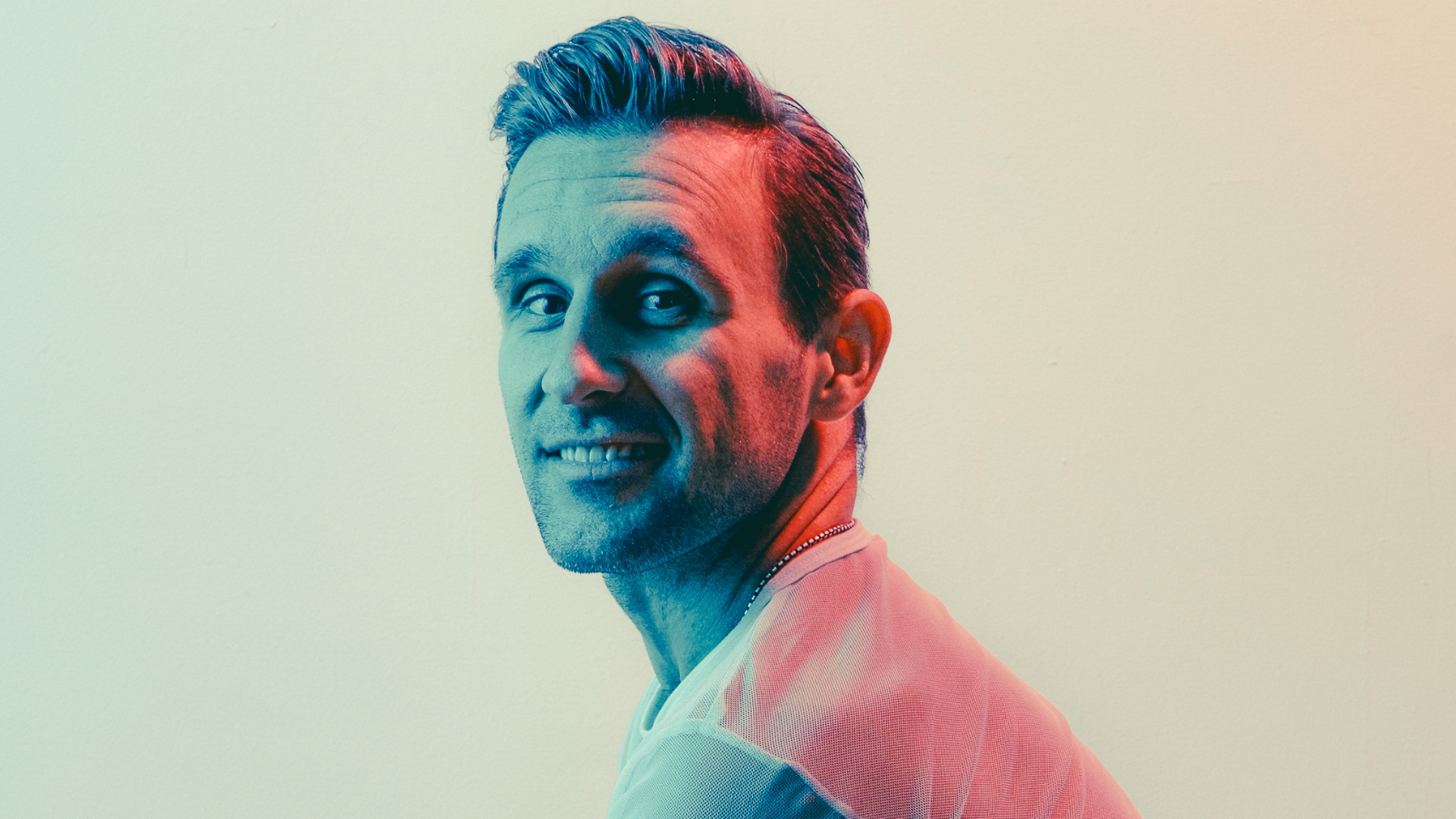
Main Photo: Nicolas King (Photo by Austin Ruffer/Courtesy 401 Records)