








Though Tony Award-winner Harvey Fierstein wrote the character of Lola in Kinky Boots to be straight, even the actor who created the part on Broadway, Billy Porter, says he always played Lola as gay. There’s nothing about Lola’s sexuality that is made part of the story. So it’s up to each actor to figure out how they want to play the part.
As I found out last week in a conversation with Wayne Brady who is playing the part of Lola for three nights at the Hollywood Bowl this weekend. He also played Simon/Lola twice during the Broadway run.
“The character sheet inside the script, it says Lola/Simon is a heterosexual cross-dressing male, a former boxer,” he told me. “And so what I take that to be is I am representative of Lola. We don’t talk about gay or straight in the show. It’s about who you are. I am Lola. Wayne Brady is Lola. I am the kid who loved to dress up in my Mom’s clothes, not because there was anything sexual, I love to play pretend. That’s the only reason why I’m an actor. I was the kid that was made fun of by other kids. I love this guy because I know what that experience is. And I think it is universal to anyone regardless of orientation.”
In Kinky Boots, Charlie Price (Jake Shears) inherits his father’s failing shoe business. Unsure what to do, a random encounter with a drag queen named Lola, inspires the idea of turning the company into one that makes boots for drag queens.
The musical won six Tony Awards including Best Musical, Best Original Score (for Cyndi Lauper) and Best Choreographer for Jerry Mitchell who also directed the show and returns to both roles for this three-night production at the Hollywood Bowl that begins on Friday night.
At a press event last week, I also spoke to Shears, Tony Award-winner Marissa Jaret Winokur who plays “Pat” and Jim J. Bullock who plays “George” and was part of the first national tour of Kinky Boots. Here are some excerpts from those conversations that have been edited for length and clarity.
Q: How has your relationship with your character evolved since you first starting playing the part on Broadway or the national tour?
JAKE SHEARS: I feel very comfortable in a certain way coming back into it. I have a confidence with it that I didn’t necessarily have the first time I stepped out on stage on Broadway. If it wasn’t for that one point directed by Moisés Kaufman at the [Mark] Taper Forum, which was my first play [Bent], you know, he taught me so much. Now coming back into a third production on stage, I feel a kind of confidence that was never there before.
WAYNE BRADY: That is that is one of the best questions I’ve ever been asked about the show. As an actor doing Broadway is amazing because it’s not like a movie or a TV show. You actually get the chance, night after night, to find things and you lose things and you find it again. From the first time I did it I had a very deep connection with Simon; using Lola as a defense mechanism. That’s how I saw the role. The second time I had a better relationship with Lola and I could have more fun with Lola as an alter ego this time around, being older than when I did it. Being seven years older than the first time I did it, I can appreciate now someone who just wants to live their life and expressing the times that we live in. Simon even says it in Not My Father’s Son ‘that I learned I could just be me.’ And that’s what I’m finding even in my own life, where I think you reach a certain age that, pardon my French, you just don’t give a shit what other people have to say. Because if you spend time worrying what everyone says, then there’s your whole day, right?
JIM J. BULLOCK: As I evolve, it evolves. What’s great about this experience is because I joined the tour after it was in progress, I joined on the road. I didn’t get to go through this creative process with Jerry and all those guys. So it’s really cool, but I’m getting to be a part of that to make it even feel like it’s more of mine instead of doing what was.
Q: Kinky Boots, I believe, has something in common with Hairspray in that there’s absolutely a message behind the show, but the infectious energy of the music and the storytelling doesn’t feel like it’s hitting you over the heard. From your experience now in both shows, why do yo think that’s so effective?
MARISSA JARET WINOKUR: Honestly, it’s because you can kind of win them with kindness. Like if you’re like singing a great song and you’re doing a great dance, people are like, ‘Oh my God, I love that.’ And then you’re like, ‘Oh, that was a message.’ I think that’s what happened in Hairspray. I tried with Hairspray to tell the kids in the show this was only ten years before I was born, you know what I mean? This isn’t a period piece. This is what really happened. With Kinky Boots, people have prejudices but we’re living in the bubble and you don’t feel it. But the people that are seeing the show, there’s probably lots of people that are going to be surprised by what they get to see. When you give them so much love and such great music and such fun dances, you kind of can’t help yourself. But you move the needle just a little bit.
Wayne, perhaps one of the most profound moments in the show is when Lola opts not to humiliate another character in the second act. Doesn’t that say everything we need to hear today?
BRADY: You just gave me goose bumps because you’re right. When Lola makes the choice I feel that if you, as the actor, have done a good job and the audience is with you, when you make that decision on stage and they see it happen, they know why you did it before you even give a reason later in the bar. They know why. And I love that moment. And I think that’s what we all need right now is we need empathy.
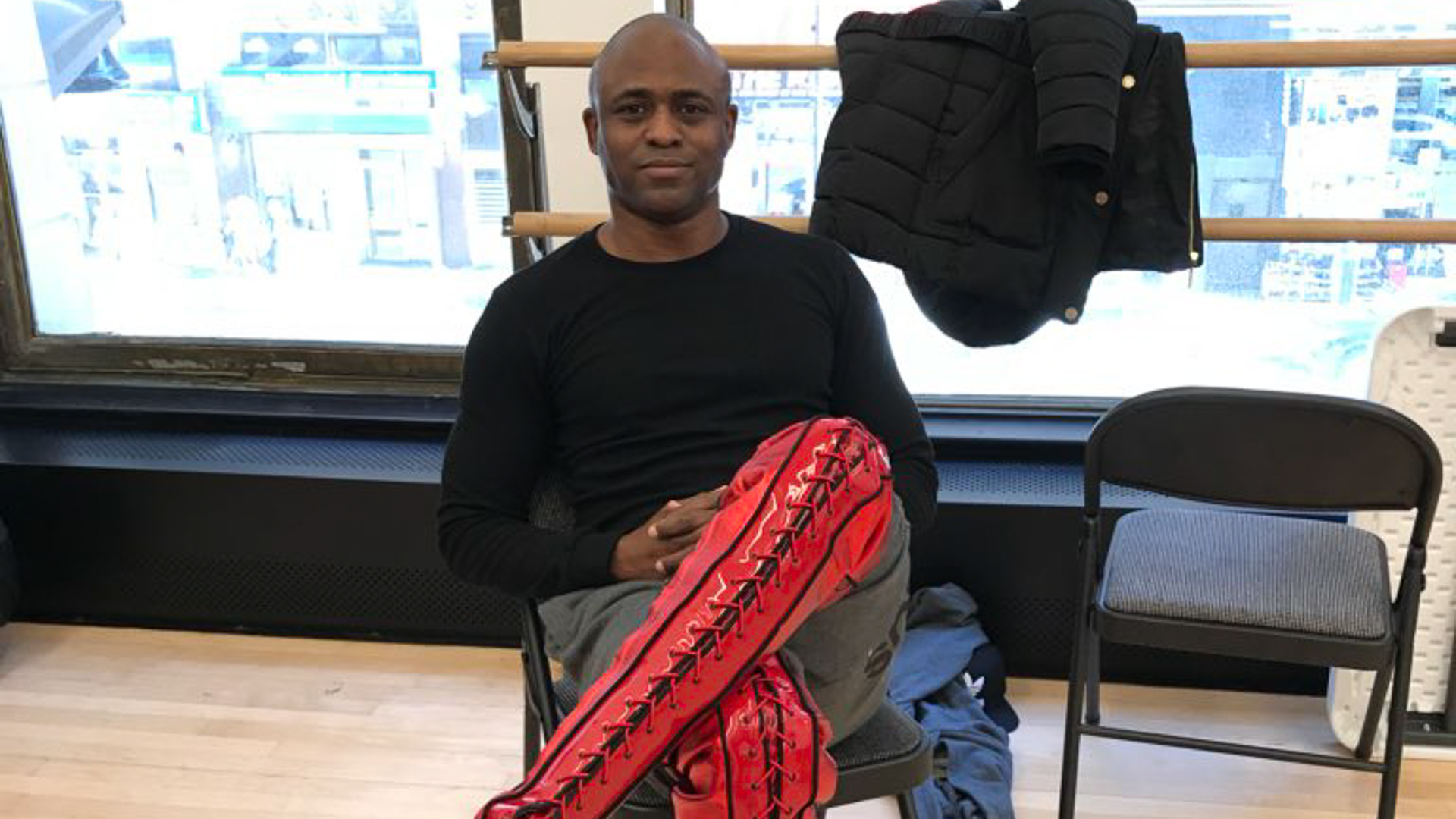
Photo: Wayne Brady taking a break during rehearsals for Kinky Boots on Broadway. (Courtesy Wayne Brady’s Twitter page)