




La Jolla Music Society’s SummerFest has always been more than a summer chamber music festival. Since becoming Artistic Director in 2019, pianist Inon Barnatan has continued to shape it into a place where repertoire, history and artists converse across centuries rather than simply share a program.
That philosophy is especially evident during the 2026 season. While SummerFest celebrates its own 40th anniversary alongside the 250th anniversary of the United States, Barnatan resisted the temptation to build a festival devoted to American music.
Instead, he created a season that explores how music responds to history, how history shapes composers and performers and how audiences discover familiar works in entirely new ways.
Our conversation ranged from Ralph Vaughan Williams and Mozart to Leon Fleisher, Maria Curcio and the responsibilities of artistic leadership. Throughout, one idea kept returning: great programming isn’t simply choosing remarkable music. It’s creating meaningful conversations between pieces, performers and audiences.
Q: Ralph Vaughan Williams wrote in National Music that “the art of music above all is the expression of the soul of a nation.” As SummerFest celebrates both America’s 250th anniversary and its own 40th season, how does this year’s programming express not only the soul of this nation, but also your own?
Well, obviously this year is a big anniversary for this nation, my adopted nation, and I feel very strongly that one of the things that is most special and most significant about this country is the diversity of backgrounds and opinions, all the people who came together to form this mosaic.
So I didn’t want the festival simply to become a festival of American music. Obviously, we have our own anniversary to celebrate, the festival’s 40th anniversary, as well as the country’s anniversary. But one of the things I find fascinating about music is that it reflects both the person who wrote it and the person who is playing it.
By bringing together music from different eras and different countries, by juxtaposing all of those voices, I think we’re doing something that’s deeply American. It’s a very special thing to be able to do in a year like this.
How does it reflect the spirit of the person who programs it?
I’m a very adventurous programmer, but adventurous programming isn’t simply putting something written yesterday on a program and calling it adventurous. To me, it’s about putting unexpected things together. It’s showing something familiar in a new light.
That’s the spirit I try to bring to my own recitals, to SummerFest and to every performance I give. You’re always trying to present something familiar as though it’s brand new and something new as though it already belongs. It’s challenging, but it’s also one of the things musicians love most.
Early in your career, The New York Times described you as a “master programmer.” That was more than a decade ago, so clearly this instinct has been with you for quite some time. Where does it come from?
I’m fascinated by programming, which is probably why people think I’m good at it. It comes out of absolute curiosity. I’m particularly fascinated by the conversations that happen across centuries and across generations.
One of the best museum experiences I’ve ever had was walking through a museum that wasn’t organized by artist or period or style. Instead, everything was organized by association. You’d see works from different countries and different eras hanging next to one another because they were speaking to each other.
Suddenly you’d look at a Renaissance painting beside a Picasso and think, “Oh, now I understand where this comes from,” or, “I see this reflected over here.”
That’s my hope whenever I put together a program. You’re not simply listening to a piece you already know. You’re hearing it differently because of what came before it, what comes after it and the context surrounding it. That’s the job of a curator.
This year’s theme is Making History. We’re living through an extraordinarily complicated moment in history ourselves. When you began shaping this festival, what kinds of conversations did you hope the music would start?
When I say history, obviously history and politics are intertwined, but I wanted to show specifically how music fits into that equation. How historical events shape music, and how music shapes history.
The opening concert examines ten works that made history in one way or another, or were themselves shaped by history. We travel from the eleventh century all the way to today.
Sometimes we become disconnected from where music comes from. We know the finished work, but not the circumstances surrounding its creation. I think it’s fascinating to ask what was happening when this music was written. How were artists shaped by the world around them? That’s the major theme I wanted to explore, but we explore it from many different directions.
Sometimes it’s through world events like the First or Second World War. Sometimes it’s through institutions like the Library of Congress and the role commissioning has played in shaping musical history. Sometimes it’s focusing on a particular city during a remarkably short period of time, like Vienna, where within only a few years you can hear an entire musical world changing.
It’s an almost endless subject, which is exactly what makes it so fascinating.
I found an article in The Times of London about your teacher Maria Curcio. It said she insisted her students study all of a composer’s music, not just the piano works. That has to be an extraordinary foundation for someone now programming an entire festival. How much has that lesson stayed with you?
Tremendously. Both Maria Curcio and my later teacher, Leon Fleisher, studied with Arthur Schnabel, and both emphasized that if you play the piano simply like a piano, you’re missing something.
You can’t really do justice to a Beethoven piano sonata without knowing what the string quartets sound like or what the symphonies sound like, because very often the piano isn’t simply being a piano. Sometimes it has to sound like a string quartet. Sometimes, if you’re playing Mozart, it has to sing like a voice. If you’re playing Ravel, it has to become an orchestra.
You have to imagine those sounds and hear them in your inner ear before you can reproduce them on the piano. That’s one of the great things about the instrument. It’s a shape shifter.
For me, that’s one of the reasons I direct a chamber music festival, play so much chamber music, collaborate with singers and pursue so many different musical experiences. I don’t think you can play chamber music well without understanding what it means to be a soloist. I don’t think you can play the piano well without understanding what it feels like to play the cello, to sing or to perform with an orchestra.
You first came to SummerFest in 2012 as a performer. What do musicians find there that keeps bringing them back?
Every summer music festival develops its own family. People return year after year because they fall in love with the place and with the people. At SummerFest, that’s especially true.
Most of the musicians stay with host families, so they become part of the fabric of La Jolla. Relationships develop over many years. You’re not simply arriving, playing a concert and leaving.
Of course, La Jolla itself is one of the most beautiful places in the country. If you have a free afternoon, you can walk down to the beach, watch the seals, or have a great piece of fish at El Pescador. That’s part of what makes being there so special. But there’s another side to it.
I always joke that the festival’s motto should be, “Play hard. Play hard.” The reason is that everyone who comes is performing at the highest possible level. We have one of the finest chamber music halls anywhere, an extraordinary piano and musicians who care deeply about every concert.
You don’t come to SummerFest simply to enjoy the beach, spend time with friends and play a little music. People come because they want to make music at the very highest level.
The wonderful thing is that those two experiences coexist. You can spend the afternoon with friends, have dinner together and then walk onstage completely inspired by the people around you. That’s really the ethos of the festival.
What do you remember most vividly about that first visit?
We were still performing in a different venue then, so the hall wasn’t the one we have today. I remember the extraordinary musicians who were there, and of course I remember the beach and the seals. It was my first time really spending time in that part of California. I’d been to San Diego before, but not to La Jolla itself.
Looking back now, I think every music director inevitably brings a different color to a festival. I’ve invited people I genuinely love playing with, people whose artistry I admire.
When I think about programming, I often ask myself two questions. Who would I happily go hear perform? And who would I love to sit down and have dinner with? Sometimes they’re exactly the same people.
One of the great privileges of directing a festival is getting to answer those questions yourself.
Speaking of your own performances, I noticed you’re returning to Schubert’s Fantasia in F Minor for piano four hands, a work you also played during your first SummerFest appearance. I was curious whether that was intentional.
I’ll be completely honest, I hadn’t realized that. Now I have another reason why it’s there. The real reason is that Jonathan Biss is coming this summer. He’s one of my favorite Schubert pianists, and we’ve played the piece together before. As soon as I knew he’d be there, I wanted to perform it again.
That’s really how programming works. Sometimes I begin with a piece of music. Sometimes I begin with an artist.
In this case, knowing Jonathan was coming made me think immediately about the Fantasia.
Then that led to the idea of building an entire Schubertiade around it, which also fit beautifully into the festival’s larger themes.
Putting together a festival is always a puzzle. The interesting part is discovering how all those pieces eventually fit together.
One of the things that delighted me most this season was seeing so much Ralph Vaughan Williams. I’ve always thought he’s one of the great underappreciated composers. What inspired you to feature his music so prominently?
Besides the fact that I think the music itself is extraordinary and still somewhat underrepresented, Vaughan Williams was such an iconic figure in English music. He became the musical voice of a particular moment in England’s history, a period that was simultaneously looking backward with tremendous nostalgia while standing on the edge of enormous change.
That quotation you opened with about music expressing the soul of a nation is one of the reasons he’s so present throughout this festival. His music really did represent England at a particular moment in time.
One of our concerts explores that remarkable period in the early twentieth century when, within little more than a decade, an entire musical world changed.
I’ve also wanted, from my very first SummerFest, to program the Fantasia on a Theme by Thomas Tallis. I think it’s one of the most beautiful, deeply moving pieces ever written. Celebrating the festival’s 40th anniversary gave me the freedom to think on a slightly larger scale. This was the right moment to bring that piece to life with some of the finest musicians anywhere.
I’ve always hoped a major orchestra would devote an entire season to Vaughan Williams’ symphonies instead of another complete Beethoven or Brahms cycle.
I think anything that’s done in good faith can find an audience. One of the things I’ve learned as a music director is that, over time, you build trust with your audience.
If people see that you’re programming thoughtfully and for the right reasons, they become willing to follow you into unfamiliar territory. One of my favorite experiences was opening a season with a concert where we didn’t publish the program at all. Nobody knew what they were coming to hear. The concert sold out.
It’s like going to a Japanese omakase restaurant. You don’t know what’s coming, but you trust the chef. You trust that every choice has been made thoughtfully and that you’re going to leave having experienced something worthwhile.
That’s a wonderful relationship for an audience to have with an artistic director.
You’ve spoken before about Leon Fleisher encouraging you to “transcend what happens at the keyboard” and think from “30,000 feet above the piano.” How has that way of thinking shaped the musician you’ve become?
Leon had this wonderful ability to remind you that what happens on the surface is only a very small part of what music actually is.
He used the analogy of an iceberg. What we hear is the small part that’s above the water, but everything underneath it determines what that visible part becomes.
So understanding structure, literature, history and everything surrounding a piece of music is essential. It’s like an actor taking the time to understand the world a character lived in, inventing a backstory and filling in all the details so that every word feels inevitable. That’s really what we’re trying to do as musicians.
You want to become as fully rounded a person as possible because all of those experiences eventually find their way into the music. Whatever you do should feel natural for that composer, for that era and for everything that was happening around it. That’s a fascinating process.
It’s also understanding the mechanics of the instrument itself, isn’t it? The composer has to think about how every note affects the next one, how pedaling changes what came before and what follows.
Yes, but if you’re simply following the text without understanding why it’s there, I don’t think it will ever sound natural. It will sound like you’re reproducing something.
If you understand why the composer wrote that marking, why that pedaling is there and what the intention was, then sometimes you don’t even have to do exactly what’s written. Different halls, different pianos and different circumstances require different solutions.
The important thing is understanding the intention. Once you understand that intention, music making becomes interesting.
A friend of mine once wrote about the similarities between interpreting music and interpreting the Constitution. It isn’t simply about following the words. It’s about understanding why those words exist in the first place.
I think about music in exactly the same way.
Mozart wrote in The Man and the Artist as Revealed in His Own Words that “the most necessary, most difficult and principal thing in music… is time.” What has time come to mean in both your music and your own life?
You specialize in very grand questions.
Time can mean so many different things, but music exists as an act in time. Unlike a painting, you can’t stand back and absorb the whole thing at once. Music unfolds second by second, and every moment changes the meaning of the moment that follows. That’s one of the reasons interpretation is so endlessly fascinating.
Tempo isn’t simply speed. It’s proportion. It’s breathing. It’s understanding how one idea grows naturally into the next.
As I’ve gotten older, I’ve also realized that life works the same way. You can’t rush it. Some experiences only make sense years later. Some relationships only reveal their significance with time. Teaching, performing and programming have all taught me patience in different ways.
Time isn’t something you’re fighting. It’s the medium in which everything meaningful happens.
Making History isn’t only about looking backward. It’s also about recognizing that history is being made every day. Does directing a festival like this change the way you think about history itself?
Absolutely. History isn’t something that’s finished. History is constant. It’s happening right now.
Sometimes we think of classical music as something preserved behind glass, but it isn’t. It’s a breathing, living thing that’s constantly changing because every generation asks different questions of it.
That’s one of the great privileges of programming a festival. You can help people hear a familiar piece in a completely new way simply by changing its context, by placing it beside another work or by inviting a different artist to perform it.
If that happens, then history isn’t something we’re commemorating. It’s something we’re participating in.
Summerfest2026 runs from July 31st – August 29th.
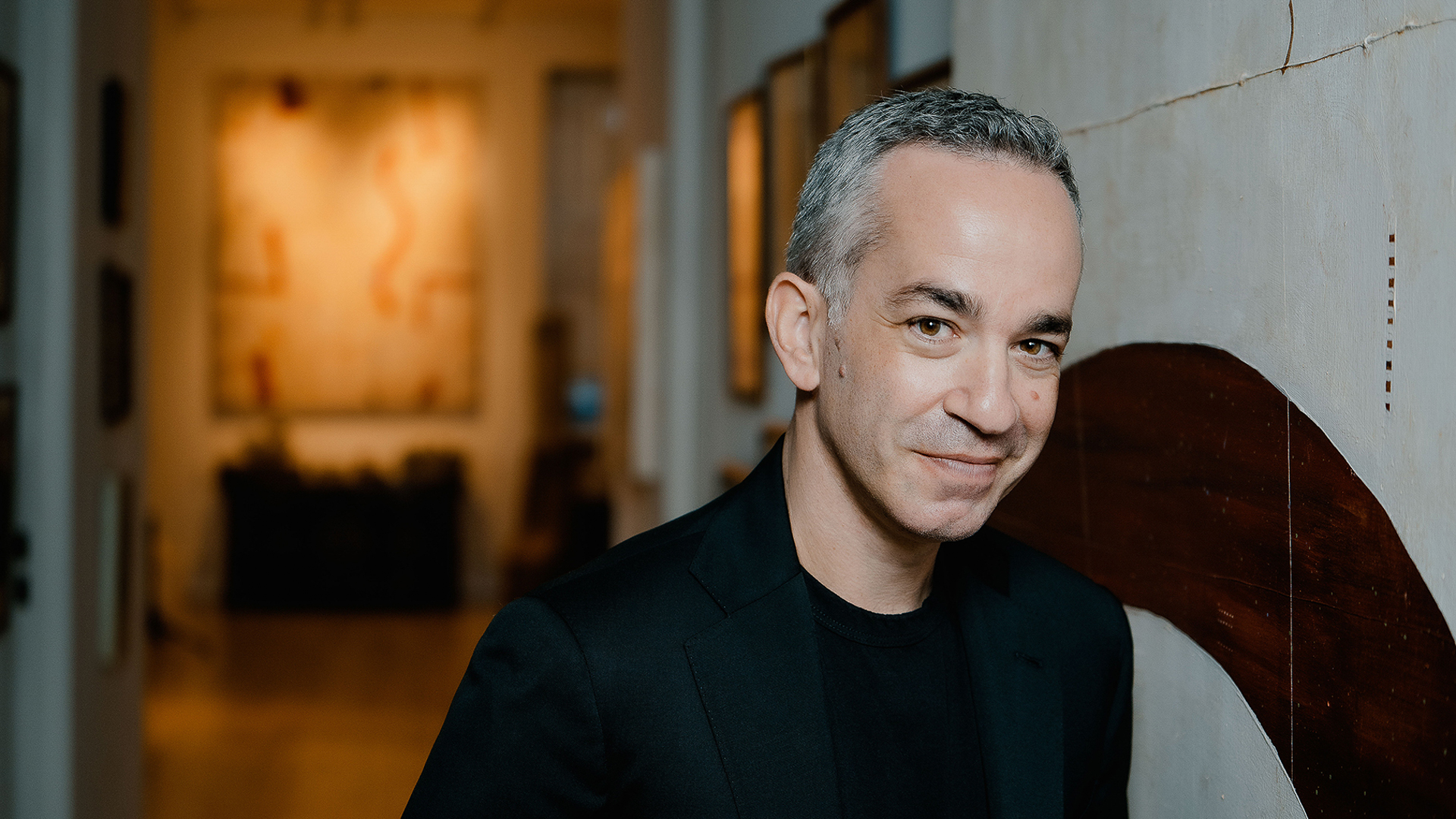
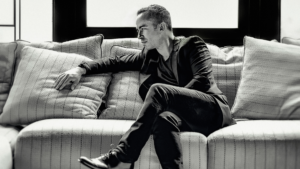
Main Photo: Inon Barnatan (Photo by Marco Borggreve/Courtesy The Artist)