







Pearl Cleage has spent a lifetime telling stories about people she knows, loves, and understands. From her early years in Detroit surrounded by the Civil Rights Movement and Black Arts Movement to her emergence as one of America’s most important playwrights and novelists, Cleage has consistently explored the complexities of community, identity, love, and truth.

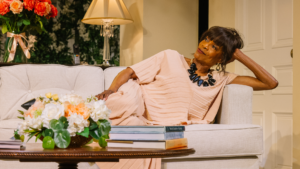
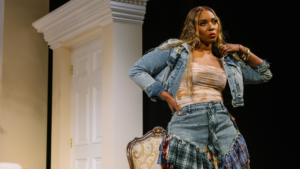
Her play Angry, Raucous and Shamelessly Gorgeous, now playing at Geffen Playhouse, brings many of those themes together through an unexpectedly funny and deeply moving conversation between generations. Centered on a legendary feminist artist and the younger woman who enters her orbit, the play examines what one generation owes the next, how artistic legacies are inherited, and whether wisdom can be passed along without becoming instruction.
In conversation with Cultural Attaché, Cleage discusses the writers who shaped her and the importance of telling the truth through art.
Cleage also reveals why she remains fascinated by the relationship between older and younger generations, and why she remains optimistic about humanity despite everything.
Your play, Angry, Raucous and Shamelessly Gorgeous, is now playing at the Geffen Playhouse in Los Angeles. For people who don’t know the play, can you give me a brief setup of what you’ve written about?
What made me start writing the play was wanting to look at intergenerational conversation. I wanted to explore how women my age can have meaningful conversations with younger women without trying to tell them what to do or insisting that because we lived our lives a certain way, they should do the same. I was looking for two characters I could bump up against each other and see if I could make them talk.
Lorraine Hansberry [playwright of A Raisin in the Sun] once urged young writers to write about their people and tell their stories because they had something glorious to draw on. When did you know that was what you wanted to do?
I grew up in a very race conscious family in Detroit. We were surrounded by the Civil Rights Movement, the freedom struggle, the Black Arts Movement. Writing about the community that nurtured me wasn’t something I had to discover. It was what I was raised to do.
I remember seeing a touring production of A Raisin in the Sun when I was about eleven years old. The theater was filled with people I knew. The play was so much about us. We knew every person on that stage.
Walking out afterward, I told my mother, “That’s the kind of plays I want to write.” She said, “Well, that’s what you should do.”
That’s what I’ve always tried to do. Write about the people I know and love. Not as a sociological experiment, but as a way of understanding the full humanity of the community that produced me.
The best work often finds a universality that transcends a specific community, doesn’t it?
I think that’s true for everybody. I loved Ibsen and Tennessee Williams as a little Black girl growing up in Detroit. They weren’t writing for me specifically, but I understood Blanche. I understood Hedda.
Sometimes we talk as if universality is a challenge only for writers who identify in a particular way, but it’s really the challenge for all of us. If we do it right, we’re inviting people into stories they may know nothing about and making them feel at home there.
How often does your writing hold up a mirror to yourself?
All the time. That’s why I do it.
I’m always trying to figure out what’s driving me crazy, what’s making me laugh, what’s staying on my mind. If I can identify those things and find a story that lets me explore them, I’m always amazed by how many other people are wrestling with those same questions.
One of the fascinating elements of the play is Anna Campbell’s legendary naked August Wilson protest. How many people have asked if that actually happened?
A lot of people. Designers have asked if there are photographs of the performance. I have to tell them, “No, I made that up. That’s what I do.”
I’m always flattered that people believe it, but I’m also surprised. If something like that had actually happened, the entire American theater would have known about it.
What interests me is the idea that once artists become iconic, people can become afraid to engage critically with their work. August Wilson is an extraordinary writer, but no artist should be beyond conversation. I’m a sixties child and a radical feminist. If there’s something people say you can’t talk about, that’s usually exactly what I want to talk about.
This production is directed by Latanya Richardson Jackson, whose career has intersected significantly with August Wilson’s work. What conversations did the two of you have as you approached this production?
Many. The wonderful thing is that Latanya and I have known each other since college. These conversations go back decades. We were talking as young women about why men’s stories were always treated as the most important stories and why so many artistic structures reflected male assumptions.
Working together on this production brought all those conversations full circle.
One of the ideas at the heart of the play is that younger women don’t have to do exactly what we did. The point is that we helped make space for them. We don’t need to tell them how to live. We can simply say, “We see you. We love you. Godspeed.”
One of the themes that resonated with me is the tension between generations. Older generations often feel younger people don’t appreciate the work that made their freedoms possible.
It’s hard sometimes not to say, “Do you know why you’re able to do this?”
Whether it’s younger Black women, younger gay men, or any younger generation, there are moments when they look at you as if they’re tired of hearing it. But we worked hard to make those spaces.
I’ve learned that when younger people ask about that history, you should tell them everything you can. Talk fast. They may never ask again.
Pete ultimately does something that becomes a sensation. Reading the play, I found myself thinking she received the lesson even if she didn’t fully realize it.
That’s exactly right. She received the gift even if she didn’t know it was being handed to her.
The mistake older generations sometimes make is waiting for gratitude. We get our feelings hurt if it doesn’t arrive. Instead, we should look at what younger people do with what they’ve inherited. That’s the real reward.
One of my favorite lines in the play comes when Anna says, “You know what I want? I want it back. All the time I wasted like there was an endless supply somewhere.” Does that reflect your own relationship with time?
Very much. I remember reading an interview with Michelle Obama after her mother died. Her mother looked back on her life and said, “Wow, that was fast.” I think about that all the time.
When you’re young, you’re busy becoming yourself. But when you’re older, especially if you’ve been fortunate enough to spend your life doing work you love, you become very aware of how quickly everything passes.
There’s gratitude in that realization, but there’s also amazement.
You have spoken before about wanting to be as free as possible, not only in terms of race but also gender. What has been the response from men to this play?
I think men have responded very well to it. Women have responded ecstatically.
The play speaks in unapologetically female tones. That’s not better than a male perspective. It’s simply a language we don’t hear often enough. The play isn’t trying to accuse anyone. Anna is trying to figure out how to get right with herself.
I think one reason the play works for men is that it offers access to conversations women have been having with one another for a very long time.
You’ve spent much of your career telling stories that weren’t being told elsewhere.
That’s one of the pleasures of being a writer. Sometimes you look around and realize nobody is standing in a particular space. Nobody is talking about something in the way you want to talk about it. Then your job is simply to step into that space and tell the truth as you know it.
When I look back at work I wrote decades ago, I’ve learned a tremendous amount from living. But the essential questions haven’t changed. What makes a good person? What makes someone worthy of love? What is a family?
What a gift it is to spend your life writing about those questions.
A friend once told me that every artist has to find what is true for them and work from there.
I believe that. A friend of mine once said that if you’re a writer, you’re either writing your way in or writing your way out. Sometimes you’re trying to discover the question. Sometimes you’ve found the question and you’re trying to figure out what to do with it.
The challenge never changes. You have to keep asking yourself what you believe is true.
I think that’s more important now than ever. We live in a time when people are overwhelmed by misinformation and confusion. The responsibility of a writer is to keep looking for the truth. Always.
For many playwrights, Broadway is the ultimate destination. How important is it for you to see one of your plays produced there?
It’s honestly not important to me. Of course it would be nice. I’m an American playwright. It would be fun to say I had a play on Broadway.
But I’ve been able to work as a writer since I was in my twenties. I get to wake up every day and do the thing I most wanted to do with my life. What I love is theater itself. I love watching people gather together, trust us enough to turn out the lights, and listen to a story.
A Broadway audience is no more valuable than the audience I sat with as a child in Detroit watching A Raisin in the Sun.
Angela Davis once said, “Walls turned sideways are bridges.” What bridges are you most interested in building now?
The bridge that interests me most right now is the bridge between generations. Partly that’s because I’m older. Partly it’s because I have five grandchildren.
I’ve spent different parts of my life trying to bridge gaps between men and women and between communities that seemed very different from one another. But now I’m fascinated by the question of how generations speak to each other.
How does Pete talk to Anna? How does Anna talk to Pete? How do they truly see each other without pretending they’re the same?
That’s the challenge that interests me most.
I’m assuming you’re ultimately an optimist.
I am. Even in the midst of all the lies and craziness, I’m optimistic because I genuinely like human beings. When we do the right thing, we’re extraordinary. When we don’t, we can do terrible things to one another.
But I think if we keep trying to be good, keep trying to tell the truth, and stop being so judgmental, we’ll be fine.
I think people can do better. And I want to be part of doing better.
Pearl Cleage’s Angry, Raucous and Shamelessly Gorgeous continues at the Geffen Playhouse through July 12th.
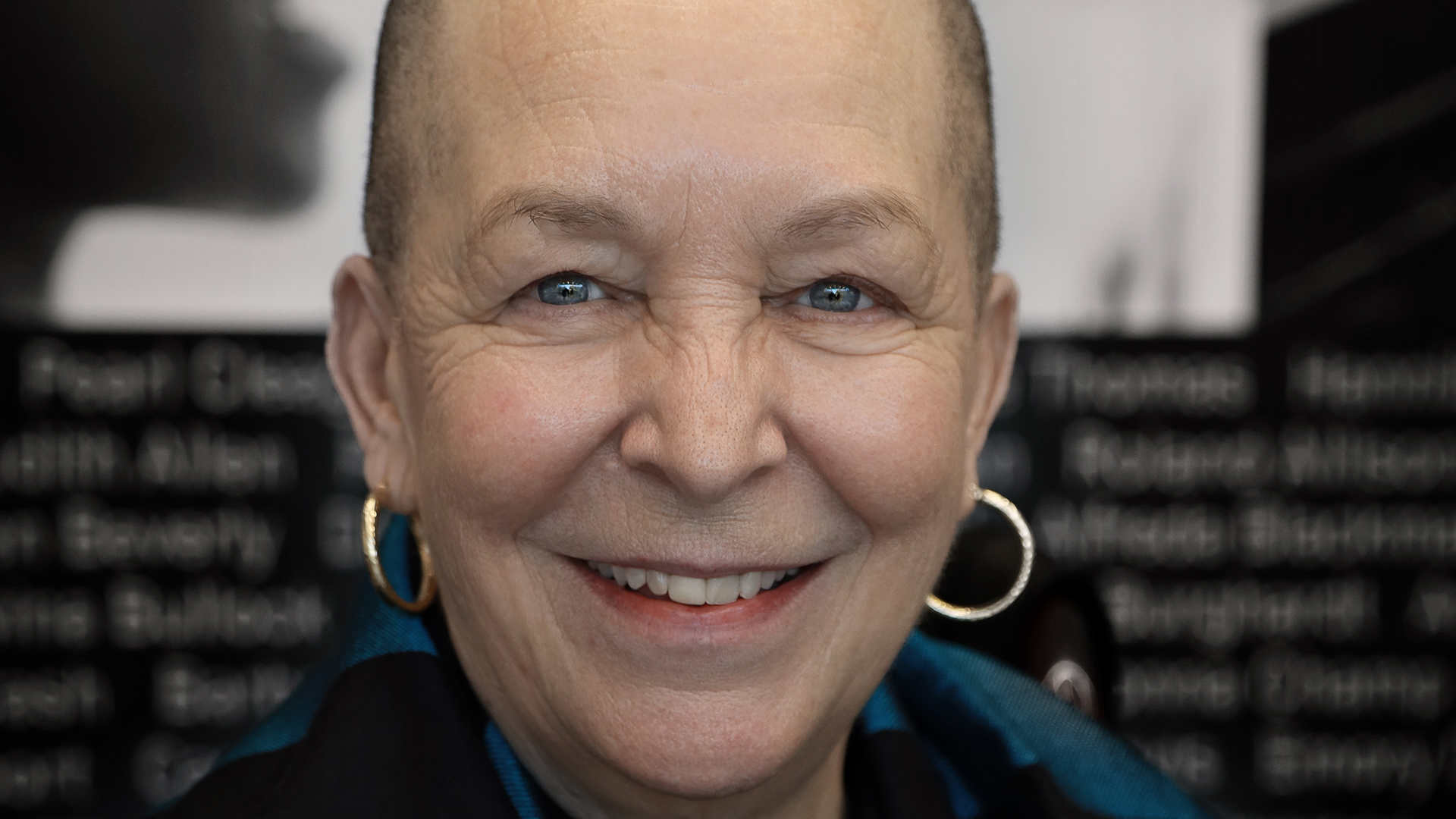
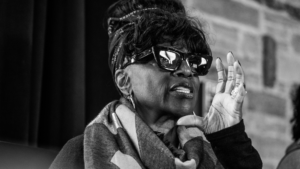
Main Photo: Playwright Pearl Cleage (Photo by Quintin Jackson/Courtesy Geffen Playhouse)