




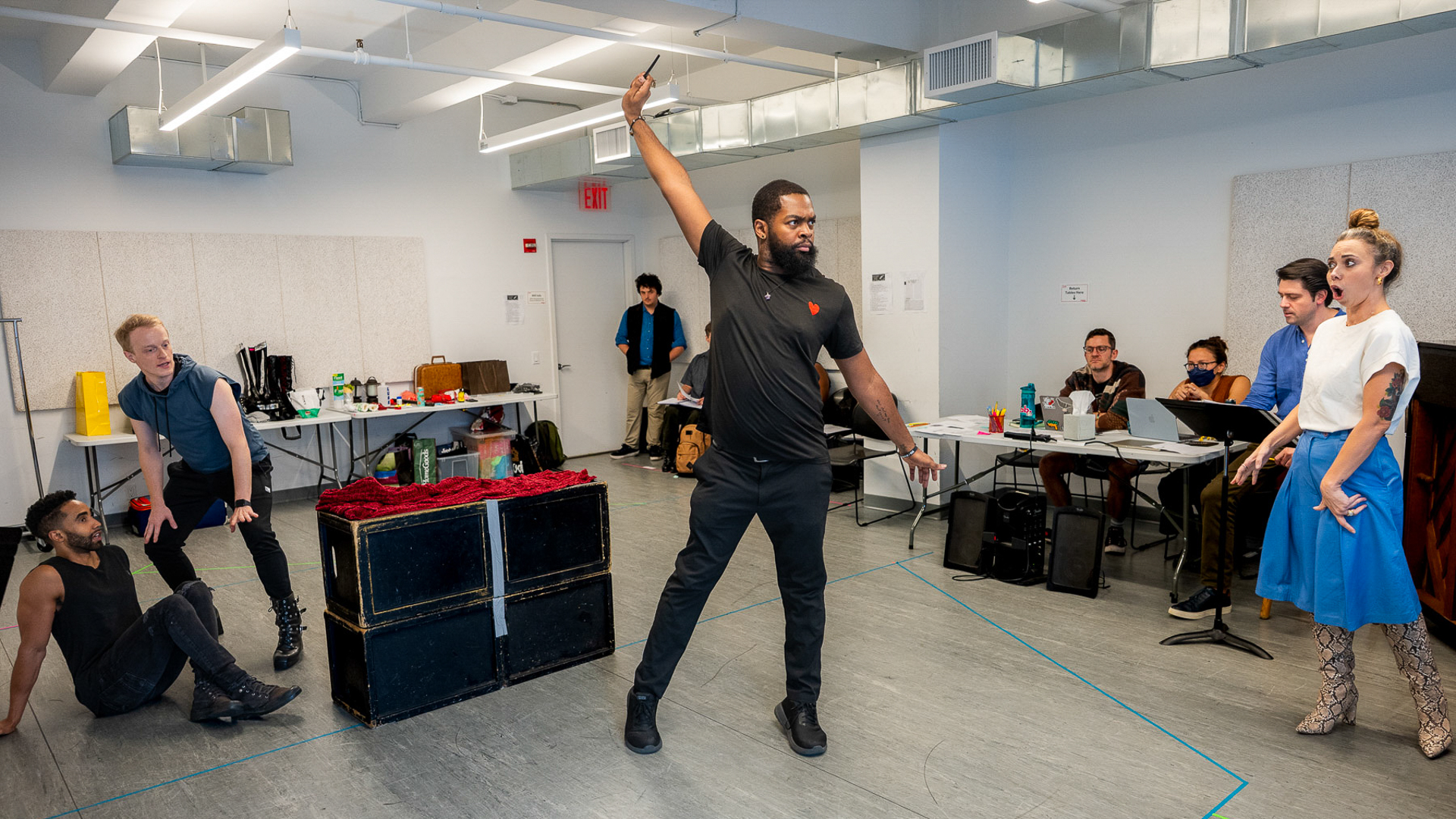


Kemar Jewel has made a career of finding new possibilities in familiar stories. As a director, choreographer and writer, he brings musical theater, opera and ballroom culture into conversation, finding room for people and perspectives that have not always been welcomed on traditional stages.
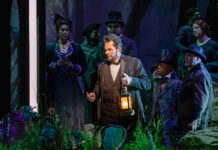
Jewel is co-writer, director and choreographer of Heartbeat Opera’s Queeney Todd: The Demon Bottom of Fleet Street, running October 22nd–31st in New York.
The production brings opera, musical theater, drag and ballroom culture together in a decidedly queer reinvention of Stephen Sondheim‘s Sweeney Todd. Its irreverence, however, does not mean its characters are without pain.
His latest project is irreverent, but our conversation also explored the tenderness beneath its camp, his relationship with Sondheim’s work, the ballroom community that helped shape him and his hopes for the next generation of artists.
Q: Stephen Sondheim described Sweeney Todd as “a movie for the stage.” What is Sweeney Todd to you, and what makes it a work that invites reinvention?
For me, Sweeney Todd is really about revenge and love and the pain that’s on the other side of what happens when our dreams get deferred or we are taken out of our true calling. Me personally, I love dark musicals, dark operas. I love the killer, the person coming for revenge. I’m always rooting for that person. But to me, Sweeney holds pain. I think that oftentimes we see characters in stories or in movies, musicals, stuff like that, that’s either you’re the good guy or you’re a bad guy. And I think we all know from being human that that’s not how things work. People are good, they are bad, there’s ebbs and flows.
You directed Marry Me a Little and were assistant director on Passion. What inspires you most about Sondheim’s work?
Sondheim is like God to me. I’m a big musical theater kid. I grew up in musical theater and I also just love English. I love words. I love pattering and alliteration and wordplay and Sondheim is so good at that. But I also think that Sondheim’s stories really make me feel whole because I often listen to his music and I feel the hurt and the pain from the characters. I also feel like I can see these persons’ dreams, what they really want.
With Passion, thinking about Fosca and what is it to be unwanted, unbeautiful, and then to have that one person look at you in a way that makes you feel beautiful. And so with Marry Me a Little, I love that show. I think that it can be done in so many different ways.
But in my version, we cast two Black men who moved into an apartment together and they were falling in love. And so we got to kind of see this journey of them flirting and falling in love and arguing and their sex and their passion and then their breakup and then maybe they get back together, you know, TBD type of thing. But I think Sondheim’s work really does hold relationships and the complexity of relationships and I just always think it’s so beautiful.
What does telling Queeney Todd through a queer lens allow you to do that might not otherwise be possible?
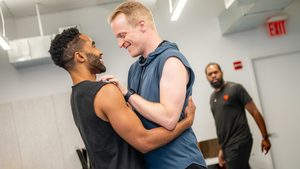
We really get to lean into the camp of it all. Musical theater is campy, opera is camp, drag is camp. And when you put all those things together, we have fun, we have lip syncing, we have reveals, we have costume changes, we have tearaways. Even if it’s silly and stupid we accept it because we know it’s drag, we know it’s campy, we know it’s not supposed to be real.
We really take what we do in theater and what we do in opera and push it times ten just based off of having this queer lens, this drag lens.
As choreographer, what is the role of your choreography in telling Queeney Todd when musical theater, opera and drag all have their own conventions?
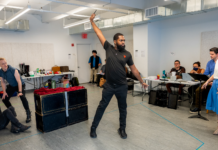
We really set out to be like, what is the tone of this scene? What is the movement? What is the language of the body in each scene? It’s been incredibly fun to work on the opening number with so many bodies and this big bombastic sound. There are some very beautiful tender moments towards the end of the show where we get to waltz. I remember being in rehearsal teaching two men how to waltz, which I thought was beautiful. There are so many styles of dance. We have tailored dance to be a part of that scene and what we’re trying to tell.
What do you think drag and camp at their highest level do to make us not just laugh, but feel and think?
I love camp. I love satire. I love these things that are so absurd and so funny and then we’re like, oh no, this is actually serious. These are actual real issues that people have. No matter if you share the identity, the lifestyle with these characters or not, there’s something about good storytelling that feels so universal. Drag and camp invite people in, in a way that’s like, oh, this is silly and stupid, let’s have fun. And then you sit and you’re like, this is really hurting this character, or this is really resonating with me. We’re going to have fun and we’re going to let you know that when we leave here, things still need to be done. It’s our duty as queer artists to make art that has a duality of fun and campy and real.
Do you see yourself directing a traditional opera in the future?
I am really falling in love with the opera canon. Part of my research has been finding out who are these characters from Carmen and Madama Butterfly and Rigoletto. On top of finding out about the characters, I’ve been watching those full operas so I can see the arc of the characters.
You recently won the Latex Ball. What did that mean to you personally, and has it changed the possibilities you see for your career?
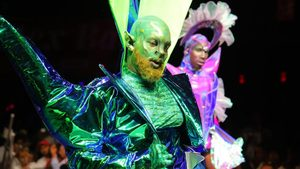
I’m actually tearing up right now because the ballroom scene is alive and well all across the world, but particularly in New York City. The Latex Ball is the largest ball in the world. About 10,000 people attend. People come from different countries just to compete in this ball. It has always been a dream of mine to win the Latex Ball.
In August, I won my very first Latex Ball. I’ve competed a few times. I’ve gotten this close to winning several times, but snatched the trophy this time.
I cried so much because it really was a huge part of ballroom history. And now I feel like I’m a part of ballroom history. It’s more than voguing. It’s drag, it is runway, it’s fashion, it’s presence, it’s how you stand, how you hold up your hand, how you deliver a line.
How does your theater work find its way into your ballroom work?
There are categories in ballroom called As a House. As a House is usually a production category where they ask you to have four to six members and you do a production of whatever is being called for. Last year there was a category in Paris called Runway as a House. They were asking for you to bring a church production. I flew to Paris. I got a few runway people together. I did this whole theatrical production where these runway ladies walked up in big church lady hats.
One month after this show closes, you will be celebrating your 35th birthday. And on the occasion of your 34th birthday, you posted on Instagram: “As I enter this new year in my life, I’m looking forward to learning more about myself and stepping into spaces and opportunities that I know are destined for me.” What have you learned about yourself since that post?
I have learned so much about my own resilience. I’ve had a lot of loss since then. My brother passed away last year around that time. And then at the beginning of this year, my mentor, Nyland from the Drama League, he passed away. I’ve really been in a lot of grief. I also think that they both have given me so much that I’ve been able to take the lessons and move forward. I’ve learned about advocating for myself, about things that may sound silly to other people, like ballroom-related productions that people may not understand. I’ve also learned about the industry and the person that I want to be in the industry. I’ve learned about the power of resilience. I’ve learned about honoring my grief and allowing myself to lead with values as an artist.
I feel like grief is at the core of Sweeney Todd. Does Queeney Todd still maintain that sense of grief amid all its humor and joy?
Absolutely. No spoilers, but there are definitely different men who come up in this show. And there is one man who really catches Queeney’s eye. What happens when you are attached to someone who you shouldn’t be? And what happens if that person gets taken away? And what happens if you need to stop and be like, oh my God, what am I doing?
You never had the opportunity to meet Sondheim, but he gave his blessing to your production of Marry Me a Little. What do you think he would make of Queeney Todd?
I think that he would love it. I feel like Stephen Sondheim, particularly in his later years, was really trying to figure out how his work could expand more and cover more identities, but also how it could reach more people. Having a female Bobby was such a huge thing. There are other characters in Sondheim’s canon that are like, could this person be trans, or could this main character be a woman, or could we do an all-Black production?
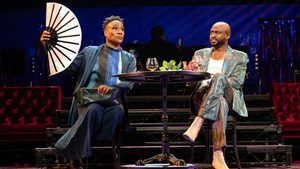
I recently worked on New York City Center’s production of La Cage with Robert O’Hara directing and it was an all-Black production. We didn’t change the lyrics. We didn’t change anything in the book. There were just so many things that hit harder with Black bodies saying these things.
I think that when you add layers of intersectionality on top of things, you really are like, oh wow, this hits harder. This really means something more than what I thought it was.
Sondheim wrote, “Art is skill in the service of passion.” What is your passion, and how is your art in service of it?
My passion really is about mentoring and paying it forward. I had a somewhat hard upbringing being Jamaican and being queer. I was having a very hard time and art saved me. Ballroom saved me and showed me that even though I was weird, I could have a space and people would applaud me for being feminine or for wanting to vogue. I always try to pay things forward and I tell people to be themselves, to not conform to the spaces just to be seen. I want to be a professor. That changed my whole outlook on the way I look at classics, plays, musicals, opera. What is the story I’m trying to tell and what from the canon can fit on top of this and make sense?
When you’re able to be that mentor, how are you personally rewarded by that?
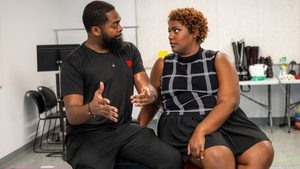
It just feels like I’m helping my younger self. There are so many people that I work with and help and I’m like, I see myself in you. I have always relied on the kindness of strangers, people seeing me and being like, you’re very talented, young man, let me help you. It feels really good when I’m able to give back, give advice. It makes me feel warm. I also would love some money, too. But it is something special to also be wealthy in your spirit. And I feel like stuff like that really does make me feel wealthy in my spirit.
Main Photo: Kemar Jewel with the company of Queeney Todd (Photo by Russ Rowland/Courtesy Heartbeat Opera)