







I wanted, perhaps needed, to take some time to think about my experiences during Cervantino 54 in Guanajuato this year. That’s what I’m offering in my Final Journal.
As this was my first international festival, I needed to consider if it changed my perspective on festivals.
I also needed to process the many comments and posts I read about how this Cervantino wasn’t what many people felt it should be.
Let’s start with the second part of that. I’m reconciling my great experience with the opinions of others with a longer history of attending Cervantino. I obviously couldn’t relate to criticism about this year’s festival having fewer street performers, fewer late-night events and a lack of other options on less busy days at the festival.
But I wholly understood that thinking. Many of the best times I’ve had at other festivals continued late into the night and involved street performers, street vendors, pop-up shows and more into the wee hours of the morning.
Could Cervantino 54 have benefited from more of those types of events? Of course. What festival couldn’t?
The range of events was impressive, even if it lacked big marquee names that have appeared at previous festivals. That was, for me, the biggest missed opportunity this year.
I am a big fan of violinist Maria Dueñas and opera tenor Arturo Chacón-Cruz. But are they household names? Not yet. I hope they will be. They both deserve it. Judging by their sold-out performances, it might not take so long for them to be big stars.
But the lack of name recognition prompted many locals to tell me they felt it impacted the lower number of visitors from both inside and outside of Mexico at this year’s festival.
There were quite a few acts that impressed me. These were my favorite performances:
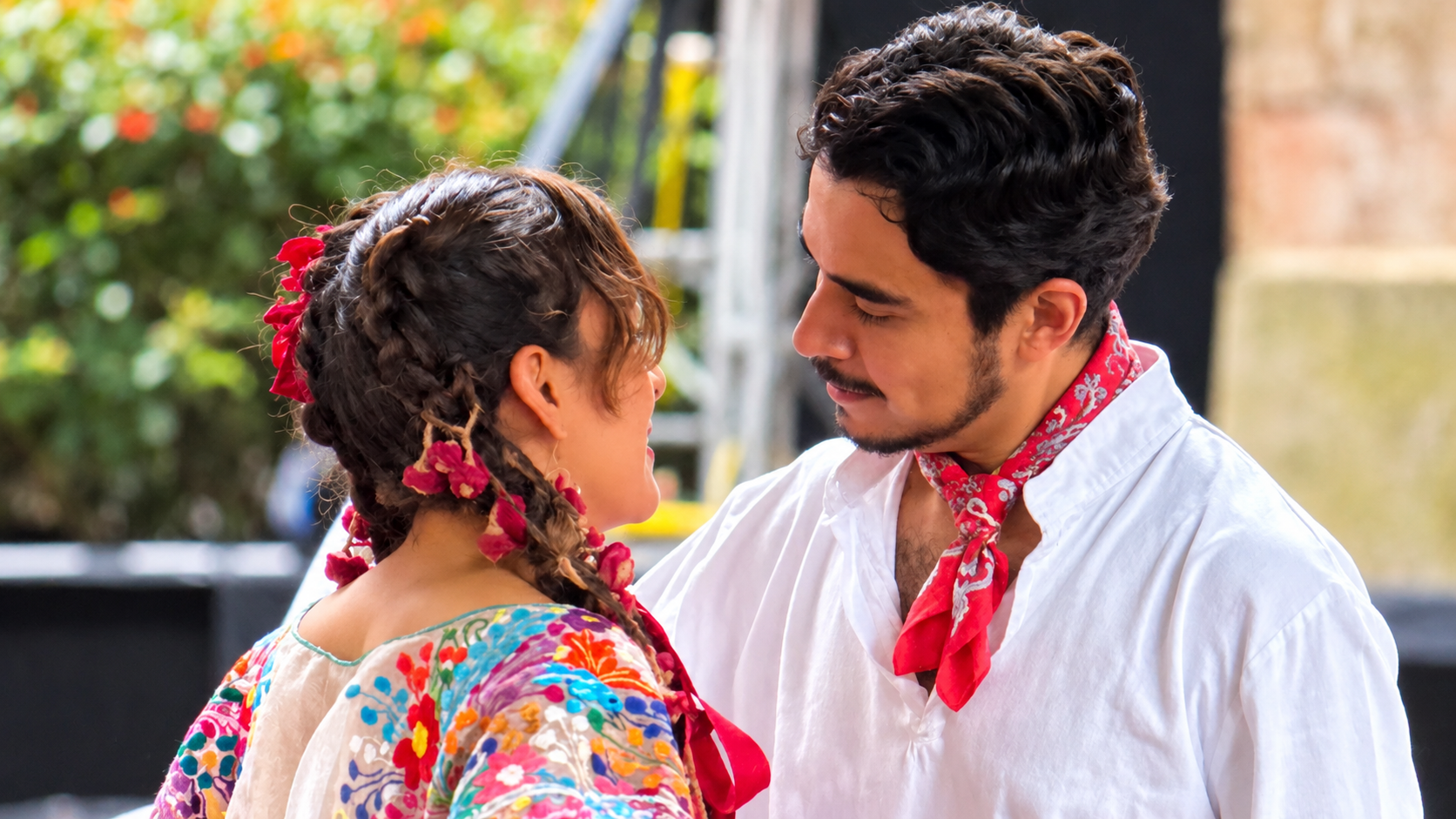
Ballet Folklórico de la Universidad de Guanajuato for the massively impressive two-hour show they performed and Chacón-Cruz y Mariachi Gama 1000 for a concert that turned into a boisterous sing-along.
Osian Meilir’s Qweerin for the pure joy it brought to the streets of the city and Gratte Ciel’s RoZéo for creating a true viral moment that brought throngs of people to Plaza Allende.
Théo Mercier & François Chaignaud’s Radio Vinci Park and Novaya’s Noire for creating provocative works that will stay with me forever. One for its depiction of the art of seduction and its power dynamics; the other for telling a little-known story about civil rights in America.
My number one moment of Cervantino 54 was seeing the performance of Kaija Saariaho’s staggering opera Adriana Mater. Estudio de Ópera de Bellas Artes’ production was impeccable. The performances were spot-on. Enormous praise is due the Orquesta Juvenil Universitaria for playing her complicated music as if they’d known it their whole lives.
Saariaho’s opera, though a deeply personal story about one woman’s journey, feels like it could have been ripped from any war zone around the world. It reminds us that the casualties of war extend beyond the loss of life.
At the beginning of this journal, I mentioned that it was my first international festival. Cervantino wasn’t, however, my first experience seeing cultural performances in other countries and in other languages.
I remember seeing Wagner’s Tristan und Isolde in Berlin with German subtitles. I also saw Hedwig and the Angry Inch in Berlin where the songs were in English and the dialogue was in German. That I know both these works well made for a fairly effortless experience.
During these two weeks, I fully experienced the idea that the arts, at their best, don’t require speaking the language of the works or the performers. All the best art transcends that necessity.
While I speak a fair amount of Spanish, I’m not fluent. But I do speak the language of music. And drama. And dance. And opera.
To see the previous stories about Cervantino 54, please go HERE for #1; HERE for #2, HERE for #3 and HERE for #4.
Main Photo: Dancers at Cervantino (Photo by Craig L. Byrd)