










For New in Music November 6th, I want to introduce you to some artists who may not be household names, but deserve to be. There are also albums by some of the biggest names in music. All of it worth your time.
My top pick is:

JAZZ: THE SOUND ORCHESTRA – Mathis Picard – La Reserve Records
If you read my interview yesterday with bandleader/composer/pianist Picard, it will come as no surprise that The Sound Orchestra is my top pick. I think this is one of the best albums of the year.
There’s an overwhelming sense of joy and humanity in the record that is 100% infectious. You can’t stand still while listening to this music, nor would you want to. This is not to suggest you put this on at your next rave, but then again, why not? If it speaks to you as it did to me, it’s good music for anyplace, anywhere, anytime.
From the opening track, FearLess, a title that can be interpreted in two ways, you know The Sound Orchestra is something special. There’s a great groove that harkens back to 70s tunes but becomes something wholly its own when Picard comes in after 20 seconds. The song gradually takes advantage of the great musicians who make up The Sound Orchestra and the groove finds its way in and out of the song.
The next two tracks, A Bigger Picture Pt 1 (Truth) and A Bigger Picture Pt. II (Hope), offer exactly what the titles suggest. The second one is much shorter and quieter as if to argue hope is all we need.
My favorite track, just because it’s so much fun and has echoes of so many different influences from Fats Waller (obviously) but also Nino Rota (he of The Godfather score), is JitterBug Waltz. It’s also the longest track and it never runs out of energy.
Each and every tune on this album is a winner and the sound of this orchestra is richly rewarding.
Don’t miss out on Mathis Picard’s album.
To see my interview with Picard, please go HERE.
Here are the other fine releases that are New in Music November 6th:
CLASSICAL: BORN IN UKRAINE – 150 YEARS OF UKRAINIAN MUSIC – Daniel Hope – Deutsche Grammophon
What I found most intriguing about this collection of works by nine Ukrainian composers (both deceased and contemporary), is how emotional I found all the music…except for one. I’ll explain.
Since Hope is an expressive violinist, the emotion in many of these pieces resonated with me in fundamentally moving ways. This music moved me the same way John Williams’ theme for Schindler’s List does. (Of course, I still believe that Williams inverted the theme from the first movement of Mendelssohn’s Violin Concerto.)
Given what’s been going on in Ukraine since February 24, 2022 (yes it’s been over four years already), I found it impossible not to feel grief, remorse, sadness and a slew of emotions while listening to Hope’s album.
Two works here have the world premiere recordings: Footprints in the Sand by Alexey Shor and the Adagio for Violin and Piano from the ballet The Perfect Scent by Vitalli Kyianytsia.
Hope is joined by some outstanding young pianists from Ukraine: Roman Fediurko, Kyianytsia and Alina Pronina.
Oh, that one piece of music I didn’t have a response to was Mykola Leontovych’s arrangement of Carol of the Bells. The team at South Park gloriously ruined that song for me.
CONTEMPORARY CLASSICAL: ADÈS / KURTÁG / TIPPETT – Hallé Orchestra / Thomas Adès – Hallé
Thomas Adès is one of my favorite contemporary composers. He’s also a fascinating conductor who likes to put together interesting programs.
He serves as the Principal Guest Conductor of the Hallé Orchestra and his program is, as I expected, quite thoughtful.
The recording starts with Nicolas Altstaedt on cello and Dénes Várjon on piano as the soloists for György Kurtág’s Double Concerto. They play it quite well. But I have to admit it isn’t my favorite piece.
Two pieces by Adès follow: Air – Homage to Sibelius and Lieux retrouvés. The first features Anthony Marwood playing this fragile piece with the utmost of emotion. The second features Altstaedt on cello. These two pieces are my main reason for recommending this album.
I love the contrast of closing with Michael Tippett’s Triple Concerto with violist Lawrence Power joining Marwood and Altstaedt.

CONTEMPORARY CLASSICAL: NEW ADDRESSES – Christopher Cerrone / Hub New Music – Better Company Records
Composer Cerrone, as regular Cultural Attaché readers know by now, is one of my favorite contemporary composers. Whatever he does always jumps to the top of the new music I want to see or hear.
New Addresses is no different.
Within 15 minutes of receiving, I was listening to it for the first time.
The album contains two world premiere recordings: New Addresses, a three-movement suite, and Barnes Dances, a five-movement suite.
The first movement of New Addresses, To Breath, starts rather breathlessly with the flute. The percussive nature of the piece reminds me of how brilliantly John Williams (he’s sneaking in here a couple times today, isn’t he?) mimicked the heartbeat with the theme from Jaws. Cerrone accomplishes the musical equivalent of breathing here.
The second movement features the violin and evokes images of mystery within a melancholy landscape. The third movement is pure energy from start to finish.
Barnes Dances has such an intriguing premise. It’s built around the sounds of crosswalk signals from various parts of the world. The music then mirrors, mimics and speaks in relation to those sounds. It sounds intellectual, but I found it quite entertaining and inspired.
Hub New Music is comprised of Michael Avitabile on flute, Jesse Christeson on cello, Gleb Kanasevich on clarinet and Magnolia Rohrer on violin.
Also on the album is South Catalina, also by Cerrone, performed with guests Ian Rosenbaum on percussion and Adam Tendler on piano.
New Addresses is so compelling that I’ve listened to it four times. I can’t shake the ideas that inspire Cerrone and the way he chooses to put those ideas into music.
CONTEMPORARY CLASSICAL: MUSIC FOR TRANSITIONS – inti figgis-vizueta / Rothko String Quartet / Andrew Yee – New Amsterdam Records
I can’t believe this is the first full-length album featuring works by acclaimed composer inti figgis-vizueta. Given how much praise has gone her way, it’s long overdue. Thankfully, Music for Transitions is an excellent way to make up for the lengthy delay.
The album showcases works in which the music leaves breathing room, allowing the musicians to quick-change their emotions. Other pieces are driven by intense, rhythmic moments that require strict adherence to the form. Both styles coexist beautifully on this album.
They all serve to tell a story about transitions in many different forms. Nonconformity – and the independence that comes with it – is reflected in these deeply personal expressions by figgis-vizueta.
This might sound abstract. That’s true because I can’t say in words what figgis-vizueta is able to do with music. I don’t believe these pieces are meant to be heard as any one particular thing. The same qualities that allow freedom for the musicians also allow each of us to hear and feel this music differently.
The Rothko String Quartet and cellist Andrew Yee, already advocates of figgis-vizueta’s music, are the perfect ambassadors for her work on Music for Transitions.
GENRE MIXING: ON MY MIND – Lucienne Renaudin Vary – Warner Classics
Trumpeter (and now singer) Vary is the one mixing genres here. This album explores the intersections of classical music and jazz plus the space that exists between them.
This fascinating recording opens with Bernd Alois Zimmermann’s Trumpet Concerto. Using Nobody Knows the Trouble I’ve Seen as its inspiration, this 1954 work is interesting and showcases Vary and her thesis statement quite clearly.
A quick side journey to Grieg’s Morning Mood from Peer Gynt gives way to a trio of fairly straight-ahead jazz tracks. Then it’s Federico Mompou’s Combat del somni: No. 1. Then we’re off to church with Nobody Knows The Trouble I’ve Seen.
Beyond Zimmermann’s piece, the most intriguing for me here is Shostakovich’s arrangement of the song Tea for Two which he completed in 45 minutes as part of a bet in the fall of 1927. Is Vary’s first solo written or improvised? I don’t know, but this was truly fun to hear. She also sings on this track!
Vary has a lot on her mind and I found this recording filled with enough jewels to put it on mine.

JAZZ: FLYING HIGH ABOVE – Amina Figarova – AmFi Records
A passion for Cuban music inspired pianist/composer Figarova to travel to Cuba. This album reflects her excitement about going (represented by the title track) and the complete joy she had while being there (represented by the three-movement Suite for Havana.)
This is an interesting album in that the first five tracks are like a slow burn leading up to the Suite for Havana. That’s not a criticism, just a reality. They are five beautiful tunes – particularly Sapphire V – that are very enjoyable, but I was eager for something a little more fiery.
What got my heart racing on this album was the over 20-minute Suite for Havana. This is where I felt the strongest influence of both her passion for the music and her opportunity to be there and collaborate with local musicians.
The final track, Ya Llego (which translates to I’m Here) is the real barnburner on the album. Her excitement is totally palpable.
Let’s see what she does next to see how this experience translates in her writing and performing on the next recording.
JAZZ: ROMA – Keith Jarrett – ECM Records
This live recording comes from Jarrett’s July 12, 2016 concert at Santa Cecilia Hall in Rome. It is the fifth recording from his European solo tour from that year.
Most artists don’t require five albums from the same tour. Jarrett does as no two shows were ever alike. For instance, Roma runs a brisk 69 minutes compared to two other recordings from that same tour and month that run nearly 90 minutes.
To my ear, the difference means that the avant garde or more experimental part of his program gives way more quickly to more accessible performances. The same material, but the brisker runtime does make this the most concise of these performances – which I appreciated.
It’s highly unlikely we’ll ever see or hear another artist like Keith Jarrett. For those who can’t get enough, Roma is going to be very exciting to hear.

JAZZ: CHROMA – Tyreek McDole – Artwork
In June of last year, I put vocalist/arranger McDole’s Open Your Senses at the top of that week’s New in Music. I concluded it by saying “I can’t wait to hear the next album.”
My faith was rewarded with this interesting mix of songs and styles. There are six originals that are joined by songs by or associated with Miles Davis/Bill Evans, Kendrick Lamar, Outkast and Nina Simone.
Tracks like McDole’s Confession seem utterly contemporary. Immediately following is Blue in Green (Davis/Evans) that couldn’t be more hypnotic. Two tracks later we have Lamar’s Untitled 05. And somehow it all works. McDole’s variety of vocals are constantly surprising and satisfying.
Credit must go to Theo Croker who produced CHROMA. And, of course, McDole who arranged the music.
If you’re willing to go on a journey with an artist who wants to explore jazz in 2026, CHROMA is the album for you. And I’m once again excited to hear the next album!
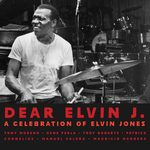
JAZZ: DEAR ELVIN J: A CELEBRATION OF ELVIN JONES – Tony Moreno – Mayimba Music
Elvin Jones, a drummer probably best known for his role in John Coltrane’s legendary quartet, was a role model and mentor for drummer Tony Moreno. Dear Elvin J is, as its title suggests, a celebration and not a tribute album.
What makes it celebratory is that this is not an attempt to replicate what Jones and his fellow musicians did. Rather, it is a look at Jones’ work over nearly four decades, played the way Moreno and company want to do these tunes today.
Growing up hearing albums by drummers like Gene Krupa and Buddy Rich, I’ve long had an affinity for drummer-led albums. This is no exception.
I’m not an expert in drumming. For me to compare Jones with Moreno would be pure folly. What I hear in listening to this album is a man who is deeply passionate about the role Jones played in his life. That affection is what drives this celebration.
The credit also goes to Moreno’s fellow musicians: Patrick Cornelius on alto sax, Mauricio Herrera on percussion, Gene Perla (who spent several years with Jones) on bass, tenor saxophonist Tony Roberts and pianist Manuel Valera.
VOCALS: NO BAD CHORDS: A TRIBUTE TO MIKE RENZI -Nicolas King – 401 Records
It might help to know who Mike Renzi was. If you asked Ella Fitzgerald, Peggy Lee, Liza Minnelli, Mel Tormé and dozens of other artists, he was one of the best, if not the best, arranger and music director with whom they collaborated.
Nicolas King, who appeared on Broadway in Beauty and the Beast as Chip and toured with Liza Minnelli at the tender age of 11, befriended Renzi. They began working together in King’s late teenage years and continued as friends and collaborators until Renzi’s death five years ago.
This album is taken from his April concert at 54 Below in New York City and it celebrates Renzi in two ways. The first half of the show is focused on arrangements they did together and/or Renzi did for him. The second half finds King performing Renzi’s arrangements for the likes of Sammy Davis, Jr., Lena Horne, Jack Jones, Maureen McGovern and Mel Tormé.
King’s knowledge and passion for this material shine throughout. He’s clearly an old soul and that wisdom beyond his years (he’s all of 35) allows the uniqueness of these arrangements to come through – particularly in tracks like I’ve Got the World on a String and the stunningly beautiful When the World Was Young.
Perhaps the biggest compliment I can give this album is that the first thing I did after listening to it was begin tracking down the original recordings.
Check back on Tuesday for my interview with Nicolas King.
LEFT TURNS:
GENRE DEFYING: FIGMENTARY LOGIC – Bradford Blackburn – Big Round
I’ll be honest. This isn’t a left turn because it’s outside the genres I normally cover here. It’s a left turn because no track is like the other. Just when you think you know where Blackburn is going with his compositions and performances, he changes the style of music, how it is performed and what it is. It’s as if he’s embraced Monty Python’s And Now For Something Completely Different as his north star.
Having said that, I didn’t stop listening to it. I wanted to see where this album was going. I was captivated but couldn’t tell you that the long and winding road of Figmentary Logic resulted in some great awareness of anything other than Blackburn’s unique talent. Who else would write a piece for circuit-bent Texas Instruments’ Speak & Spell? Where did he even find one?
QUICK HITS:
CLASSICAL: SERGIU CELIBIDACHE AT THE BERLINER FESTWOCHEN – Münchner Philharmoniker / Sergiu Celibidache – Deutsche Grammophon
Conductor Celibidache passed away thirty years ago and this box set celebrates his legacy with the release of an early performance in Berlin and a 1987 recording previously believed to have been lost.
Celibidache was instrumental (no pun intended) in helping the Berlin Philharmonic to rebuild after World War II. Despite this work, he was pushed aside when they named Herbert von Karajan their music director in 1954.
The concerts included here document his returns to Berlin with the Munich Philharmonic who had become a leading orchestra under his direction.
There are performances of Dukas’ The Sorcerer’s Apprentice, Dvořák’s Symphony No. 7, Hindemith’s Mathis der Maler Symphony and Symphonic Metamorphosis of Themes by Weber and Mussorgsky’s Pictures at an Exhibition.
REISSUES:
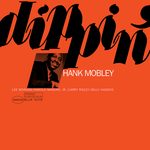
JAZZ: DIPPIN’ – Hank Mobley – Blue Note Tone Poet Series
This 1966 album features tenor saxophonist Mobley with Billy Higgins on drums, Harold Mabern, Jr. on piano, Lee Morgan on trumpet and Larry Ridley on bass.
These guys must have had fun making the record because there is joy throughout. Why not? They get to do music that’s funky and bossa nova and the final track, Ballin’ lives up to its name and The Break Through just might break on through to the other side. The ballad I See Your Face Before Me is gorgeous.
I think this is one of Mobley’s best albums. (Full admission, I haven’t heard them all, but of those I have, this one ranks right up there!)
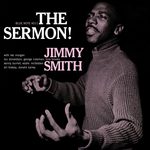
JAZZ: THE SERMON! – Jimmy Smith – Blue Note Tone Poet Series
I’ve loved this album for years. There are only three tracks and the last one, Flamingo, features trumpeter Lee Morgan at his most sublime.
The album opens with the title track and closes with Flamingo. That session featured Art Blakey on drums, Tina Brooks on tenor sax, Kenny Burrell on guitar, Lou Donaldson on alto sax and Morgan. Brooks and Donaldson only appear on The Sermon.
An earlier session found Donald Bailey on drums, George Coleman on alto sax, Eddie McFadden on guitar and Morgan for the second track, J.O.S.
Listen to the album for Smith. Buy the album for Morgan whose playing on The Sermon! is a beautiful way to preach with his instrument. I’m a believer.
Here ends New in Music November 6th. I’d start with The Sound Orchestra and then close your eyes, put your finger anywhere on this story and make that your next discovery. Enjoy the music!
Main Photo: Part of the album art for Mathis Picard’s The Sound Orchestra (Courtesy La Reserve Records)