





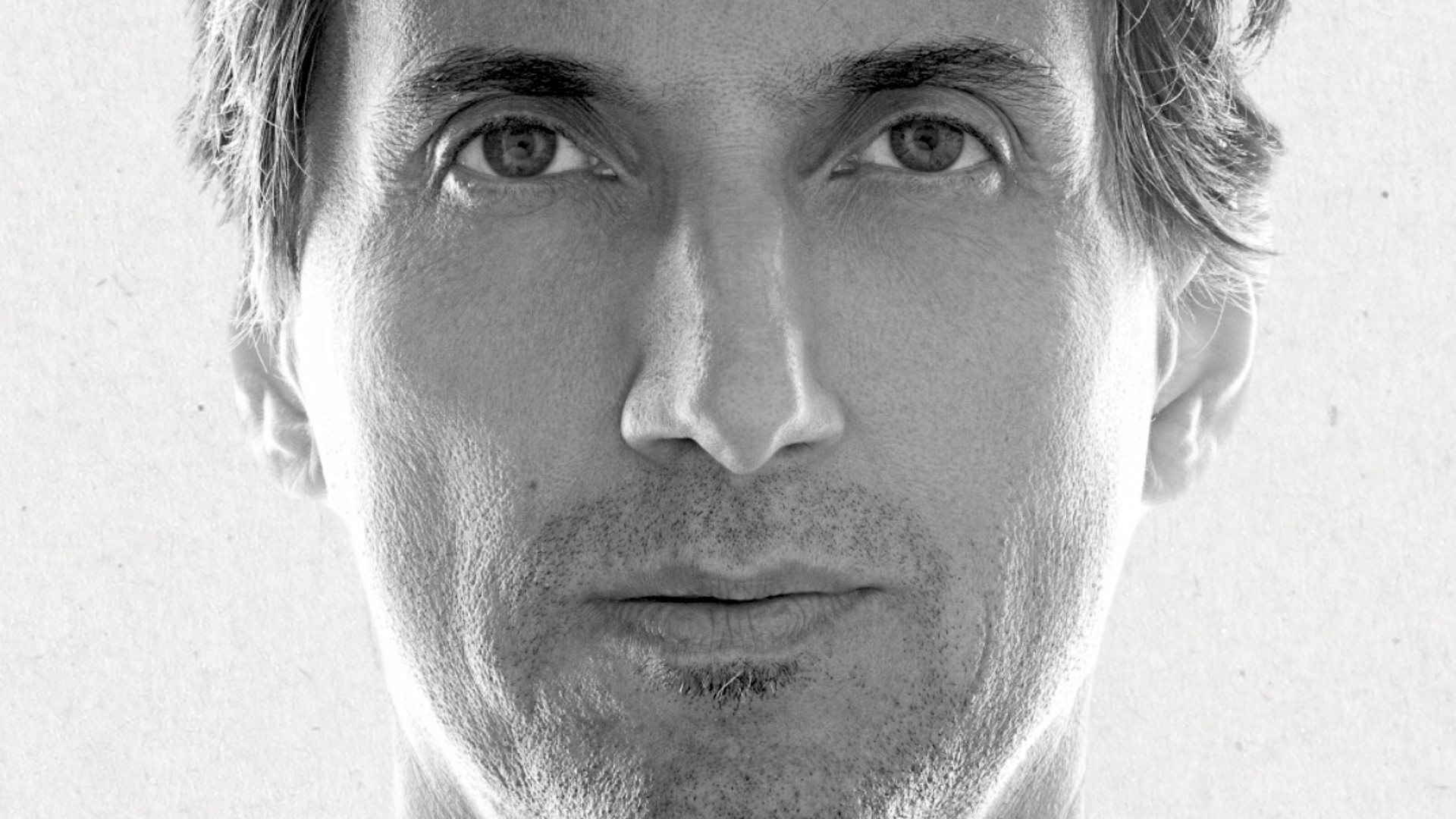

João MacDowell is a man of contradictions. The Brazilian composer can be provocative, outspoken and occasionally outrageous. He champions artistic freedom while insisting on rigorous discipline. He challenges the conventions of contemporary opera while embracing the traditions that shaped it. And he believes that composers must be willing to risk failure, even as he teaches them how to avoid it.
Perhaps those contradictions are what fuel his creativity.
MacDowell’s musical career has taken him from popular music and television to opera. His ambitions extend beyond his own compositions to creating opportunities for other composers and expanding the repertoire available to audiences.
On November 16th, MacDowell’s International Brazilian Opera Company (IBOC) presents its second Opera Nova biennial at Carnegie Hall in New York. The concert, a collaboration with Opera Ebony, celebrates Brazilian opera and the legacy of Benjamin Matthews, a man who helped MacDowell realize his own operatic ambitions.
Our conversation explored Brazilian musical identity, the shortcomings of contemporary opera, the necessity of emotional communication and the sometimes uncomfortable process of discovering artistic greatness.
Q: Ingmar Bergman wrote in Images: My Life in Film, “I am living permanently in my dream, from which I make brief forays into reality.” How are you living your creative life?
MacDowell: It’s been a journey.
This concert is particularly meaningful because we’re collaborating with Opera Ebony, and Benjamin Matthews was the man who gave me the support to be an opera composer.
My father listened to opera in the house a lot. I had this love-and-hate relationship with opera, but I would never have really taken up on it if it wasn’t for Benjamin. He in many ways made possible a dream.
When I came to New York, his health was beginning to deteriorate. So we met a few times in his apartment and looked over the score of the music we’re presenting. We’re presenting scenes from Tamanduá, which is my first opera, which was the work he was helping me revise at the time. Then his health deteriorated. He passed in 2006, and Opera Ebony went dormant for a while. That’s the reason we started Brazilian Opera, the 501(c)(3), because we needed a home.
It’s always a balance between the imagination and reality. My first opera has this big chorus, a lot of characters. My second opera is like reality: monodrama, one character, small orchestra. The third opera, three characters. As a producer and a composer, you need to change hats and be able to balance reality and dream.
Q: On IBOC’s website there’s a tagline that says “Embracing the difference.” What does that difference mean to you personally?
When I started doing opera, we did Tamanduá in New York. We did a few concerts and they were extremely successful. I felt like, okay, I found my niche. I wanted to write like the new Carmen, something that people would just gravitate towards because of the music. And no one would pick it up.
I would apply to these programs that were developing new opera and I wouldn’t get in. Then I would go to the concerts: nails on a chalkboard.
The singers and my friends kept talking about creating an opera company, and I was reluctant about it until 2014, when we did.
I felt there was a contribution to the larger classical music environment that we could bring by embracing these differences.
Q: When we talk about Brazilian opera, are we talking about a recognizable musical identity, a particular approach to storytelling, or simply opera created by Brazilian composers?
There’s definitely an aesthetic to it. There’s a technical approach to it, and this aesthetic is shaped in Brazilian art in general.
In Brazil, we had the anthropophagic art movement, which would roughly translate as a cannibalistic art movement. You eat the culture of the European colonizer, digest it and put something out that’s better, so to speak.
This 1920s movement was very important in embracing all these cultures that shaped the Brazilian ethos. The African culture, the Indigenous culture and the European culture. The Asian culture also.
This aesthetic of bringing these elements together is an essential part of every Brazilian art that’s respectable ever since. It’s not just the fact that they are Brazilian.
It’s more than just being born in Brazil. You could be from Minnesota and be writing in the spirit of Brazilian opera.
Q: If one of the goals of these biennials is to introduce American audiences, and presumably arts organizations, to Brazilian operas, how often are Brazilian operas programmed into seasons in Brazil? I did a cursory look and saw the traditional lineup of operas I would see in any other city in the world.
There’s about 80% traditional repertoire, I would say, and about 20% Brazilian-based composers.
There’s a reason the old repertoire keeps getting recycled, because it’s easy to do it. It’s like being a cover band. But if you’re the Beatles and you’re stuck doing cover songs for the rest of your life, you don’t become the Beatles.
Q: You’ve argued that true art requires an intuitive, ritualistic shift in the audience’s awareness. Have you witnessed that transformation through your own work?
We do surveys. We keep track of things by numbers and answers, but a lot of this is more like you feel it happening.
If we think of opera as a grand ritual ceremony that’s transformational, with a story, a narrative, music and the power of the human voice resonating, we could go back 40,000 years to the caves. Singing stories around the fire.
You can be in the audience, in the theater somewhere or onstage, and you feel that when the work is relevant and meaningful, something happens there. A very powerful connection that you don’t get on a cell phone scrolling or in technologically based entertainment.
Q: I talk to people who are reluctant to go to too many modern operas because they feel there’s no accessibility. Do you think accessibility is important in contemporary opera?

Yes, accessibility is important. Philip Glass is an example of a very successful contemporary opera composer, and he has this mantra energy in his opera. He brings you in. You might find it a little too repetitive, which it is repetitive.
I think the problem with the rejection that people have with contemporary operas is because the works are not good. It’s simple. With exceptions, of course.
The training is biased towards innovation, which is something that happened in the 20th century. Innovation is important, but you also need communication.
I don’t think accessibility quite does it. It needs to be exciting. It needs to be meaningful. It needs emotion. It needs to reach your heart. Then you get good opera.
Q: And if we don’t do that, it becomes a dinosaur. It has to reflect the times we live in.
It can’t be just a museum piece. The museum is fine. I’m not saying burn the old. We have to study it, learn from it and do it better.
I’m building a roster of 30 composers that can write exciting new opera for a business plan for the next 30 years. If I’m going to be premiering 10 new operas a year, I need about 30 composers averaging three years for each new opera to be produced.
I have a composer from Korea who’s unbelievable, a composer from Qatar, a composer from Iran, a few composers from the United States who are amazing composers. Someone just needs to be on top of them. What’s this about? Where’s the tune? How is this relevant to your audience?
Q: You’ve described opera as the ultimate arrogance of art, inherently doomed to fail. Yet you continue to devote years of your life to creating it. What makes that apparent impossibility irresistible to you?
I don’t remember the quote. I say a lot of things off the top of my head. I don’t have a lot of filter. I might have been referring to the specific industry.
There’s a reason people think opera is elitist and out of touch and boring. It depends on donors. It doesn’t depend on ticket sales and actual sponsors who want to see their brand associated with a product that’s meaningful to a larger audience.
At the same time, there’s a great movement through OPERA America to build new repertoire, and you find really fantastic artists working through it. It’s not a black-and-white scenario. There are a lot of tones of gray in it.
When people have the stereotype of opera being elitist, it’s a stereotype that exists for a reason. That kind of opera is doomed to fail.
It’s a great opportunity for us to come in with an aesthetic that’s more embracing, that takes in new cultures and their contributions to music and drama.
I have a lot of respect for the Met, and I don’t think it’s the role of the Met to be doing new operas. They need smaller institutions like us to be testing and trying. If they put in a new opera that’s never been workshopped in a smaller theater, in a theater where you need to sell 4,000 tickets, it’s hard to get it right. Very expensive to get right.
Q: But the last two seasons, they’ve had The Amazing Adventures of Kavalier & Clay and Missy Mazzoli’s Lincoln in the Bardo, which is doing great business and getting great reviews. I think we can agree there’s no one way to create new opera.
Correct. I just mean City Opera used to be more active doing that role of bringing new works to the front stage. Collaborating with smaller institutions actually streamlines it. You’ve got ten works, but naturally not all of them are going to be great.
Q: Dulcina de Moraes is quoted as having said, “Without failures—and I speak in general terms about life—everything would be monotonous, empty.” What have your failures taught you, and how have they inspired your greatest successes?
You learn a lot from failures. You learn more from failures than from successes, definitely.
As a composer, I’ve learned about the voice. Writing an opera is no small task. It’s theater, music, orchestration, the human voice, the different kinds of human voices, the choral voice, different soloist voices.
By studying where these guys have failed also in the potential of the art form, we can do better than them. We don’t have to necessarily fail every time. We can be a lot more fail-proof. That’s one of the things we try to go deep into in the composition courses. We’re giving the skills for these composers to fail minimally, hopefully.
Q: That’s a very professional response about what you’ve learned creatively about your art. But what have you learned about yourself as a person?
Oh dear. I’m this very transparent person, which is great when I’m happy with things going. Everybody loves me. But when I am frustrated, it can be very hard on people.
I’ve had students who got frustrated with me because I was like, “This is crap, you need to do it again,” or things like that. I’ve learned how to be more gentle in that respect.
With composers, a lot of times there’s this “trust your heart, follow your instinct.”
Most composers have a lot of monkey brain. You get a lot of ideas. You study a lot, you learn all this music. Beethoven, Mahler, blah, blah, blah. You get it in your brain and there’s a lot coming out because they need to express it.
The metaphor I tell them is, you eat all this stuff and then you go to the bathroom and you poop. Eventually there’s a pearl in there. The pearl is not something the oyster wants to do, but you need to find it inside of it. You need to squish it and find that pearl. That pearl is something you need to attach yourself to.
It’s hard to tell composers that most of the stuff that comes out of their brain is not beautiful genius like their mothers and their friends have been telling them all their lives. That’s something I’ve been getting better at. Maybe a colorful metaphor here and there. Maybe too colorful a metaphor sometimes.
You don’t reach the sublime by being funny. If you want to reach the sublime, you want to be able to run the risk of being tacky. Allowing yourself the risk of being emotional, the risk of having a little Puccini over the top in your music, is the thing that may bridge you to actually reaching the sublime, which is when something actually magical and meaningful happens.
It takes courage to take that risk because it’s easy to be ironic and sophisticated and brainy, but it’s hard to actually open up to the deeper layers.
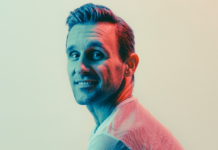
Main Photo: João MacDowell (Photo by Athena Azevedo/Courtesy IBOC)