









2026 just might go down as one of the most prolific years for new big band music. This is the seventh column where big band records have found their way onto my lists. You’ll soon discover what’s special this week when you explore New in Music October 30th. I have 16 new releases for you to explore!
My top pick this week is:
JAZZ: BLUE SALIENCE: FOR YUSEF LATEEF – Jason Robinson– Circumvention Music
This stunningly inventive album might seem a tad deceptive from the title. That is, if you are expecting the works of Yusef Lateef to be brought into our time by composer/saxophonist/bandleader Jason Robinson.
Au contraire! Robinson, long an admirer of Lateef’s work, took inspiration from Lateef’s writings in his 1981 book, Repository of Scales and Melodic Patterns. The liner notes include specific passages that inspired the 14 tracks on this intelligent and thoughtful recording.
What Robinson accomplishes with this album is to create a wholly original way of acknowledging an influential artist from one era, but writing new music that is fiercely intelligent, often surprising and very contemporary.
I wish I had the space to identify all the Janus Orchestra musicians on Blue Salience, but that would bump a bunch of other titles I want you to know about. Suffice to say they are all top-notch performers doing incredible work.
The vinyl version contains an extra track, a Dub mix of the track Bright Spirits which is the fifth song of the album.
Here are the other fine releases that are New in Music October 30th:
CLASSICAL: BRAHMS: VIOLIN CONCERTO & TRIO – Augustin Dumay / Philharmonia Orchestra / Eliahu Inbal / Frank Braley / David Guerrier – Erato Records
This album makes me wish I could go back in time about 64 years. That’s when violinist Dumay first performed Brahms’ warhorse of a concerto for violin. Even though he won First Prize at the Paris Conservatoire at the age of 13, he’s never recorded it until now.
I’d love to know how a teenager approached this work so I can compare it to how a 77-year-old musician, buoyed by a lifetime of experiences, approaches it.
Given the depth of emotion in this recording, I’m going to wager it was quite different. With maturity comes a different understanding of music and its role in one’s life. Dumay plumbs one of the canon’s most played violin concertos and finds a sense of melancholia I’ve never heard before in the work.
Brahms’ Horn Trio in E flat Op. 40 gets fine treatment by Dumay with pianist Braley (who seemed to be quite busy recently, see below) and David Guerrier on horn.
CLASSICAL: WEBER & THE CLARINET: COMPLETE WORKS – Pierre Génisson / Mozarteumorchester Salzburg / Gábor Takács-Nagy / Frank Braley – Erato
I didn’t know I needed Carl Maria von Weber’s clarinet music in my life until I listened to the way Génisson performs it on this album. Usually, I prefer the clarinet in jazz or the opening of Gershwin’s Rhapsody in Blue. Shame on me!
It would be very easy for this album to offer showy performances of some of this work. Rather, it is sublime, perfectly calibrated and beautifully performed. Whether with the orchestra or pianist Braley, Génisson has awakened me to the beauty of Weber’s music for clarinet.
CLASSICAL: MENOTTI ORCHESTRAL DISCOVERIES – Orchestra Sinfonica di Milano / Francesco Cilluffo – Orfeo
Gian Carlo Menotti is best known for his operas, specifically Amahl and the Night Visitors and The Consul which won a Pulitzer Prize.
This album is filled with world premiere recordings of a few of his orchestral works. This includes the Lewisohn Stadium Fanfare, his only symphony and suites of music from his 1986 opera Goya. To round out the collection there is also music he wrote for the 1944 ballet Sebastian, choreographed by Edward Caton.
I enjoyed this album as it allowed me to develop a more complete picture of Menotti. The Orchestra Sinfonica di Milano plays this music beautifully.
CLASSICAL: RAVEL DAPHNIS et CHLOÉ / STRAVINSKY LE SACRE du PRINTEMPS – Orchestre Symphonique du Montréal / Rafael Payare – Pentatone
Sensuality meets the primal forces of nature in this fine recording of two great works.
Conductor Payare leads a fine orchestra in performances of these two works whose debuts were separated by slightly less than a year – both in Paris and both for Ballets Russes.
The contrast is what I find most striking about this recording. It’s likely no one could have predicted what Stravinsky was going to bring to the world with The Rite of Spring. It’s a piece of music I will never grow tired of and will always see it performed live when given the opportunity to do so.
Having heard this recording, I’d love to hear this orchestra with this conductor perform both pieces.
One quick aside, does anyone else hear music in Part 1, Les Augures printaniers – Danse des adolescents that must have inspired John Williams in his score for Jaws?
CONTEMPORARY CLASSICAL or OPERA: MUSIC FOR NEW BODIES- Matthew Aucoin / AMOC* / Sandbox Percussion – DACAMERA Editions
If you’re wondering where the genre I’ve chosen comes from, it is directly from the press materials for its release. Aucoin’s Music For New Bodies is “an epic musical work that is part opera and part vocal symphony.”
The poems of Jorie Graham serve as the libretto for this work that had its world premiere at DACAMERA in 2024 and a full production at Lincoln Center in New York in 2025.
While reviews were decidedly mixed, I find Music for New Bodies totally compelling. It’s not easy, but it is always interesting.
As Aucoin says in the liner notes, the drama in the work is about “the tension and the dance between embodiment and disembodiment, individual and collective existence, the human and the post-human.”
That subject matter alone makes Music for New Bodies thoroughly fascinating. Aucoin is, in my opinion, one of our most gifted contemporary composers. He’s constantly finding new ways of expressing himself and this album is no exception. With his music Aucoin makes the argument for humanity in inventive ways throughout.
The outstanding soloists, who have challenging music to sing, are tenor Paul Appleby, soprano Meryl Dominguez, bass-baritone Evan Hughes, soprano Kathryn Lewek and mezzo-soprano Megan Moore.
As befits the theme, this is not an easy journey. But it becomes an emotionally satisfying one by the conclusion of this 70-minute work. Graham and Aucoin in their own ways remind us of the simplest truth, I am the earth…Remember me.
GENRE DEFYING: THIS DAY, EVERY DAY – Council – Bedroom Community
Composer/songwriter/singer/musician Gabriel Kahane teams up with violinist/composer/conductor Pekka Kuusisto on This Day, Every Day. It has so many genres built into its DNA that genre-defying is all I can call it.
Think of it this way. If you’re familiar with the songs and music of Peter Gabriel – and the music released on his Real World Records label – you’ll be accustomed to the production approach of the album and the mix of genres.
Now that I’ve told you, to the best of my ability, what this album is in the vaguest of terms, let me be more direct. I love this album.
I don’t care what genre it is. Kahane and Kuusisto are two great artists. They are performing songs about some of the deepest of subjects. Yet they’ve found a way to wrap those ideas in a warm and inviting sound. Once you add their vocals, playfulness and obvious mutual respect, This Day, Every Day challenges you not to like it.
JAZZ: TRAPPINGS OF SLEEP – Caroline Davis / Grey Mcmurray /Qasim Naqvi – Red Hook Records
First an introduction; Davis plays saxophone, Mcmurray plays guitar and Naqvi plays drums. Their interactions with one another on this album are so free, and the space they allow each other so perfect, that Trappings of Sleep is difficult to resist.
The album is not for those expecting any form of a traditional trio. Frankly, this feels like an album you might expect from ECM Records. It’s open. It’s experiential. It’s intoxicating.
For an album entitled Trappings of Sleep, this experience is positively dreamy.

JAZZ: THE SLEEPER: THE MUSIC OF GREGG HILL – Michael Dease Big Band – Cold Plunge Records
I was inspired to look up who Gregg Hill was before listening to The Sleeper. After all, who was this composer I didn’t know that inspired Dease to dedicate an entire album to his music.
Making a Scene said of the composer, “Hill’s music is a melting pot of influences throughout the jazz spectrum.”
That made complete sense when I heard the music on Dease’s album. He’s a trombonist and saxophonist and composer and bandleader. This is not his first exploration of Hill’s music. That was on The Other Shoe: The Music of Gregg Hill from 2023, but that wasn’t a big band album. After listening to The Sleeper, I went down the rabbit hole and listened to that, too.
He clearly has an affinity for Hill’s music. Along with the great playing by the musicians, Dease did something unique. He reached out to ten different people to arrange one track each for the album. Different approaches, for sure, but it still feels cohesive.
Are we living in a golden age of big band music? Keep reading…
JAZZ: THE SAME RIVER – Steven Feifke– La Reserve Records
This week and next week mark great releases from La Reserve Records. Both albums feature big band ensembles, but they couldn’t be more different. You’ll have to wait to learn of the other one until next week.
Feifke is a pianist/composer/arranger and bandleader. He talks about the importance of the relationships he has with the musicians on this album. But I fear he’s being a bit modest. Feifke composed seven of the nine tracks. He arranged eight and orchestrated all nine.
Take the title track, which also opens the album. It was commissioned by the Jazz at Lincoln Center Orchestra by Wynton Marsalis. It opens with a drum roll as if a big announcement is about to be made. Then slowly the members of the band join and what starts out dramatically and at a leisurely pace, suddenly breaks out in a strongly syncopated rhythm that sets this record in motion.
Save Your Love For Me, written in 1955 by Buddy Johnson, features Alita Moses is the singer. Christian Wiggs sings on You and Me, composed by Feifke and Wiggs. All the other tracks are big band through and through.
I’d love to tell you which tracks I liked, but since that would be all of them, you’ll have to listen for yourself.
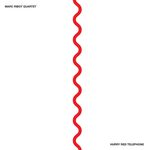
JAZZ: HURRY RED TELEPHONE – Marc Ribot – Pi Recordings
Is this jazz? Is this rock? Is this punk? Would you accept all three? When the album started, I wasn’t sure it was my thing. But there are so many surprises built into the music, it became more compelling the more time I gave it. The combination of all those styles ultimately yielded a deeply felt collection of music.
When guitarist/composer Ribot’s bass player, Henry Grimes, passed away, Ribot found himself wondering how to keep moving forward musically after so successful a collaboration. This album is his first instrumental album in 12 years and a result of that contemplation.
Interestingly he opted for two (truly three) different quartets. Drummer Chad Taylor, who was part of the trio that included Grimes, is joined by alto saxophonist Briggan Krauss and Sebastian Steinberg on bass.
The second quartet features Ribot and Taylor with Hillard Green on bass and two tenor sax musicians, James Brandon Lewis and Brian Settles. The latter two appear on separate tracks – thus my truly three comment.
Most people might think that you’d track the album with one quartet and the second one would be tracked after that one. I’m fascinated that Ribot opted to mix and match the quartets.
JAZZ: HOUSE OF TRANE – Jim Snidero – Savant Records
If you are a fan of ballroom culture, you might think this album would be a drag. But the house being spoken of was the home for Alice and John Coltrane for many years in Dix Hills, New York.
Composer/saxophonist Snidero has released an album that reflects his emotional response to a visit to the place where Coltrane composed A Love Supreme. Again, this is not a tribute album, it is a response to something more than the music of John Coltrane. Just as Robinson’s album was a response to something beyond Lateef’s music.
Six of the tracks were composed by Snidero. Beginning with Ascent which opens the album and through to Relaxin’ in Dix Hills, he has created a suite representing his thoughts and emotions at that house.
The album closes with two covers: A Weaver of Drums which appeared on the album Cannonball & Coltrane. Rather ironically, Adderley did not perform on that track. The second cover is Resolution which is the second movement of A Love Supreme.
Snidero has clearly been influenced by Coltrane. What saxophonist hasn’t in some way or another? But this is not imitation. This is a fully formed vision of his own that allowed me to feel exactly how spiritual and powerful that visit must have been.
VOCALS (STANDARDS): IMAGINATION – Stella Cole – Decca Records
Peter Allen and Carole Bayer Sager wrote a song (famously featured in Bob Fosse’s All That Jazz) called Everything Old Is New Again.
I’ve resisted Stella Cole since I first heard her because I felt like her records were a throwback to an earlier era. Not that there’s anything wrong with that, but I like new approaches, even when tackling standards.
Earlier this fall I had a conversation with my very dear friend, Michèle. She argued that it didn’t matter if her style of singing was new or not – as long as it was good.
With her thoughts echoing in the windmills of my mind (not a song Cole sings on this album), I listened with a more open mind and heart.
Amongst the songs are As Time Goes By, Singin’ in the Rain, It Had to Be You, Till There Was You and the most appropriate of songs, I’m Old Fashioned.
Cole is a very talented singer and likely an old soul. So why should I be so curmudgeonly about her? I can easily see Michèle and me in a club filled with dark wood, comfortable booths and martinis made to perfection listening to her and being completely entertained.
LEFT TURNS:
JAZZ: A MERRY BARI CHRISTMAS – Ryan Middagh Jazz Orchestra – Ear Up Records
I very much enjoyed Ryan Middagh’s 2025 release, Tenor Madness. Even though I’m not a fan of Christmas music, I gave this album a listen.
I still very much like what Middagh does as a performer/composer/bandleader. The album is more fun than I’d care to admit. Middagh has come up with very clever and surprising arrangements. Those looking for a different approach to well-known Christmas songs will certainly enjoy A Merry Bari Christmas.
For the record (no pun intended), I grew up playing the piano and was asked to play the standard holiday repertoire so many times, I just grew tired of them all. I still haven’t recovered all these years later.
QUICK HITS:
CLASSICAL: ROBERT SCHUMANN: COMPLETE WORKS FOR PIANO TRIO – Antje Weithaas / Marie-Elisabeth Hecker / Dénes Várjon – Deutsche Grammophon
What I’ve heard of this album, the Piano Trio No. 1 in D Minor, Op. 63 is tremendously well played.
All three of the composer’s piano trios are here along with Fantasiestücke, Op. 88. It is only because I didn’t have time to hear the entire 1 hour and 48 minutes of this record that I’m putting this in quick hits. But my gut tells me the whole album is quite good.
CLASSICAL: A LIGHT EXISTS – Evan Mitchell – First Hand Records
This, too, is here because I haven’t had time to listen to the entire recording. But I spot-checked a few tracks: The opening Dubnová preludial, Op. 13 by Vítězslava Kaprálová and Samuel Barber’s Interlude 1 (Adagio for Jeanne), a very early work by Barber.
They indicate that A Light Exists is a very interesting look at early works by those two composers along with Alban Berg, Elliott Carter and Gideon Klein.
REISSUES:

CLASSICAL: BEETHOVEN PIANO SONATAS OP. 26 and 27 – Marios Papadopoulos – Signum
This is a digital re-release of a recording originally released in 1996. At the time, some critics embraced it for its daring of presenting this music (including the Moonlight Sonata) as the works of a composer full of grand emotions. Others thought it was a recording that took its own sweet time and was way too deliberate.
I’m looking forward to making up my own mind. Either way, it’s bound to be fascinating.
Enjoy the music!
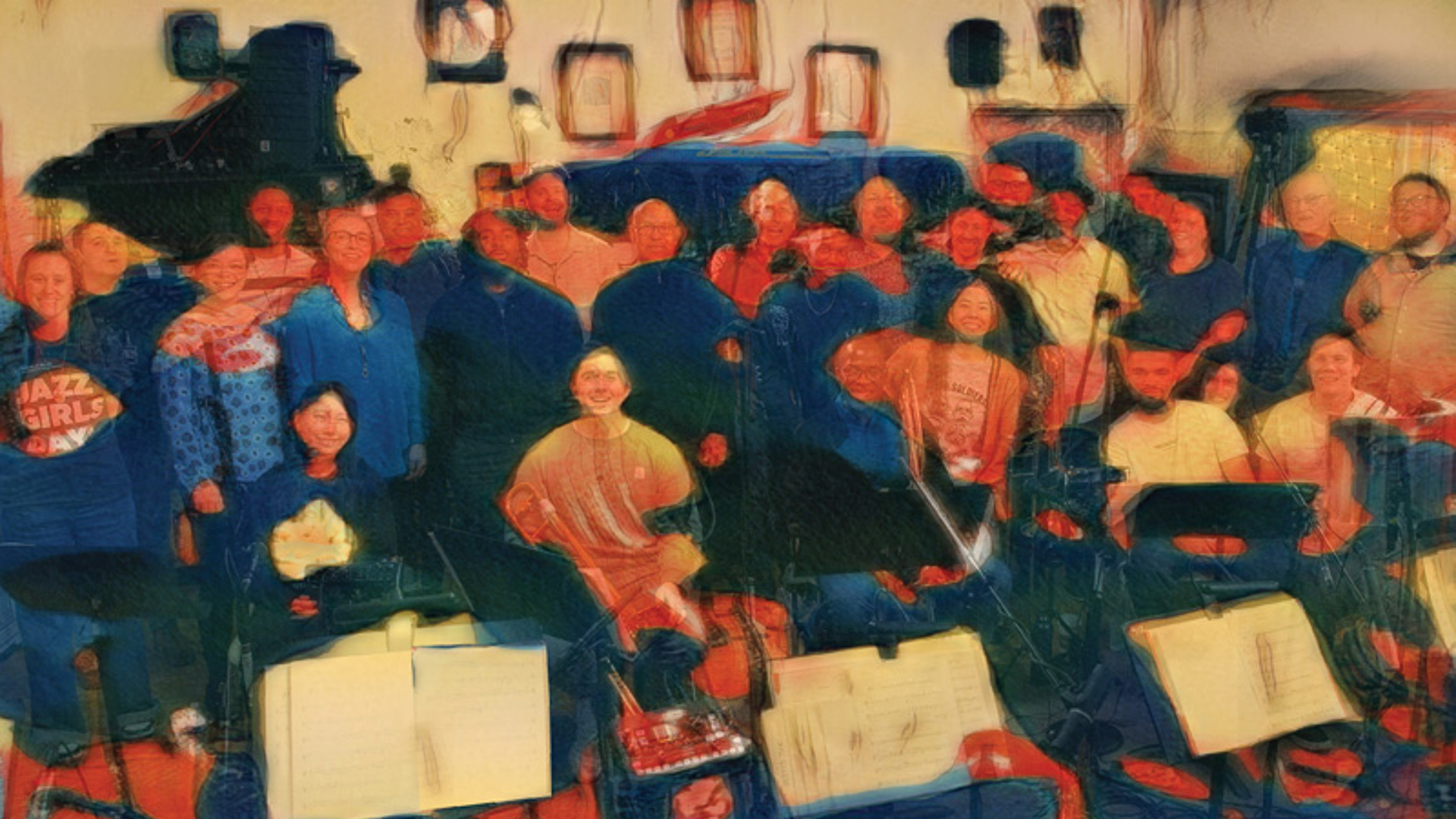
Main Photo: Part of the album art for the Michael Dease Big Band’s The Sleeper: The Music of Gregg Hill (Courtesy Cold Plunge Records)
Correction: An earlier version of this story indicated that there was only one song with a vocal on “The Same River.” There are two and the post has been updated to reflect as much. Cultural Attaché regrets the error.