






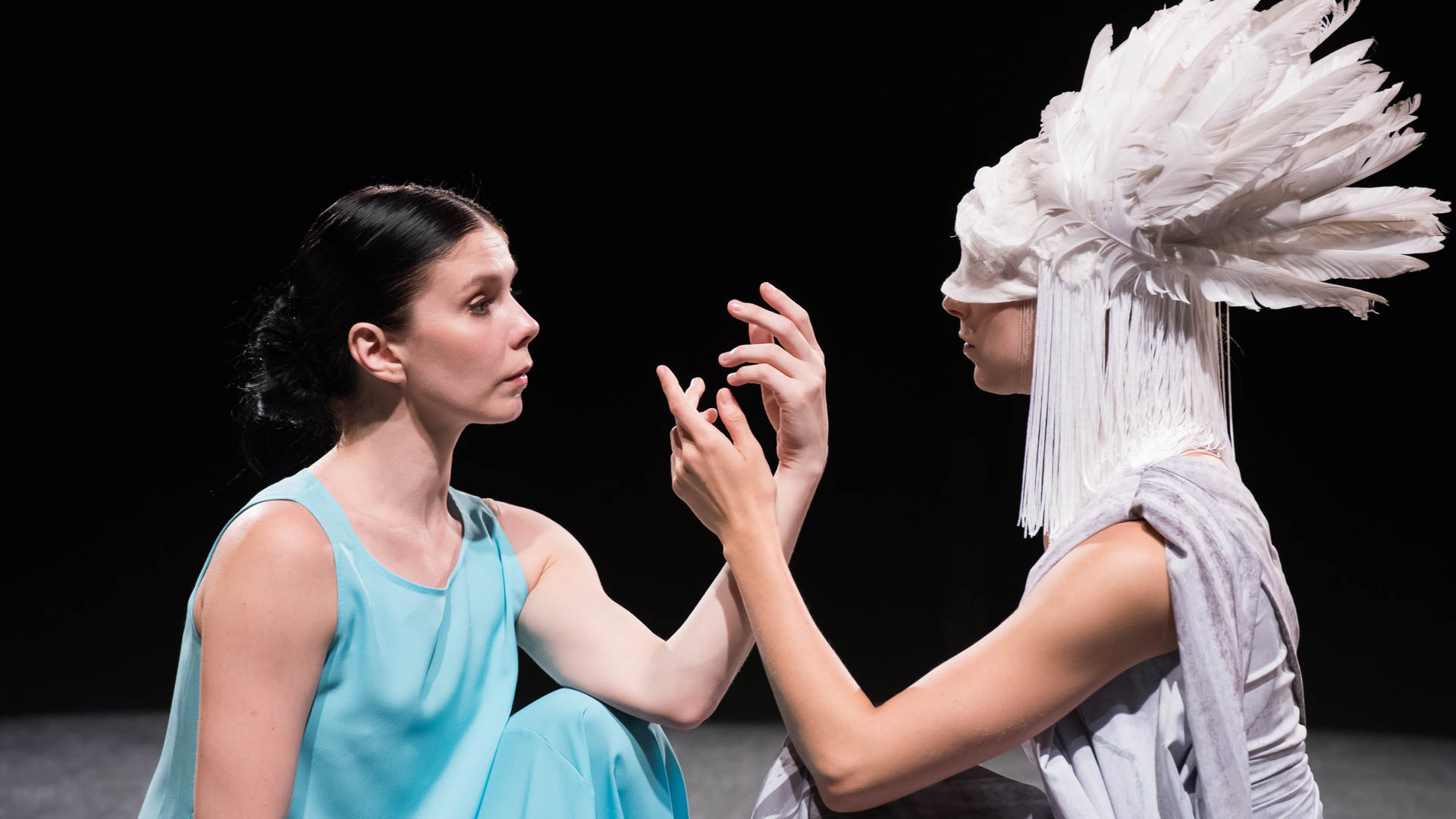

If you ask the average person today who Isadora Duncan was, chances are you’ll get a blank stare or a shrug of the shoulders. But for dancers, Duncan was, and remains, an icon. Fiercely independent, strong-willed and graceful, Duncan has long been considered one of the finest dancers the world has ever seen. So it’s no wonder that this weekend a new ballet, appropriately named Isadora, is having its world premiere at Segerstrom Hall in Costa Mesa. Appearing in the role of “Terpsichore” in the ballet is Emily Anderson.
In Greek mythology Terpsichore is one of the nine muses of dance and chorus. Her name itself means “delight in dancing.” So when I spoke to Anderson during a break in rehearsals, I immediately asked her if she is taking delight in the work she is doing.
“I would hope so,” she says with a laugh. “This has honestly been one of most amazing opportunities I’ve been handed as a dancer. To take on the role of the delight in dancing, that’s been a pleasure to go back and understand why we like dance, we honor dance, we do what we do. Isadora had a really great way, she was a defender of the free spirit and this expression. To be tied to this idea of dance as freedom is really awesome.”
This is not the first time Duncan has inspired choreographers. Frederick Ashton created Five Brahms Waltzes in the Manner of Isadora Duncan in 1975 and Kenneth MacMillan created Isadora in 1981. This new piece is choreographed by Vladimir Varnava, choreographer of the Mariinsky Theatre in Moscow. For Anderson, working with Varnava has given her a fresh perspective on how the creation of a new work can be done.
“Even from the first audition, I just felt like he was a very interesting and unique thinker,” she reveals. “He definitely has his vision, but within that vision we are the pawns. We’re being moved around and breathing life into his vision. Yet we are an important piece in his puzzle. He talks organic movement, naturalism, minimalism and I think as dancers we sometimes forget there’s so much beauty in simplicity. That’s what Isadora talked about. She had an idea that dance was the language of the soul. It was the connection of the body and the soul. By exploring this concept we are able to find a connection to her ideas and her approach to dance.”

Anderson finds that the process of creating a new work is very different than learning an already established role.
“Going into it we didn’t really know what we were going to be coming out with in the end. Vladimir always talked about ‘keeping our self,’ – organic movements and what comes naturally to the dancers. It gave the dancers the chance to speak with our own understanding of dance. We were all able to keep our own quality. I think he chose dancers who were great thinkers. This is a good opportunity to show that we’re capable of doing everything. Vladimir would give ideas or images or words or emotives and we would draw from there and he would input his thoughts and ideas.”
If the concept of a character named “Terpsichore” sounds a tad esoteric, it seems as though that’s the point of the character Anderson plays in Isadora.
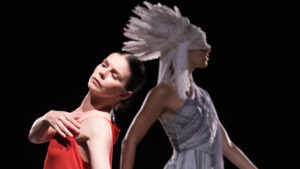
“She is a representative of dance itself. There are moments where I interact with her [Isadora – played by Natalia Osipova] in her story and her life and in that way we are embodying her relationship to dance itself.”
In other words, it doesn’t sound like your typical ballet. “It is definitely not because Isadora was not your typical dancer. She very much danced a different dance. That is what we are trying to honor. She told her story through abstract universal expressions of the universal condition. We are finding a middle ground immersing all these different styles to pay respect to her ideas to what dance could be one day.”
Sergei Prokofiev’s music for Cinderella was chosen as the score for Isadora. One key reason is that Osipova had never had an opportunity to dance that role, but Osipova, along with Varnava, felt the music would be a good fit for this project. Anderson agrees.
“I think Natalia loves that music and that helps her find her connection between this role as Isadora and herself – which is a vital part of telling that role for her. I’d never heard this music before. What’s interesting about this is you are going to see a completely different plot line and way of dancing and utilizing this music. And that is what Isadora was known for doing – being different. For utilizing dance in a different way. I think that was why it had to be set to music people recognize; to store the pot. That’s what she did.”
Anderson, who trained with the Alvin Ailey American Dance Theatre, was exposed to the Duncan technique early in her studies. She also audition for the Isadora Duncan Dance Company. So does she share Duncan’s feelings as expressed in the comment “You were once wild here. Don’t let them tame you?”
“Definitely. Her philosophy that we are wild, we are free spirits, we are powerful, we have ambition.” She pauses for a moment. “Sorry give me one second. I’m trying to get the right idea. I just really agree with her approach to dance and her ideas of freedom and individuality and self-expression. We talk about the idea of wild in the show. Hopefully I will bring that to Terpsichore. It’s something I’ve explored in my own dancing and my own career. She was such a forefront figure in shaping the concept of modern dance. Hopefully we are bringing light back upon her.”
Main Photo by Doug Gifford