







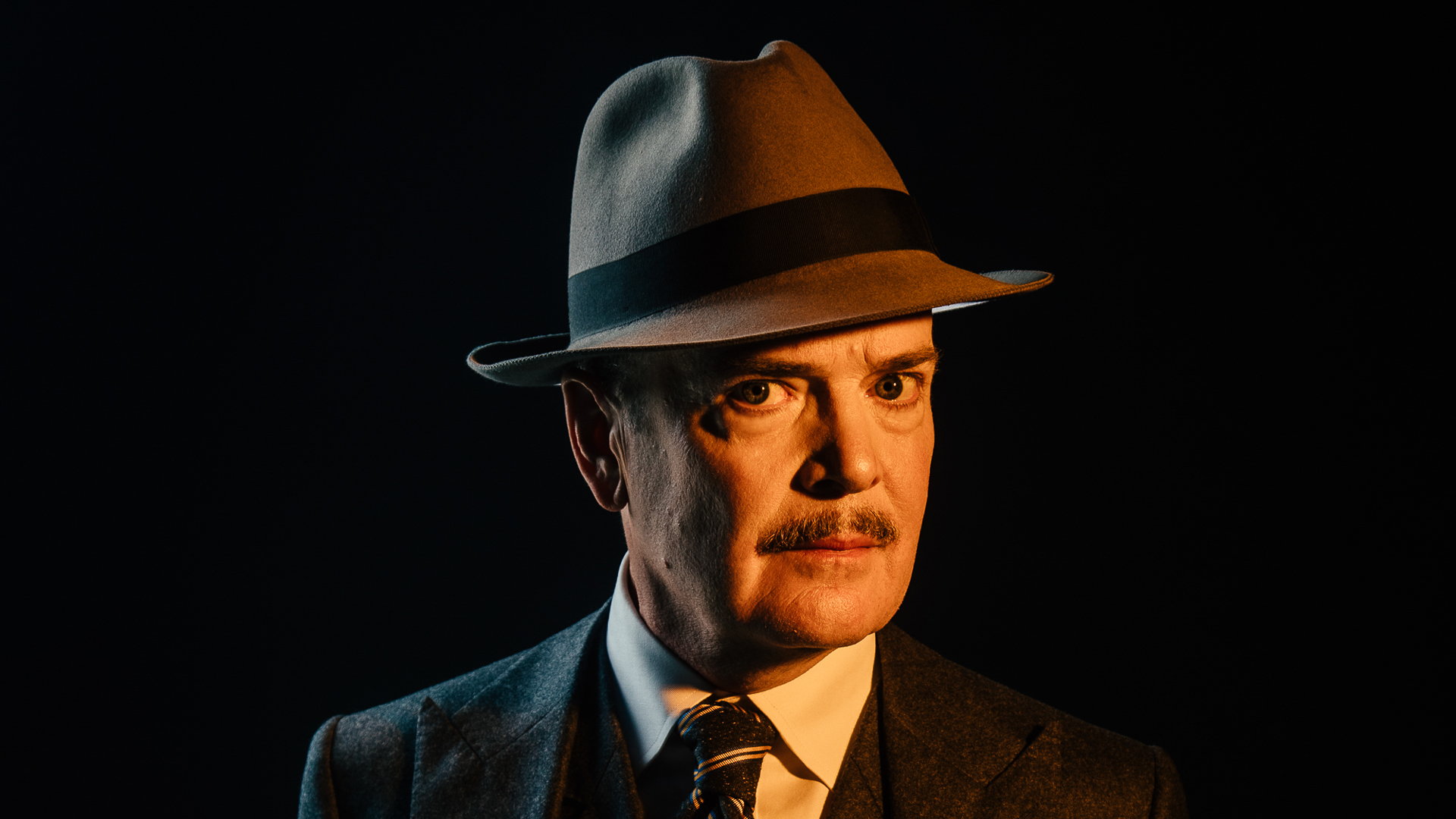

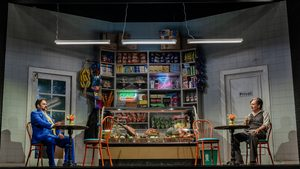
Jefferson Mays and Darko Tresnjak have been making theater together for nearly three decades. Their latest collaboration brings them to Pasadena Playhouse for Friedrich Dürrenmatt’s The Visit, with Mays playing Anton Schill and Tresnjak directing the play he credits with inspiring him to become a director.
Mays and Tresnjak were interviewed separately about The Visit and their long history of working together.
What emerges from those conversations isn’t a simple story of friendship or two artists who always agree. Mays says they don’t talk much and doesn’t even describe Tresnjak as a close friend. Yet he calls him his “artistic brother.” Tresnjak talks about love and trust as the things that allow collaborators to be hard on one another. Nearly three decades after they first worked together, neither seems particularly interested in making collaboration sound comfortable.
Q: Darko, take me back to Rosencrantz and Guildenstern Are Dead in 1999. What stood out about Jefferson that made you think this was an actor you wanted to continue working with?
DARKO TRESNJAK: I saw Jefferson a few years before and within seconds I was like, “I want that.” I just knew, and then I tried to see him in everything.
A few years later Rosencrantz and Guildenstern Are Dead came up. A famous actor got a movie two weeks before we started, and I was like, finally, Jefferson Mays.
We lived in the same house, the cast, and he and Chris Welch would get up at 6:30, at 7 o’clock. They were running lines. I was preparing the day’s rehearsal. We did a full day of rehearsal, and then we would have drinks and dinner and rehearsals would continue on the back porch into the night.
Because nobody can tell the two characters apart, Jefferson and Chris decided that they couldn’t tell themselves apart. So they decided to move in tandem. For two and a half hours, they were in lockstep. They were never out of sync. I was so amazed because it looked so light.
I found in Jefferson something I was looking for my whole life, and I hoped everything would be like that. I found the discipline, imagination, precision with the text, everything that I love in actors.
JEFFERSON MAYS: I think he’s obsessed with beauty, even when he’s dealing with ugliness. Whenever you see a Darko Tresnjak production, you can be assured of just great, soaring aesthetic pleasure.
He’s a rigorous intellect, a great analyst of text, but he also operates on a purely intuitive level, as most great artists do. In his approach to staging, it’s almost choreographic. It’s almost more musical than anything else. He’s a conductor as much as he is a director.
It’s curious to watch him in rehearsal because he’ll often not be watching the stage action at all. His head will be down, his script will be open and he’ll be listening. So it’s the way it hits his ear that he makes his decisions.
I just remember falling in love with the pure beauty of his work.
What keeps bringing the two of you back together? What made The Visit the next collaboration?
MAYS: I was inspired by Darko’s inspiration. This is a play that’s been festering in his mind since the late 1980s. He directed it first as an undergraduate at Swarthmore College in like 1985, ’86, and he’s been obsessed with it ever since.
This is deeply personal to Darko, and there is nothing more exciting to me than when a director or a playwright approaches you with such passion and desire to do a play. Almost always you’d be a fool not to hitch your ride.
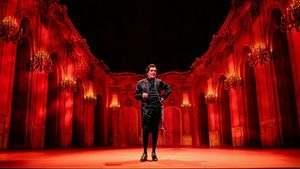
TRESNJAK: Jefferson approached me about directing Amadeus. I approached him about being in The Visit. It’s an incredibly difficult role in a whole different way, and he never shies away from the challenge.
Playing nine different characters in Gentleman’s Guide, the hardest part was offstage, where there were 19-second complete costume changes. Whatever the project is, he attacks it head on.
Psychologically, the role of Anton Schill, you have to have a great deal of fortitude as an actor to withstand what’s going on.
You’ve worked together for nearly three decades. What is the key to a successful actor and director relationship, and what makes yours work?
MAYS: I think there are as many successful actor-director relationships as there are actors and directors having success together. We don’t talk a lot. I wouldn’t even call him a close friend. But we do get on well in rehearsal together for the most part.
Sometimes we fight like brothers, but he does feel like my artistic brother, like a family member. We both work very hard and are mystified by each other and rejoice in each other. I can’t really explain it any better than that.
TRESNJAK: When you have a working relationship with the actor, there is love and trust and respect, and then you can afford to be hard on each other. It’s not about going easy on each other. It’s about asking the tough questions, surmounting difficult moments because there’s a level of respect.
In this play I’ve worked with most of the cast before. It’s a tough play in every way. It’s very demanding, but there is a level of respect in the room, so people rise to the occasion and challenge me when need be.
MAYS: Maybe it’s the very polar oppositeness that gives it the tension that you need, because I think making a play is never a purely comfortable experience. You’re tugging something into shape. All these artists are coming together, encountering, confronting the work of another artist and trying to pull it into some sort of shape.
That is by nature a fight of sorts, a fight with other people in concert, but nevertheless, it’s a noble struggle.
There’s a difference for me between joy and fun, and you can battle joyfully. I derive a great deal of joy watching my fellow performers at work. These are people that I have worked with many times through my career.
It’s lovely to come in contact with all these former company members and shave time off rehearsal because the trust is already there and familiarity with each other. So many of these people were in Amadeus, and the design team, of course. That fosters a wonderful sense of community, collegiality.
TRESNJAK: I truly believe that I don’t interfere with anything outside of rehearsal. I’m a director. Nobody has to subscribe to my view of the theater, life, anything.
I would tell young directors, it seems like you want to be a guru, you want to be a shrink, you want to be a father. Just be a director. Give them coherent pieces of direction and staging based on information in the text.
MAYS: I think we’ve always had this shorthand.
We don’t talk much and he’s able to use very few words to convey to me what he wants, or at least I think so. It’s a rather streamlined approach where we can get in each other’s heads and work in concert.
That’s an extraordinary gift, but I think that Darko and I always had that. I don’t ever remember a moment where we didn’t sort of click and lock into each other while working.
To watch my interview with Jefferson Mays, please go HERE. To watch my interview with Darko Tresnjak, please go HERE.
The Visit continues at Pasadena Playhouse through October 4th.
Main Photo: Jefferson Mays in a promotional photo for The Visit (Photo by Jeff Lorch/Courtesy Pasadena Playhouse)