




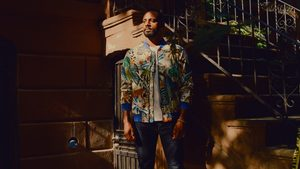
“It really is about the soul,” composer Carlos Simon says of his collaboration with countertenor John Holiday. Their shared musical backgrounds, rooted in church and gospel music, helped shape The Afterparty, a new six song cycle receiving its world premiere with the Los Angeles Chamber Orchestra on September 26th, followed by a second performance in Beverly Hills on September 27th.
The Afterparty is inspired by the 1924 Civic Club Dinner, a gathering of Black artists and intellectuals associated with the birth of the Harlem Renaissance.
The work draws on poetry from that era, including two poems by Gwendolyn Bennett. But Simon’s musical imagination reaches beyond the 1920s, finding connections to funk, the Black Power movement, Baroque music and the sounds of his own upbringing.
In discussing The Afterparty, Simon revealed a creative process built on research, improvisation and a willingness to surrender control. He also spoke about vulnerability, joy and his belief that artists have a responsibility to document the world in which they live.
Q: One of the people who attended the Civic Club Dinner on March 21st, 1924, was a poet named Gwendolyn Bennett, who said in a poem she read at that dinner, To Usward, “If you have a song to sing that’s different from the rest, oh, let them sing.” What was it about this event that made you want it to also sing through The Afterparty?
The idea that Black people coming together in a space was legendary. It’s iconic, and it speaks to the time because particularly in the South, Black people weren’t really allowed to be gathered in one place outside of church. It was illegal.
To have that level of community, particularly in a place like Harlem, sparked new thought. There’s a well known scholar at that time, W. E. B. Du Bois. He talks about this duality where Black people have to be both American and Black. You have to always be constantly thinking about the two. This is one form of thought that I think comes out of these conversations, particularly this event, this party that you speak about.
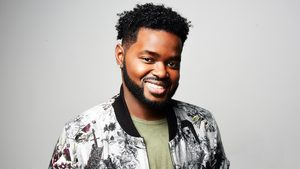
Countertenor John Holiday sought you out for this after having read a New York Times article. And it was seeing you play the Hammond B3 organ that made him say, that’s the guy I want to do this. What was your reaction to this idea, and what made you say yes?
I knew of him before I actually knew him because I’d seen him sing in different places. There’s a clip on Instagram that I saw of him singing some early Baroque music, and I said, who is this man singing? He just is incredible. He commands the stage.
When I got a message from him saying that he wanted me to write this piece, I was like, absolutely, of course. We had drinks about a month later and discovered that we had the same background of growing up in church and playing in church, playing the same type of music, gospel music, the same type of songs.
That made this collaboration even richer because we understand each other on a deeper level that goes beyond the music. It really is about the soul. I can speak a certain language and he gets it. I sent him a draft, and he’s like, well, maybe you can try this, you can try that. Typically, I don’t like to take notes from singers, especially in the very beginning stages, but he was so gracious. We clicked.
You told 15 Questions in an interview that you like to draw or map out a piece on paper using adjectives, scribblings representing feelings and an overall arc. Is that still your process, and is that how you approached The Afterparty?
It changes depending on the piece. What doesn’t change is that I love to do a lot of research. I love doing a lot of reading, a lot of traveling. I love to immerse myself into the concept. From that experience, I would jot down certain adjectives. I’ll even draw a diagram. But out of that, the music will come.
Improvisation is the main tool that I use to get the music out. When I’m improvising, it’s a stream of consciousness. I’m not thinking about anything in particular because I would have immersed myself in whatever the concepts are, the historical event. I feel like whatever comes out, it’s natural because I’ve been so deep seated in it. The beginning process is very important in how I understand the concept from an intellectual perspective and from an emotional perspective, too, which is more important because the music has to come out from that space.
You set six different poems, two of them by Gwendolyn Bennett, to music as part of this. What was the process of selecting those particular pieces and why?
A lot of that had to do with John. He chose a lot of those poems. It just goes to show you how much we were connected. I’m very particular about what I set because it has to have a certain density as well as balance between whether I can have the music be a part of the poem. There can’t be too many words, for instance. The rhythmic scheme has to be just right. It’s almost like it has to be right for music. These poems, I feel, lend themselves perfectly to music.
Given that what you write is not strictly defined by one genre, I’m assuming that the diversity of the texts allowed you to explore different avenues to express yourself through music.
I’m always open to the storytelling in whatever genre. I like to use any musical style that’s helpful in telling the story and getting the message across.
The last movement is a prayer. I’ve set it in a way that’s very hymn like, almost in the style of Monteverdi or Handel. Very stately, but still hymn like. There are other movements that are very jazzy and lend themselves to big band harmonies, very melodic and rich, with extended harmonies.
Does being open allow you to be surprised by your own thoughts?
Yes, and that’s one of the joys of being a composer. I go into writing a piece thinking it may be one thing, but ultimately I have to lend myself to the piece. It’s a whole entity in itself. I feel like it wants to be something, and I have to be open to whatever the piece wants to be.
There have been many times where I have said, okay, I’m going to use this scale, this particular text, and it’s going to have this climax at three minutes and four seconds. Very meticulous and controlling. After listening to what I’ve written, it’s just like, it doesn’t feel right.
I truly believe the creator, God, has a hand in that. I’m a religious person. I feel like I’m a conduit. When it’s deeper than what I have to say as a person, my background, that’s when the piece really flourishes.
So what did you think the piece was going to be, and how is that different from what it became?
This is where the joy of collaboration comes into play. I knew John was a great interpreter of Baroque music, and his voice just moves. I had written some sections that sounded like Handel, very melismatic, very fast.
I sent him that draft, and he’s like, baby, listen. I’m going to need you to pull it back a little bit. We’re going to slow this thing down a little bit. So knowing him, it was like, okay, fine, I’ll adjust some things. But as I was writing, it became clear that most of the piece needed to lend itself to Black musical idioms. I wanted to embed that into the work as much as possible because the artists who had written the poetry would have been listening to jazz, early jazz, ragtime, these types of music that were very much part of the Harlem Renaissance.
LACO describes The Afterparty as being inspired by this gathering but also celebrating a hundred years of Black culture. How did you decide which aspects of that history you wanted to bring to your music?
The poem What the Mirror Said by Gwendolyn Bennett, there’s “I am what I am, I’m what I see.” I could hear James Brown in this. You think about the Black Power movement that happened in the 1970s. I imagine that someone was inspired by this type of attitude, which happened 50 years earlier.
You think about Jesse Jackson, “I am somebody.” I thought about the music of that time, which was funk. I drew some rhythms from that era. You’ll hear John speaking in a very highly syncopated way. That’s just one example.
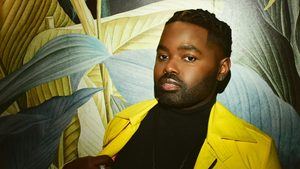
I had the privilege of interviewing John in 2019, and he told me, “I believe my job as an artist is to be who I am with fierce joy and love.” How do you see that joy and love manifesting themselves in your collaborations with him?
If, as an artist, you’re truly being honest about who you are, the music is just an extension of that. How you live your life, music is an extension of that.
One of the first pieces where I truly felt like I was being honest, I felt like I was naked on stage.
But I came to the same kind of realization that that honesty connected with someone else and, in turn, it helped to bring awareness.
I subscribe to that notion that the music is an extension of your joy. But there’s another side of this, too, that artists should be reflecting the times in which they live in their art. Part of that is looking back and realizing the similarities in what happened and what’s happening now. Those are two things that I like to think about as I’m writing.
Do you think that vulnerability you just described has informed the way you have written ever since then?
Absolutely. Every single piece that I’ve written from that point has been an extension of who I am. I’m grateful to have that platform and that outlet because many people don’t have that. Music has always been a place of refuge, a place of joy, a place of comfort and a place just to be honest.
I have people who come up to me and say that they never knew about the Great Migration, for instance, or they know how I felt in the aftermath of the murders of Trayvon Martin or George Floyd. But it’s in the music. If we look back 100 years from now, composers like me and others, it becomes like a marker. This was happening in our time because these composers, these writers, these artists were reflecting it in their work. I think that’s a huge part of an artist, to be a historical documenter.
And the nice thing about documenting history is not all of it is bad. Do you get to exhale a little bit when you’re working on something like The Afterparty as opposed to writing on heavier topics?
Oh, yeah. This was heavy, but it was still fun to write. There were some parts of it that I particularly liked. What the Mirror Said, that was so much fun to write. There are places in my writing schedule where I try to build in the fun. Like you said, it’s not all bad.
You’ve spoken about using music as your pulpit. How do you see your responsibility as a composer when responding to the world around you?
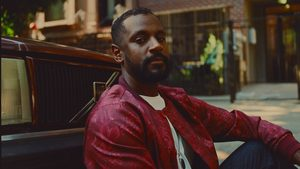
To be a truth teller, from my perspective as a Black American. I think that’s important, just to be honest about what’s going on.
One of the hardest pieces I had to write was a piece called Breath, which was written in memory of George Floyd. Yes, the piece was about George Floyd, but it was very much about the call to action and what it means to everyday people. What’s your duty and your responsibility in making sure that anti racism is a part of your everyday life, whatever you do?
Dealing with the aftermath and the tragedy of a Black man, which could have been me, killed, but understanding there’s a lot of work that has to be done. How do you deal with the tragedy and also say, okay, this is what we have to do? It’s a monumental task, but as a collective we can do that. How do you put that into music? That’s why it was so difficult to write.
But I’m not the only one doing it. There are other composers, other artists, saying the same things, not in the same ways, which is a good thing. We need multiple vantage points, perspectives to this whole thing.
You brought up W. E. B. Du Bois earlier, and he’s quoted as having said, “But art is not simply works of art; it is the spirit that knows Beauty, that has music in its soul and the color of sunsets in its headkerchiefs; that can dance on a flaming world and make the world dance, too.” How would you define what art is today for you?
First of all, that’s a beautiful poem, and it needs to be set to music.
Music has that ability to connect with people and to make other people aware of some things that they may not have been aware of before hearing the piece of music. Art is a great connector, I believe.
It’s not all good, but it’s honest. It can be honest. It should be honest. I think we need honesty more than anything today. We need truth. The artists, I feel, are the truth tellers in this whole world. Politicians may not be telling the truth, but the artists should be telling the truth. His words ring true, I feel.
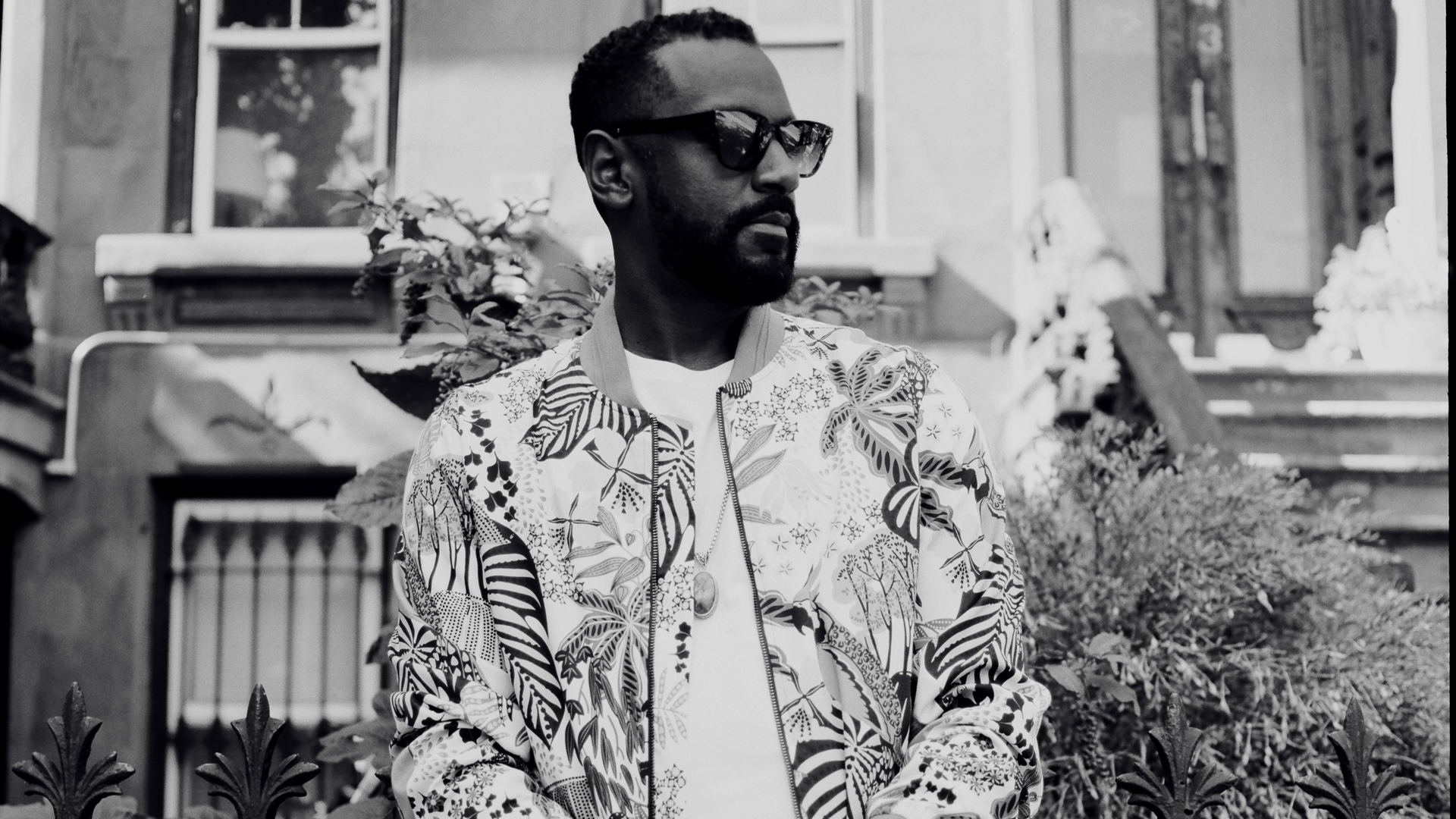
Main Photo: Carlos Simon (Photo by Kendall Bessent/Courtesy Polyarts)