





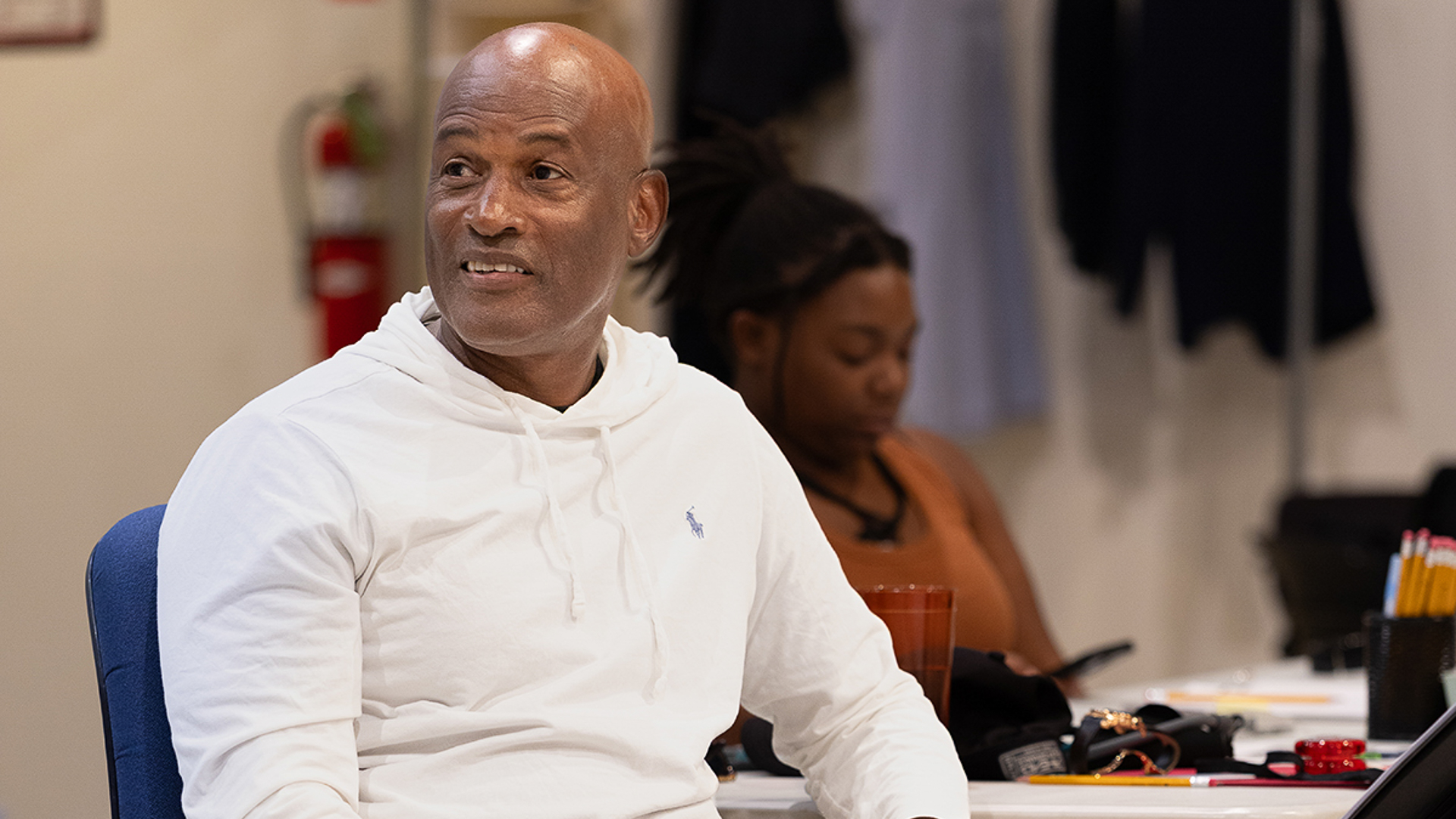

“Find the love, find the humor, find that joy. Find the joy and live in that until you can’t.”
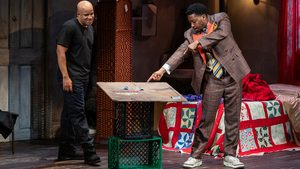
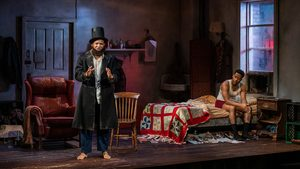
For director Kenny Leon, that is the challenge at the heart of Suzan-Lori Parks’s Topdog/Underdog. Four years after directing the play on Broadway, Leon returns to it with Glenn Davis and Namir Smallwood as Lincoln and Booth in a new production that opened September 27th at Chicago’s Steppenwolf Theatre. The actors are different, the country is different, and Leon believes the play has become more urgent.
But his approach begins with the same conviction: this is a love story. In a conversation that moves from the rehearsal room to the condition of America, Leon reflects on the demands of Parks’s writing and what Davis and Smallwood bring to the play.
We conclude by discussing what theater continues to teach him about being human.
Q: You talked about watching an actor eat a watermelon in Beverly Trader’s The Wishing Place in 1984 and realizing that theater could be more than just a play. How has that realization informed the projects you choose to direct and how you direct them?
When I was in college, I actually majored in political science. So I found a way to find my love of theater and to marry it to political science, or my care and love for America. And I’ve been lucky enough to line up projects that really allow me to say something about the state of the country, the state of its people, and the love that I personally have for it.
To come back to do Suzan-Lori Parks’s play, which is really a love story. It’s a love story to specifically African Americans, and it’s a love story to America.
The beautiful thing about this play is that it tailors itself to whomever is playing those two roles. Whoever is playing Link and Booth can find truth and can find a production that’s really tailored to them. With this production, for instance, I may ask Namir, what’s your favorite love song? And then he tells me that. And what’s your favorite love song, Glenn? And he tells his. And I found a way to interweave both their songs into the show. So I tailored it to them, what they have to say. And it’s very different than what we did on Broadway.
Ultimately, the play is about what happens when the foundation of America does not live up to the words in this document. And when you walk into the theater, in this production, you see an American flag drenched in gold. That’s asking the question: Has commerce, has material greed, overtaken what could really be beautiful about our country? And when we forget our families, when we forget our people, then we crumble.
The Broadway production was just four years ago. What are you discovering about this production that is new to your understanding of the play and its characters?
This play is a love story to America, and it sort of morphs into whatever time period we’re living. Four years ago, we were in a different place in terms of what material greed would do. We were in a different place about wars around the globe. We were in a different place about even what DEI means, or how do we include all people in the American stories.
I think the message is more urgent now, which is, we’re losing ourselves. We’re losing our beauty. We’re more beautiful together. We’re more beautiful when every human life matters.
I grew up Southern Baptist. So when we talked about love thy neighbor, the question is, well, who’s your neighbor? Is it just the people in your tribe? Is it the people of your race? Is it people in your state? Is it your people in the political party? No, I believe that the neighbor implies that you love everybody, even when you don’t understand everybody. And I think that’s what the play reminds us of.
Are Glenn Davis and Namir Smallwood challenging what you had thought about the play and offering their own perspective?
I always create an atmosphere in my rehearsal for the actors to reach their greatness. At the same time, I think a director’s job is to provide the parameters, the tone, the direction. What story are we telling?
I think this is one of the most difficult and challenging plays to perform. I respect the difficulty of their job and they respect the difficulty of my job. It’s very difficult for the actors to believe me when I say this is a play of love and joy and levity. Find the love, find the humor, find that joy. Find the joy and live in that until you can’t.
And now the only question to answer is, when does the joy and levity stop in this production? And I say it stops probably 30 seconds before the play is over. But everything before that, you have to search deeply for joy and love, because what that does, that allows all audience members to find themselves in it. It invites them in.
You’re also dealing with two fiercely intelligent actors who are very gifted. I can only imagine what the conversations have been like in the rehearsal room.
The conversation in the rehearsal room has been great. I tell them on the first day of rehearsal, I’m going to talk a lot. So 90 percent of our time, I’m going to talk. Every day, more and more, I need more and more of you and less and less of me. Until right before we open, then you’re at 90 percent and I’m at 10 percent. So that’s how we proceeded, and I think we’re in a happy place.
An audience might come in thinking it knows what’s going to happen by virtue of these characters’ names. How do you and your actors make what’s happening moment by moment so compelling that the audience forgets what it thinks it already knows?
Nobody wants to sit in misery. Nobody wants to sit in anger. Everybody remembers when they were a kid. Everybody wants a loving family. Everybody wants to laugh.
The metaphor I have is, you actors are in a car and the audience is a dog chasing the car. Don’t let the dog catch up to the car. That’s our goal. And these are two brilliant actors who are so skilled at that. They have continued to drive the car, and the audiences continue to be surprised. They need to be surprised.
There’s a lot of laughing in the show from the audience. There’s a lot of crying. There’s a lot of sitting and thinking.
I saw an interview that Suzan-Lori Parks gave and she talked about how effortless writing Topdog/Underdog was and how it just flowed through her. When you direct a play that came to its author so quickly and in that way, how much of your job is discovering what’s already there and how much is bringing something of yourself to it?
I try to lose me inside it. I worked with Suzan-Lori Parks on Broadway in the show, and she was there every day. We got along so fiercely well together. So I’m just trying to let the play reveal itself.
We don’t have to make it happen. We have to let it happen. It’s all there. It was spiritually delivered to her, and all we have to do is open up and let it breathe. Everything we need to know, the answers are in the text. Every argument you could possibly have about how the play should be is in the text. It’s just a perfectly written play.
You have a new book coming out on December 1st called Direction: Making the Most of the Performance of Your Life. You say in the press release that a rehearsal room can teach you everything you need to know about life. What has the rehearsal room for this or your previous production of Topdog/Underdog taught you?
No matter what play I’m on, I spend the first five minutes just me and the actors sitting around talking about what happened in our lives. Because so many times, actors are getting away from human behavior and human relationships. And that’s what we’re the study of. We’re on a raised stage in front of the whole community trying to say something about life.
There’s a picture I have in my phone. I was in New York City on Eighth Avenue and I’m walking down the street and there was a woman completely nude and she was pregnant. And my heart just broke. She had a bowl of water and she was giving herself a bath.
As I got closer, though, I could see that she had pretty much made everybody on that street, 800, 900 people walking by, she made them disappear. And she was just somewhere giving herself a bath. She was pregnant on the street.
So I show that picture to my cast, and I said, you know what’s interesting? That woman has a better idea of what the news in our world is. She’s telling us the condition of our world.
I tell the actors, we have to be as naked on our stages as that woman is. The pain she’s going through, we have to feel. Our job is to hold the mirror up to us. And you’ve got to be in touch with where humanity really is, the evolution of humanity. That’s why I love Topdog. Topdog is not about two men and what happens to them. Topdog is what has happened to humanity over time, what has happened to human beings in America over time. It’s not about one year, it’s about hundreds and hundreds of years.
I haven’t seen the play in 22 years. What is your hope of what an audience is now going to see of themselves or of the world they live in when they see this production?
I’m hoping that they see the absolute truth of where we are. With that, I’m hoping that they see there’s hope. There’s hope to make a difference. There’s hope to stop the tide. There’s hope, one person at a time, one talking to one neighbor at a time, one kid at a time, one parent at a time.
And I’m hoping that when you see it, you’ll be reminded of some of the joy and laughter that these men share with us and say, wow, how can we stay with that more? How can we get to that for me personally and for us collectively?
One of the reasons I love the performing arts as much as I do is because we go into a darkened theater and come together as a community. Then we go our separate ways and start to fragment again. What is the role of theater, and perhaps this play in particular, in reminding people that that fragmentation is destroying us?
I think the more we can make our theater like a church, the better it will be, because then we can say, you know what, it’s not even just about Topdog. It’s about, do you see enough in Topdog to come back next Sunday to see that next play where some human being is trying to struggle with some aspect of being human?
When it becomes contagious, that’s what I want theater to be for more and more people. I want it to be an inviting place to come to experience what other humans are going through.
In 1986, Frank Wittow, who gave you your first real opportunity in theater, told Southern Exposure that he liked to think of theater as a place where we’re all continuing to learn. After all these years, what is theater still teaching you about yourself?
Theater’s teaching me that I am still growing, I’m still learning, I’m trying to be a better human being, still trying to find the true meaning of Christianity, still trying to get comfortable with loving every single person on the planet. And every play teaches me something else about being a better human being.
If I can have a hand in helping actors step into these garments of other individuals, it feels like a ministry to me. I wouldn’t know what to do if I wasn’t in the American theater. Even if I didn’t have the opportunity to direct at Steppenwolf or to direct on Broadway, I would be directing in some elementary school or some high school or some community church. That’s my way of giving back, but also my way of life. It’s the greatest thing in the world to share stories, to be in stories, to understand other people.
Topdog/Underdog continues at Steppenwolf Theatre Company through November 1st.
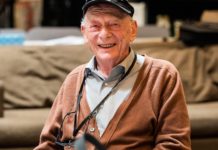
Main Photo: Kenny Leon at a Topdog/Underdog Rehearsal (Photo by Joel Moorman-Courtesy Steppenwolf Theatre Company)